
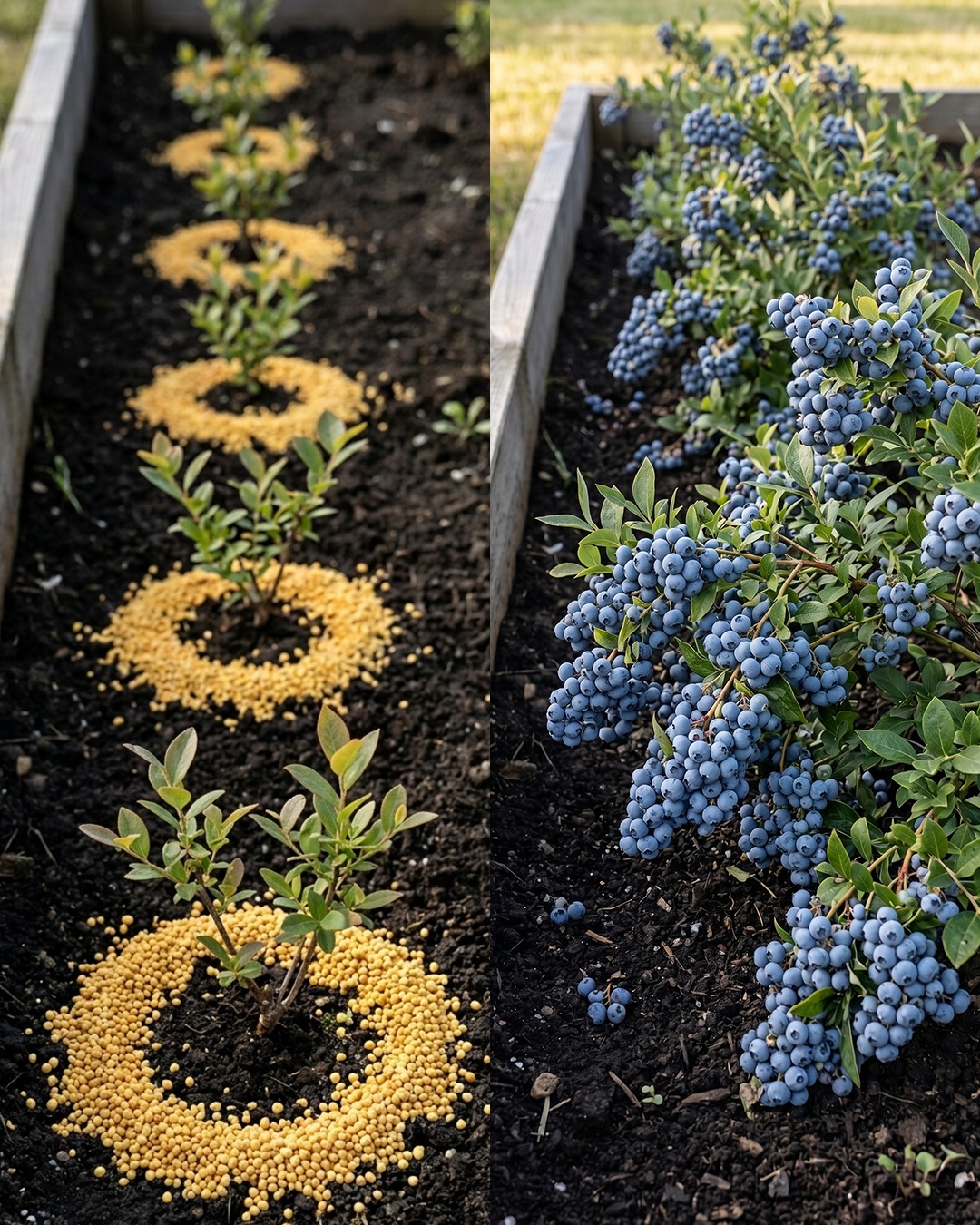
If you have planted blueberry bushes in your yard and are wondering why the harvests are small, the leaves look yellow, and the plant simply refuses to grow, the problem is rarely a lack of water or sunlight. The issue is almost always hidden right beneath the surface in the dirt itself. Blueberries are incredibly strict about the soil they live in. They require a highly acidic environment, specifically a pH level resting between 4.5 and 5.5.
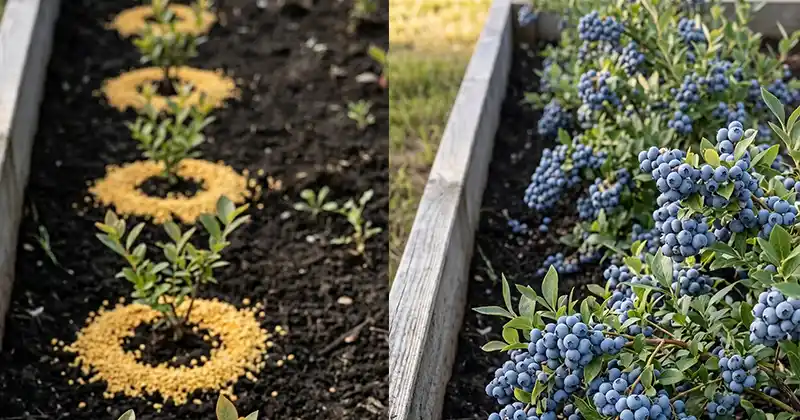
If your soil sits at a normal, neutral pH like most garden dirt, your blueberry bush is effectively starving. Even if the ground is packed with rich nutrients, the plant’s roots are locked and cannot absorb them. You can fix this problem and potentially double your harvest by unlocking the soil with one highly potent ingredient: elemental sulfur.
What is Elemental Sulfur?
Elemental sulfur is a naturally occurring mineral. When added to your garden, soil bacteria slowly break it down, a process that safely and permanently lowers the pH of the earth. It is not a temporary fertilizer; it is a fundamental soil changer.
When buying this ingredient, you must be very specific so you do not accidentally harm your plants:
- Look for Elemental Sulfur: It is often sold simply under the name “Soil Acidifier.” Always turn the bag over and check the ingredient list to ensure elemental sulfur is the primary active component.
- Choose Granules or Pellets: Always buy the pellet form. Powdered sulfur easily blows into the wind, making it messy to apply and irritating to breathe in or get in your eyes.
- Avoid Aluminum Sulfate: Many stores sell aluminum sulfate as a fast-acting acidifier for certain flowers. Never use this on blueberries. Blueberries are highly sensitive to aluminum, and it will quickly become toxic and damage their shallow root systems.
Where to Get It
You do not need a special license or a commercial farm supplier to get it. You can find bags of elemental sulfur pellets easily at:
- Local garden centers and plant nurseries.
- Large home improvement stores in the outdoor garden aisles.
- Agricultural supply shops, where it is often sold in larger, more economical bags labeled as agricultural sulfur.
How to Apply Elemental Sulfur for Maximum Results
Continued on next page:
