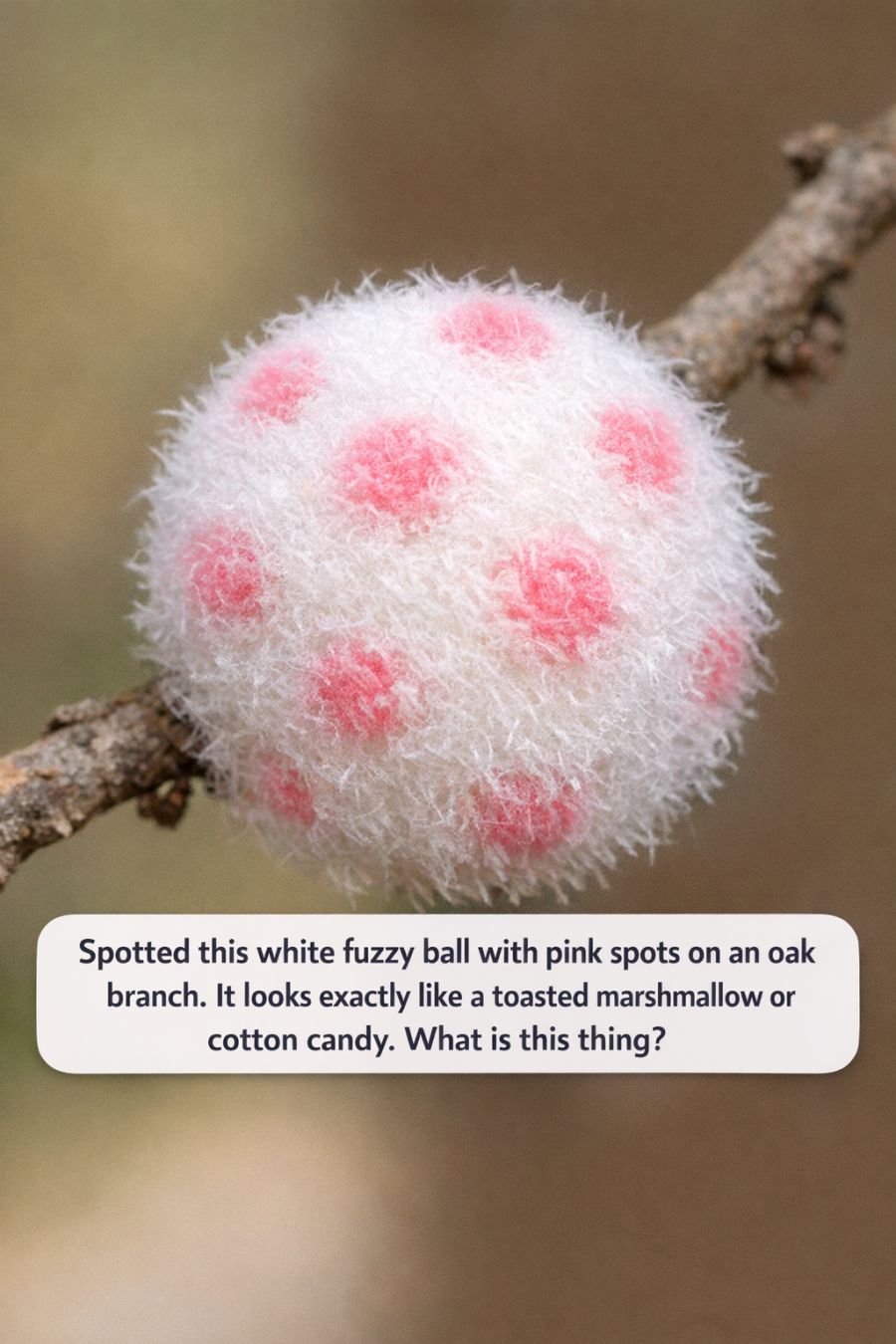
These galls are more prevalent in areas where white oaks are abundant, such as deciduous forests and wooded suburban areas. Observers should look for them on the branches of oak trees, especially those that are younger and have more leaf buds.
7. Is It Harmful? The Real Impact on Your Oak Tree
While wool sower galls might appear alarming due to their unusual appearance, they are generally not harmful to the oak tree. The formation of galls typically does not cause significant damage to the tree, as it affects only a small portion of the plant tissue.
In most cases, the presence of these galls is considered a natural part of the ecosystem, with minimal impact on the health or growth of the oak tree. However, a very heavy infestation could potentially stress young or already weakened trees.
8. Can You Touch or Remove It? Safety and Handling Tips
Wool sower galls are safe to touch, as they do not pose any threat to humans or pets. However, removing them is generally unnecessary and does not prevent the wasps from continuing their life cycle.
If you decide to remove a gall for observation or educational purposes, it is best to do so gently to avoid damaging the surrounding plant tissue. Keep in mind that the gall is an integral part of the wasp’s life cycle, and removing it could disrupt the development of the larvae inside.
9. Common Look-Alikes: Other Odd Galls and Fuzzy Growths on Trees
There are several types of galls and fuzzy growths that can be found on trees, which might be confused with wool sower galls. These include oak apple galls, which are larger and rounder, and spangle galls, which appear as small, disc-like structures on leaves.
Each type of gall has a distinct appearance and is caused by different species of insects. Understanding these differences can help in correctly identifying the growths on your trees and appreciating the diversity of life they support.
10. How to Manage or Prevent Wool Sower Galls in Your Yard
Managing wool sower galls is generally not necessary, as they are a natural part of the ecosystem and do not harm the tree significantly. If you wish to reduce their occurrence, maintaining overall tree health is the best strategy. This includes regular watering, proper pruning, and avoiding unnecessary stress on the tree.
Insecticides are not recommended for controlling gall wasps, as they are often ineffective and can harm beneficial insects. Instead, focus on promoting a balanced and healthy environment for your oak trees.
11. Why These Strange Galls Matter for Biodiversity and Backyard Science
Wool sower galls, like other galls, play a crucial role in the ecosystem by providing habitats and food sources for various insects. They contribute to the biodiversity of the area and can support a range of wildlife, from birds to other invertebrates.
For backyard scientists and enthusiasts, these galls offer an opportunity to observe and study the complex relationships between plants and insects. They serve as a reminder of the intricate and often hidden interactions that sustain our natural world, prompting curiosity and appreciation for the diversity of life in our own backyards.