
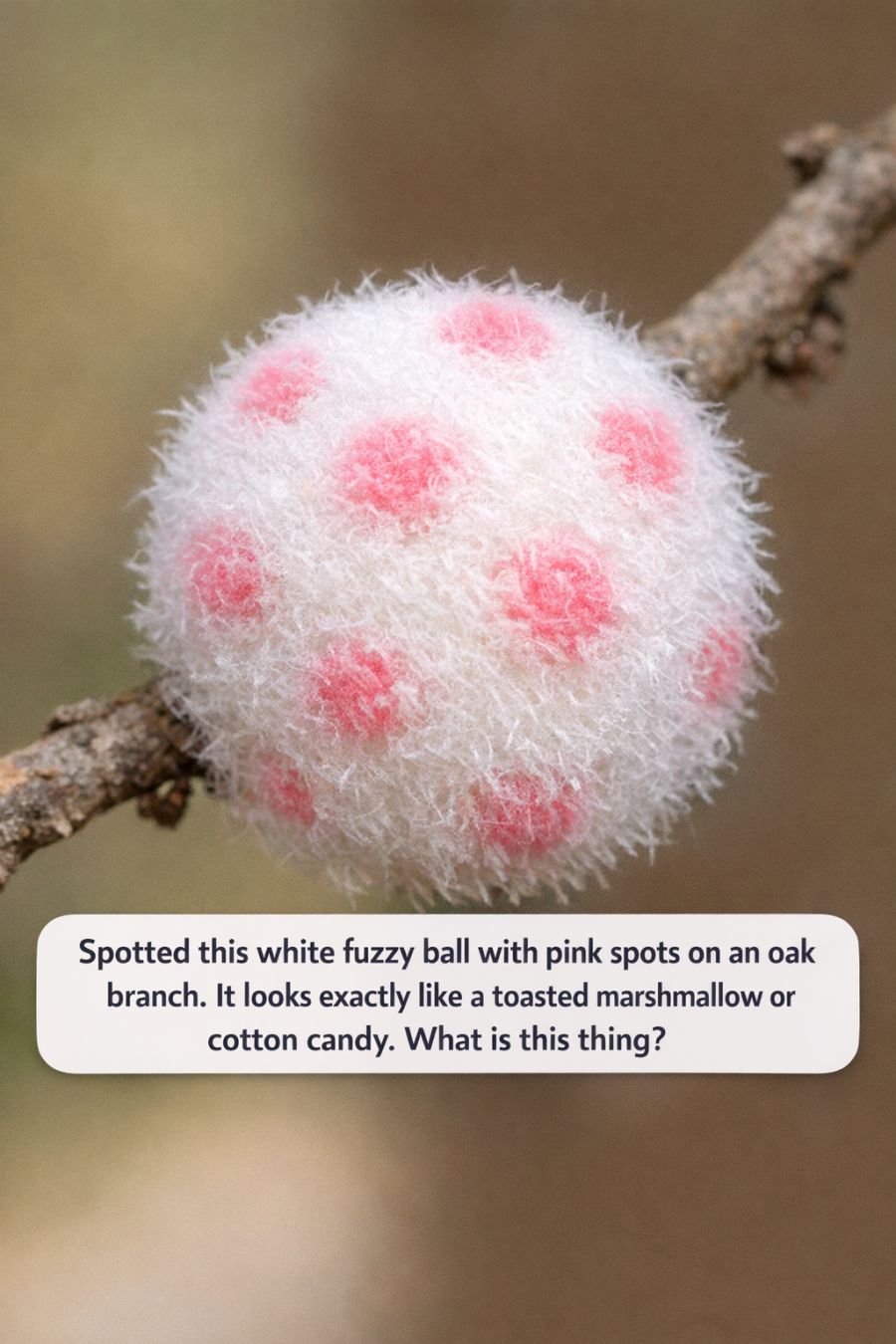
Strolling through the woods or your backyard, you might encounter something peculiar on the branches of an oak tree: a white, fuzzy ball with pink spots, resembling either a toasted marshmallow or a dollop of cotton candy. These fascinating structures often leave observers puzzled and intrigued, sparking curiosity about their nature and origin.
Far from being a sugary treat, this mysterious growth is known as a wool sower gall. Its appearance may suggest a fungal growth or a sign of decay, but the truth is far more intriguing. Understanding what these galls are and why they form can provide a glimpse into the complex interactions between plants and insects.
1. The Marshmallow Mystery: Why Your Oak Branch Looks Sugary Sweet
When you first spot this fluffy growth on an oak branch, it’s easy to mistake it for something edible. The wool sower gall is unique in its appearance, often measuring about 1 to 2 inches in diameter. Its soft, cotton-like texture and pale color can give the impression of a sugary confection, especially when accented by the distinctive pink spots that speckle its surface.
These galls are not random occurrences but a natural part of the life cycle of certain insects. The interplay between the tree and the insect results in this visually striking formation, serving a specific purpose in nature. Despite their candy-like appearance, these galls are far from edible and hold a fascinating biological story within.
2. Meet the Wool Sower Gall: A Bizarre Growth, Not a Fungus or Mold
Contrary to initial assumptions, the wool sower gall is not a product of fungal activity or mold. Instead, it is a type of gall, a growth that forms on plants in response to the presence of certain insects. Specifically, the wool sower gall is associated with a tiny wasp known as the wool sower gall wasp, or Callirhytis seminator.
Galls are essentially plant tissues that have been altered by the chemical signals released by the insect. In this case, the wasp lays its eggs in the tissue of the oak tree, prompting the tree to produce the gall. This provides a protected environment and a food source for the developing wasp larvae.
3. The Tiny Culprit Inside: How a Gall Wasp Creates This Fluffy Structure
The creation of a wool sower gall begins with the female gall wasp. She injects her eggs into the leaf buds of white oak trees. This activity typically occurs in early spring, coinciding with the tree’s budding phase. As the eggs are deposited, the wasp releases a chemical that tricks the tree into forming the gall.
Inside this fluffy structure, each egg is encased in a small chamber. The gall provides nourishment to the larvae as they develop, effectively keeping them safe from predators and environmental conditions. Once the larvae have matured, they will emerge from the gall, completing their life cycle.
4. Life Cycle of the Wool Sower Gall Wasp, From Egg to Adult
The life cycle of the wool sower gall wasp is intricately linked with the formation of the gall. After the eggs are laid in spring, the larvae develop over the course of several weeks, feeding on the inner tissues of the gall. During this period, the gall continues to grow, providing ample space and resources for the larvae.
By late summer to early fall, the fully developed wasp larvae will chew their way out of the gall, leaving small exit holes behind. They then drop to the ground, where they burrow into the soil to overwinter. In the following spring, the adult wasps emerge, ready to repeat the cycle.
5. Why Wool Sower Galls Look Like Cotton Candy or Toasted Marshmallows
The wool sower gall’s appearance is a result of its unique structure and composition. The fluffy, cotton-like exterior is composed of plant fibers, which are produced in response to the wasp’s chemical signals. These fibers create the soft texture that gives the gall its marshmallow or cotton candy resemblance.
The pink spots often seen on these galls are actually the result of tiny, pigment-producing cells within the plant tissue. These spots can vary in intensity and distribution, adding to the gall’s unusual and appealing appearance.
