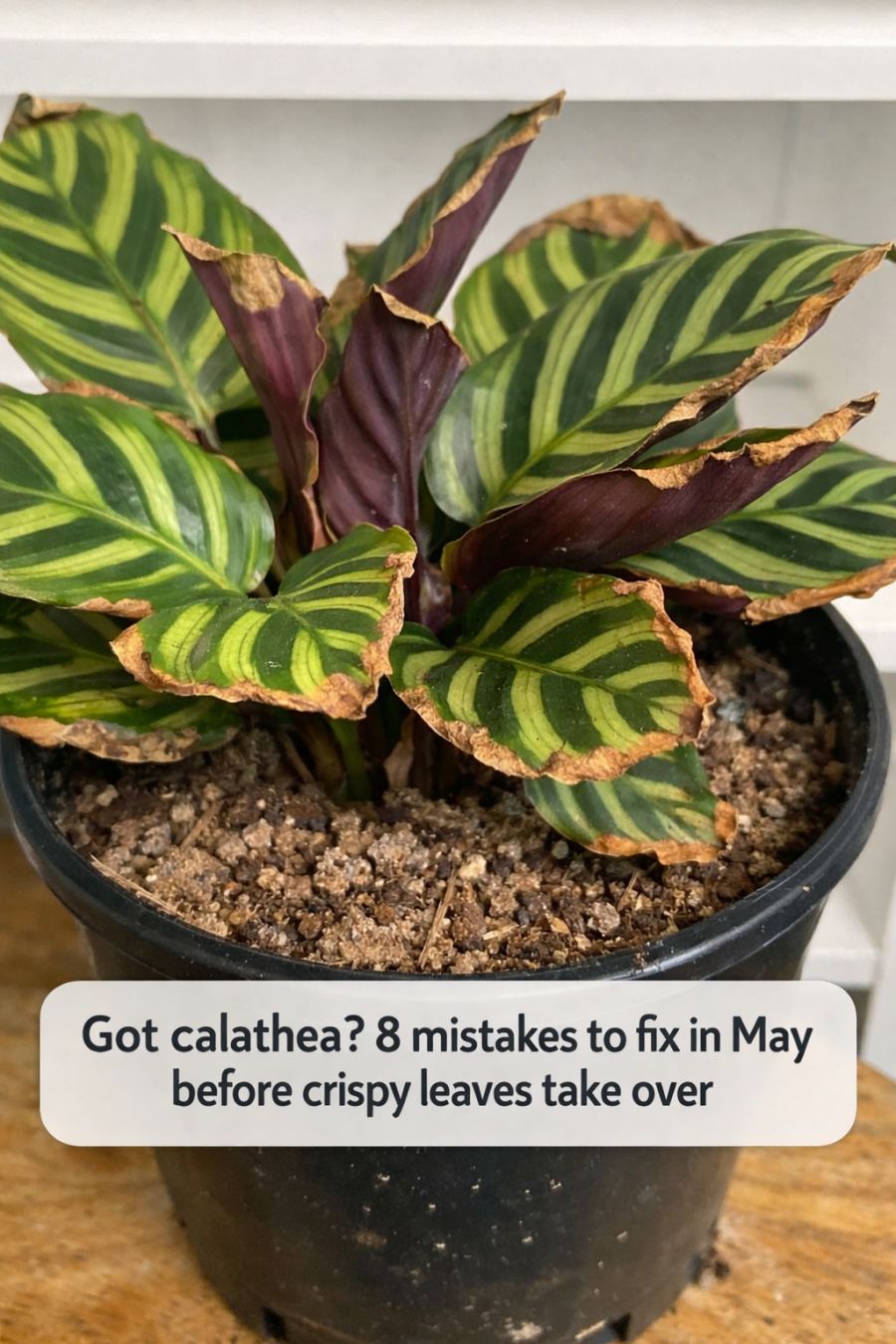
When repotting, choose a pot that is only slightly larger than the current one to prevent water from sitting in the soil for too long. Gently remove the plant from its pot, tease apart any tightly bound roots, and place it in the new pot with fresh soil.
6. Mistake: Feeding Too Much—or Not at All—In Growing Season
Calatheas benefit from regular feeding during their active growing season, typically from spring through early fall. Use a balanced, water-soluble fertilizer at half-strength every 4-6 weeks to provide the necessary nutrients without overwhelming the plant.
However, over-fertilizing can lead to salt buildup in the soil, which can burn the roots and cause leaf damage. Be sure to flush the soil with clear water occasionally to wash away any excess salts.
7. Mistake: Letting Drafts, Vents, and Temperature Swings Stress Plants
Calatheas are sensitive to temperature fluctuations and drafts, which can cause stress and lead to leaf curling and browning. Keep your plants away from cold drafts, open windows, and heating or cooling vents.
Ideally, maintain a consistent temperature between 65-80°F (18-27°C). If your calathea is near a drafty window or door, consider relocating it to a more stable environment.
8. Mistake: Overlooking Pests and Dust That Block Those Patterned Leaves
Pests like spider mites and aphids can be a problem for calatheas, especially in dry conditions. Regularly inspect the leaves for signs of infestation, such as webbing or sticky residue, and treat promptly with insecticidal soap or neem oil.
Dust accumulation can also block light from reaching the leaves and hinder photosynthesis. Gently wipe the leaves with a damp cloth every few weeks to keep them clean and vibrant.