
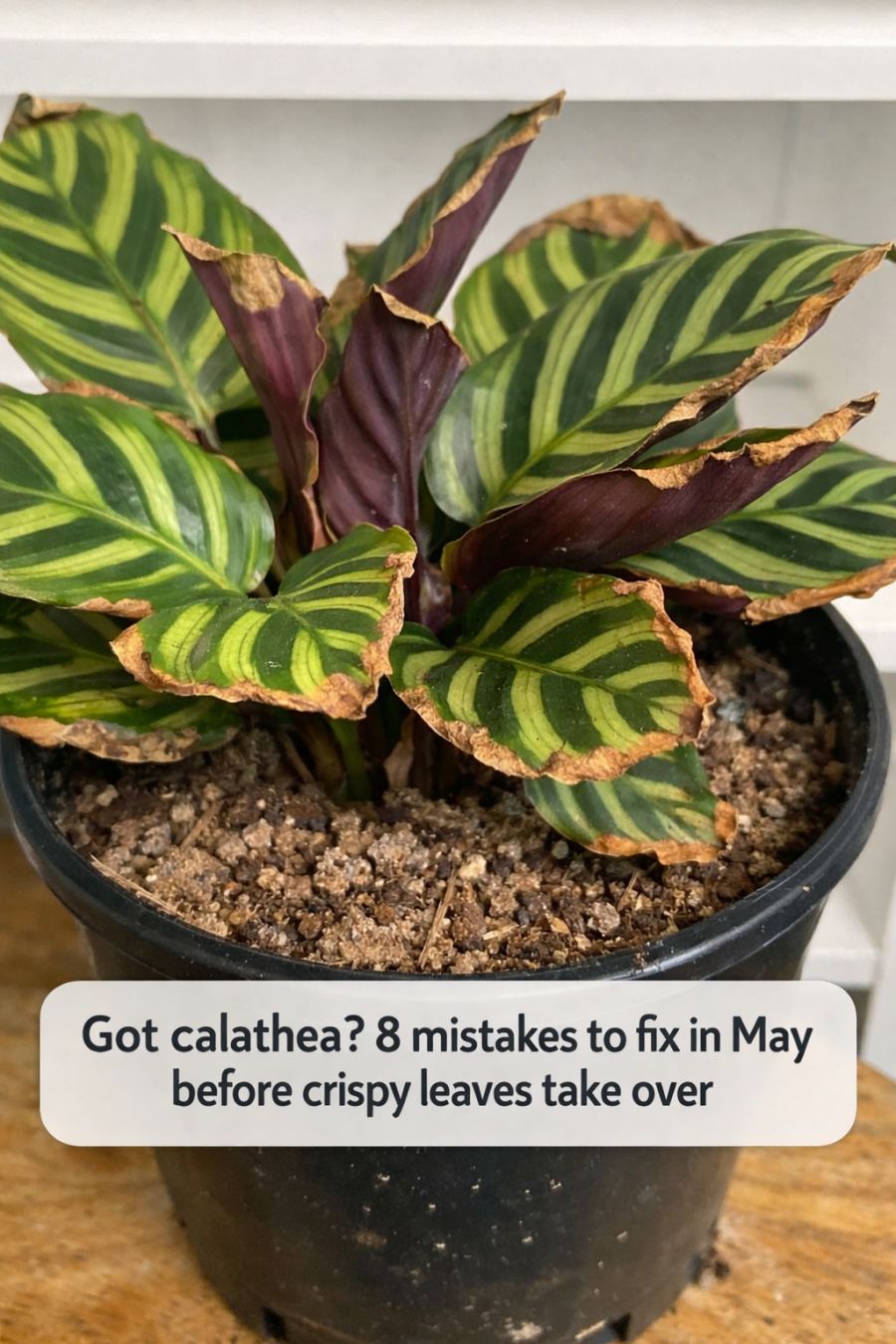
Calathea plants, known for their strikingly beautiful foliage and intricate patterns, can be a stunning addition to any indoor plant collection. However, they can also be notoriously finicky, often showing signs of distress through crispy, browning leaf edges if not properly cared for. As May ushers in warmer weather and brighter days, it’s the perfect time to reassess your calathea care routine to ensure your plants are thriving rather than merely surviving.
Understanding the unique needs of your calathea can mean the difference between vibrant, healthy leaves and a sad, struggling plant. In this article, we will explore eight common mistakes that calathea owners often make, and provide actionable solutions to fix them before your plant’s leaves start to crisp at the edges. With these tips in hand, you’ll be well on your way to lush, lively calathea plants.
1. Mistake: Letting Soil Stay Soggy Instead of Just Moist
Calathea plants prefer their soil to be consistently moist, but never waterlogged. Allowing the soil to remain soggy can lead to root rot, a condition that can quickly kill the plant. To prevent this, ensure that your pot has adequate drainage holes and that you use a well-draining potting mix. Water your calathea when the top inch of soil feels dry to the touch. This might mean watering once a week or more frequently, depending on the humidity and temperature in your home.
To check for the right moisture level, insert your finger about an inch into the soil. If it feels dry, it’s time to water. Be sure to allow excess water to drain completely from the pot, and never let the plant sit in a saucer of water.
2. Mistake: Using Tap Water That Burns Sensitive Leaves
Calatheas are sensitive to the fluoride, chlorine, and other chemicals often found in tap water, which can cause leaf burn and unsightly brown edges. Instead, consider using distilled water, rainwater, or water that has been left to sit out overnight to allow chemicals to dissipate.
Another option is to use filtered water. Some calathea enthusiasts have found success with water filtration systems that remove these harmful chemicals. Consistency is key, so choose a water source that you can reliably provide to your calathea.
3. Mistake: Ignoring Humidity Until the Edges Turn Crispy
Calatheas thrive in high humidity environments, ideally between 50-60%. When humidity levels drop, the leaves can quickly develop crispy edges. To increase humidity, consider placing a humidifier near your plants or grouping them together to create a microclimate.
Another simple solution is to place a tray of water with pebbles beneath the plant pot, ensuring the pot is not sitting directly in the water. Misting the leaves can also help, but be careful not to overdo it, as excess moisture on leaves can lead to fungal issues.
4. Mistake: Parking Calathea in Harsh Direct Sunlight
Calatheas prefer bright, indirect light. Direct sunlight can scorch their sensitive leaves, leading to bleaching and browning. Place your calathea near a north or east-facing window where it can receive ample indirect light.
If you notice the leaves are becoming pale or developing brown spots, it might be getting too much light. Conversely, if the growth is slow and the colors are dull, it might need more light. Adjust the location gradually to find the right balance.
