
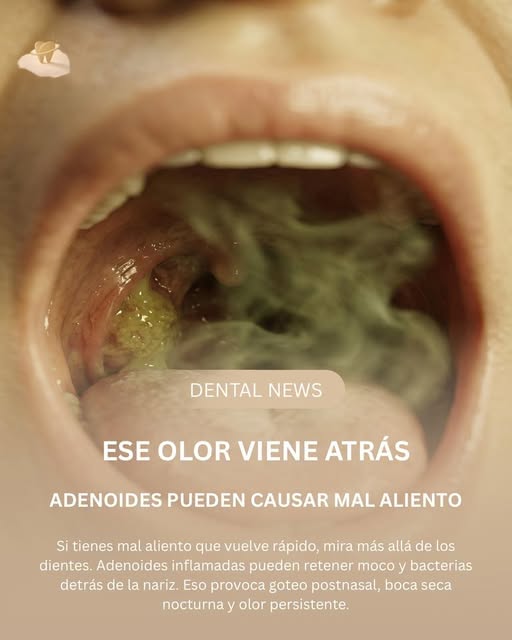
And yet… the bad breath keeps coming back.
If this sounds familiar, the problem may not be your teeth at all.
In some cases, the real cause is hidden behind your nose — in a small mass of tissue called the adenoids.
Most people focus only on oral hygiene when dealing with persistent bad breath (halitosis). But when the odor doesn’t improve despite proper brushing, it’s time to look deeper.
 What Are Adenoids?
Adenoids are small pads of lymphatic tissue located high in the throat, behind the nose (nasopharynx). They are part of your immune system and help trap bacteria and viruses, especially during childhood.
In children, adenoids are larger and more active. As we grow older, they typically shrink.
However, in some individuals — especially kids and teenagers — enlarged or chronically infected adenoids can cause ongoing problems.
And one of the most overlooked symptoms? Persistent bad breath.
 How Can Adenoids Cause Bad Breath?
Here’s what happens:
When adenoids become enlarged or infected, they can:
• Trap mucus
• Harbor bacteria
• Block proper nasal drainage
• Promote mouth breathing
This creates the perfect environment for odor-producing bacteria to thrive.
The result? A foul smell that brushing alone cannot eliminate.
The issue isn’t in your mouth — it’s behind your nose.
 Signs the Problem Might Be Adenoids
If bad breath is caused by adenoids, you may also notice:
-
Chronic nasal congestion
-
Mouth breathing (especially at night)
-
Snoring
-
Recurrent sinus infections
-
Postnasal drip
-
Frequent throat clearing
-
Ear infections (in children)
-
-
Children with enlarged adenoids often sleep with their mouth open and may wake up with extremely dry breath.
If this sounds familiar, the source may not be dental — it may be ENT-related (ear, nose, and throat).
 Why Mouthwash Doesn’t Solve It
Mouthwash treats bacteria inside the oral cavity.
But if the infection or inflammation is located behind the nasal passage, rinsing your mouth won’t reach it.
This is why many people feel frustrated:
“I clean everything perfectly… why is the smell still there?”
Because the bacteria are not only in your mouth.
 Who Is Most at Risk?
Persistent adenoid-related halitosis is more common in:
• Children ages 3–12
• Individuals with chronic sinusitis
• People with allergies
• Those who frequently experience upper respiratory infectionsIn adults, enlarged adenoids are less common but can still occur.
- Continued on next page:
Pages: 1 2
