
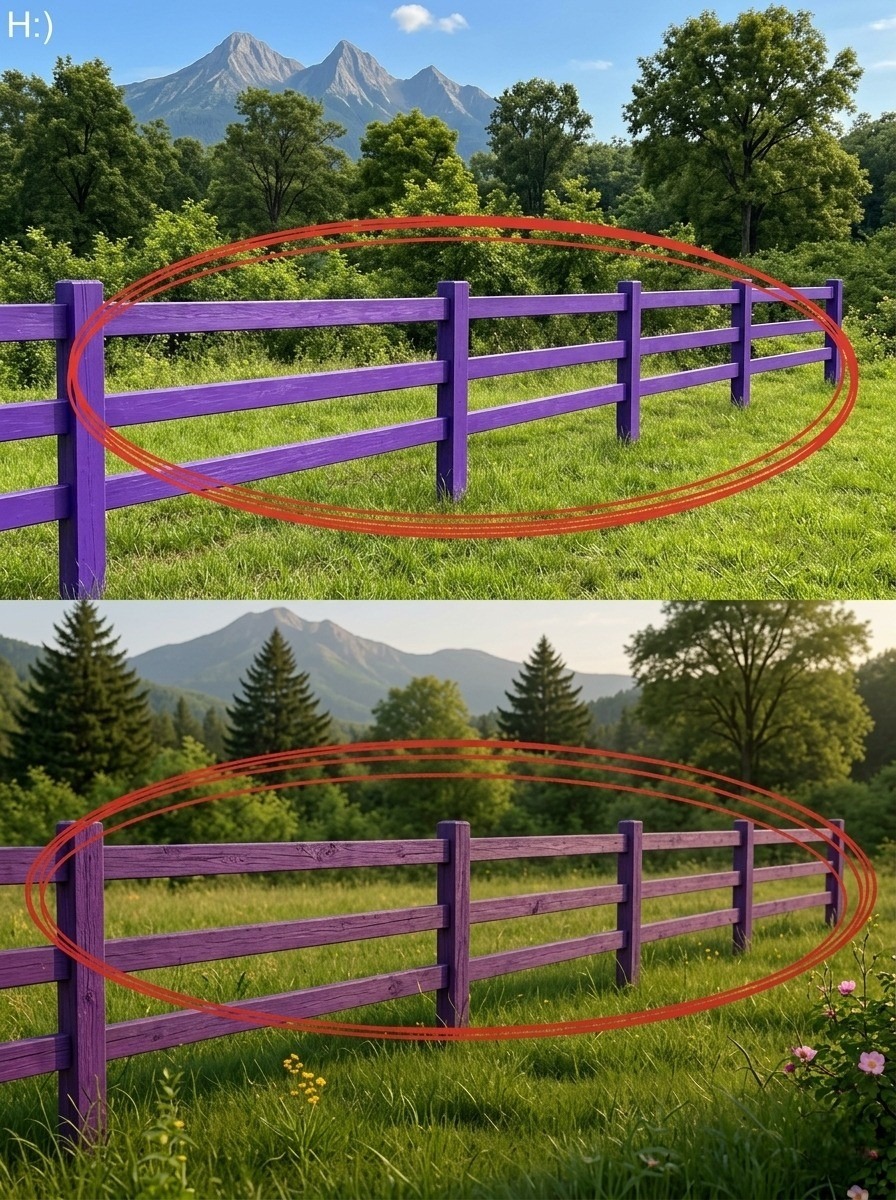
In several U.S. states, purple paint marks serve as a legal alternative to posted signs, telling people to stay off private property—especially in rural areas where signs fade or get removed.
The Unexpected Color in the Wild
Exploring the outdoors often carries a sense of freedom and curiosity—the quiet excitement of not knowing exactly what lies around the next bend in a trail or beyond a line of trees. For hikers, hunters, campers, and casual wanderers alike, nature feels open and welcoming, a shared space meant to be enjoyed.
Yet occasionally, amid forests, fields, or rural roads, something unexpected interrupts that sense of openness: a fence, post, or tree marked with a striking coat of purple paint.
At first glance, the color can feel out of place against natural greens and browns, leading many people to assume it is decorative, artistic, or even accidental. But that vivid purple carries a specific message—one that blends law, history, and practicality. Far from being a stylistic flourish, it is a clear signal that the land beyond it is private, and that crossing that boundary is not permitted.
Why Purple Paint? A Practical Solution to a Long-Standing Problem
The use of purple paint as a property marker emerged as a practical solution to a long-standing problem faced by landowners, particularly in rural areas.
The Problem with Traditional Signs
For decades, the standard way to warn people against trespassing was through posted signs, often reading “No Trespassing” or “Private Property.” While effective in theory, signs came with constant issues:
| Issue | Consequence |
|---|---|
| Fading | Sun and rain made signs unreadable |
| Weather damage | Wind tore them down |
| Vandalism | People deliberately removed them |
| Cost | Replacing signs repeatedly was time-consuming and expensive |
The Solution
Legislators in several states began looking for a more durable, standardized alternative—something that would be:
-
Unmistakable
-
Difficult to ignore
-
Long-lasting
Purple paint emerged as the answer. It was:
-
Uncommon in natural environments
-
Highly visible from a distance
-
Resistant to fading
Over time, laws were passed recognizing purple paint marks as the legal equivalent of “No Trespassing” signs.
Why Purple? The Reasoning Behind the Color
The choice of purple specifically was not arbitrary.
| Color | Problem in Natural Settings |
|---|---|
| Reds | Can darken and become less visible |
| Oranges | Can dull over time |
| Whites | Discolor quickly |
| Purple | Remains visually striking; contrasts sharply with tree bark and vegetation |
Legal Standardization
From a legal standpoint, the color also helped standardize expectations. If everyone learned that purple paint meant “do not enter,” there would be less room for misunderstanding.
Over time, awareness grew among:
-
Outdoor enthusiasts
-
Law enforcement
-
Landowners
This reinforced the color’s association with private property. What began as a practical fix gradually became a recognized visual language in many parts of the country.
The Legal Weight of Purple Paint
In states where purple paint laws are in effect, these markings carry serious legal weight.
Key point: Ignoring purple paint is not the same as accidentally wandering past an unmarked boundary.
Once purple paint is legally recognized, it serves as formal notice that entry is prohibited. Trespassing beyond such a marker can result in:
-
Fines
-
Citations
-
Arrest (depending on circumstances and local laws)
Why This Matters for Outdoor Enthusiasts
This is especially important for hunters, hikers, and campers, who often traverse large, undeveloped areas where property lines are not immediately obvious.
| Scenario | Implication |
|---|---|
| A single purple stripe on a tree or fence post | May be the only warning given |
| Presence of purple paint | Considered sufficient notice (law enforcement is generally not required to prove a person saw a traditional sign) |
Understanding and respecting these markers is essential for anyone spending time outdoors.
Important: Purple Paint Laws Are Not Universal
It is important to recognize that purple paint laws are not universal across the United States.
| Legal Status | What It Means |
|---|---|
| Many states | Have adopted purple paint laws |
| Others | Have not adopted them |
| Some states | Recognize them only under specific conditions (size, height, or spacing of paint marks) |
| States without such laws | Traditional signage may still be required for trespassing enforcement |
What You Should Do
Continued on next page:
