
14) Beets: The “rapid nitric oxide” circulation booster
Beets are rich in nitrates that can increase nitric oxide availability.
Some studies show measurable blood pressure effects within hours in certain people.
That’s why many people report quicker warmth in hands and feet after beet intake.
Roast them, blend them, or use a small amount of beet powder if that’s easier.
You’ve got the full list—now let’s make it usable.
3 Simple Food Stacks That Multiply Results

Instead of trying 14 foods at once, use stacks.
Stacks are combinations that cover different mechanisms: nitrates + flavonoids + omega-3s.
They’re also easier to remember when life is busy.
Try one of these:
- Nitrate Stack: beets + spinach + celery
- Flavonoid Stack: berries + dark chocolate + green tea
- Anti-Inflammation Stack: salmon + garlic + turmeric + ginger
Pick one stack for seven days and watch your leg heaviness score.
Small wins create momentum—and momentum is what keeps you consistent.
Now here are the tables you can reference without rereading the whole article.
Table 1: Best Circulation Foods and What They Offer
| Food | Key compounds (examples) | How it may help circulation | Easy amount |
|---|---|---|---|
| Avocado | MUFAs, potassium, vitamin E | Vessel flexibility support | ½ avocado |
| Fatty fish | EPA/DHA | Endothelial support | 2 servings/week |
| Garlic | Sulfur compounds | Vessel function support | 1–2 cloves |
| Walnuts | ALA, arginine | Nitric oxide pathways | Small handful |
| Turmeric + pepper | Curcumin | Inflammation balance | ½–1 tsp |
| Berries | Flavonoids | Vessel lining support | 1 cup |
| Oranges | Vitamin C, hesperidin | Capillary integrity | 1 orange |
| Green tea | Catechins | Elasticity support | 1–2 cups |
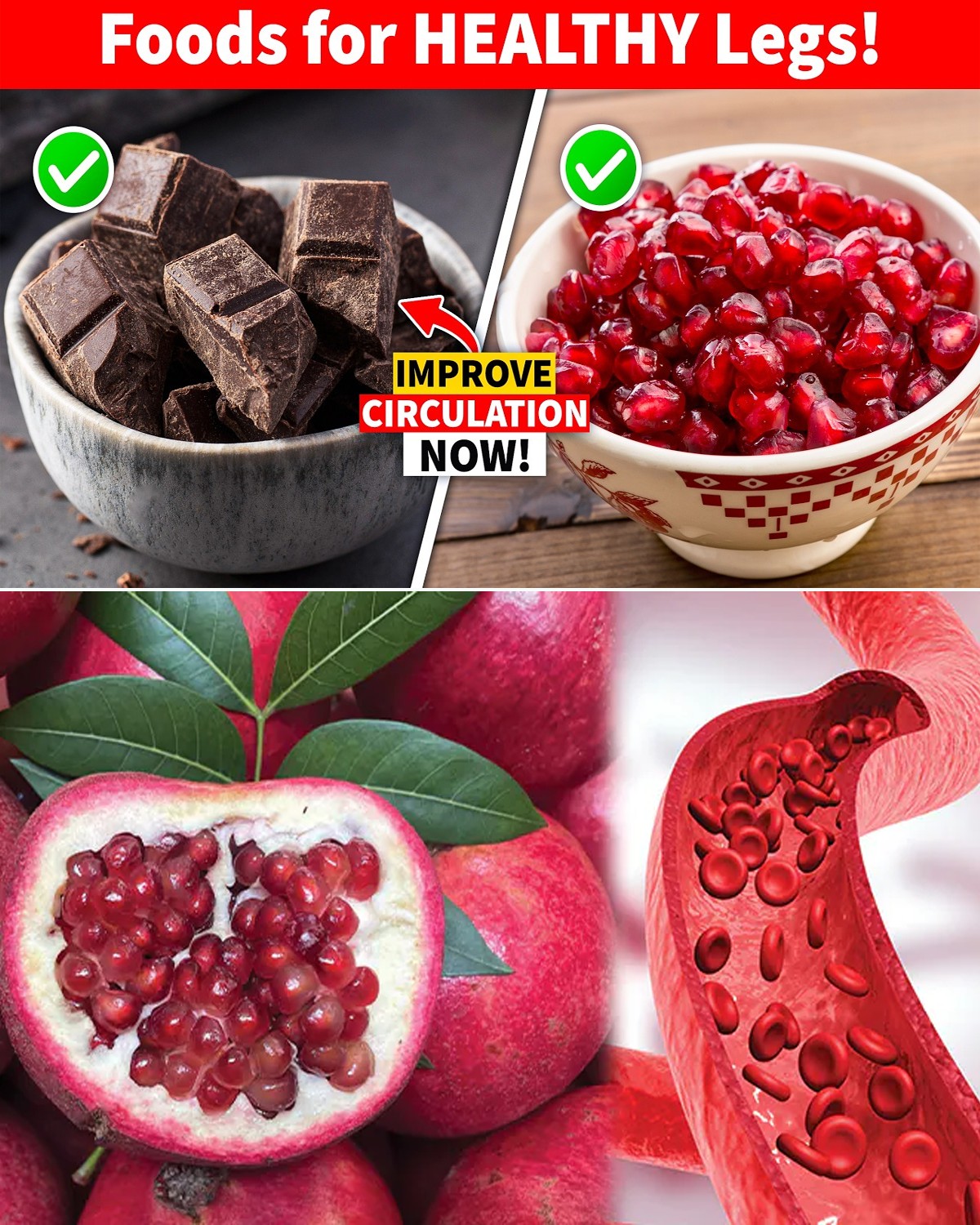
| Dark chocolate | Cocoa flavonoids | Nitric oxide support | 1–2 squares |
| Spinach | Nitrates, vitamin K | Nitric oxide production | 1 serving |
| Ginger | Gingerols | Comfort and warmth | Daily small piece |
| Celery | Nitrates, plant compounds | Pressure support | 2–4 stalks |
| Pomegranate | Polyphenols | Antioxidant vessel support | ½–1 cup arils |
| Beets | Nitrates | Faster nitric oxide boost | 1–2x/week |
Table 2: How to Use These Foods Safely
| Situation | What to consider | Safer approach |
|---|---|---|
| Blood thinners | Vitamin K consistency matters | Keep greens consistent, ask clinician |
| Diabetes | Watch sugary juices | Favor whole fruit over juice |
| Kidney disease | Potassium management may matter | Discuss high-potassium foods |
| Low blood pressure | Nitrate foods can lower pressure | Start small, monitor symptoms |
| Clotting risks or PAD | Don’t self-treat serious symptoms | Get medical evaluation |
Now let’s turn this into a plan you can actually follow.
A 30-Day “Lighter Legs” Action Plan
Week 1: Add one nitrate food 4 days (spinach or beets) + garlic daily.
Track leg heaviness morning and evening, 1–10.
Keep walking gentle and consistent.
Week 2: Add berries daily and green tea most days.
Notice warmth, cramps, and end-of-day swelling.
Adjust timing so caffeine doesn’t harm sleep.
Week 3: Add fatty fish twice weekly and walnuts as a snack.
Pay attention to recovery after walks.
Your legs may feel “less punished” by movement.
Week 4: Choose your “forever five.”
Pick the five foods you’ll actually repeat.
That’s the real secret—not variety, but repeatability.
Before you go, re-rate your leg heaviness number.
Even one point of improvement is meaningful when it’s consistent.
And if your symptoms are severe—especially one-sided swelling, sudden pain, skin color changes, or non-healing wounds—don’t wait.
Those are medical evaluation signals, not food experiments.
This article is for informational purposes only and does not replace professional medical advice. Please consult a qualified healthcare provider for personalized guidance, especially if you have diabetes, kidney disease, peripheral artery disease, clotting disorders, take prescription medications (including blood thinners), or experience sudden or severe symptoms.
