
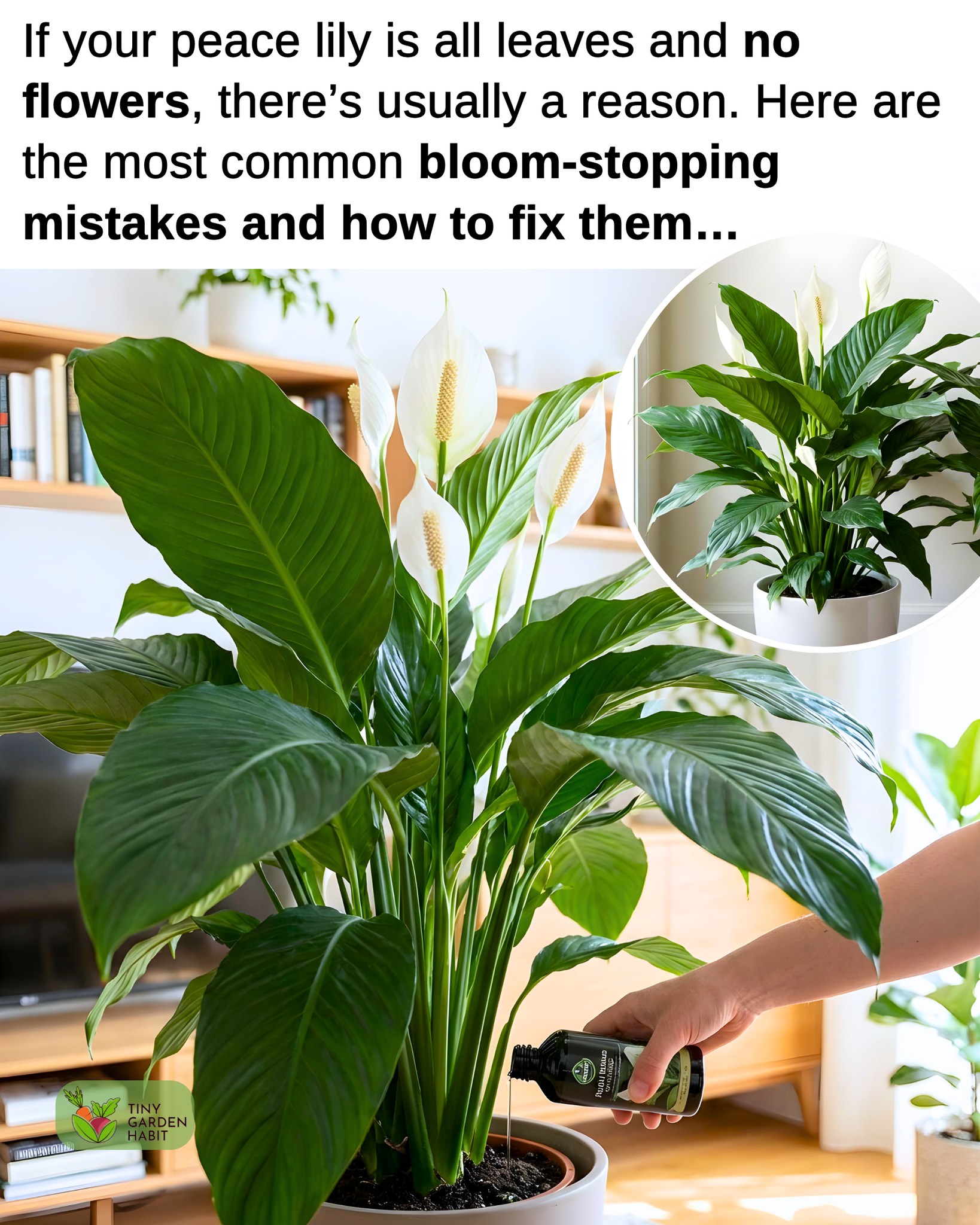
Although peace lilies are said to be low-maintenance, they can actually be a pain in the bum once they start showing problems.
One of the most common problems with peace lilies is poor blooming results, which can stem from a plethora of underlying reasons. In today’s article, let’s discuss a few of these reasons in detail and try to determine simple, practical solutions for each of them.
Your Peace Lily Should Bloom In Early Summer


Before we get to the actual reasons behind the poor blooming, it’s important to discuss expectations.
Ideally, your peace lilies should be blooming from March to July. A little late or early is totally okay as long as it’s somewhere within this timeframe.
If the perennial is not blooming during these months at all, it means that something is wrong.
🌱 Get Your FREE 2026 Sowing Calendar! 🌱
Plan your best garden yet! This printable 2026 Sowing Calendar tells you exactly when to plant your favorite vegetables, herbs, and flowers for a thriving garden all year long.
Your Peace Lily Goes Into Dormancy In Winter

Peace lilies actually prefer some degree of warmth and long sun exposure to bloom properly. When the wintertime comes around, sunlight typically isn’t around for very long, and temperatures drop, leading to weaker, slow-emerging peace lily blooms. So, don’t worry if it’s not blooming in winter!
Why Your Peace Lily Isn’t Blooming? 5 Reasons & Solutions

1: Light Is Essential!

Peace lily is one of those perennials that cannot do well in shade or partial shade conditions. They need plenty of sunlight on a daily basis to perform basic functions and grow meaningfully. While poor lighting won’t be lethal, it can certainly limit your perennial’s overall growth and blooming potential.
Solution: If your peace lily is in a pot and has mobility, move it to a well-lit area like a windowsill or the kitchen counter near the window.
2: Age (Too Young Or Too Old)

🌱 Get Your FREE 2026 Sowing Calendar! 🌱
Plan your best garden yet! This printable 2026 Sowing Calendar tells you exactly when to plant your favorite vegetables, herbs, and flowers for a thriving garden all year long.
Age is another very important variable in peace lily flowering. If the perennial is young or newly propagated, expecting it to bloom immediately is unrealistic. Senior citizen peace lilies may also have trouble blooming since they’ve reached an age where performing normal functions becomes tremendously challenging.
Solution: Your peace lilies need to be at least 1-3 years old before they fully bloom. Since there’s no real reversal for old age, the best you can do in that case is just enjoy the leaves and weak blooms the perennial has left to offer.
3: You Must Be Careful With Nutrient Deficiency

When the soil you’ve planted your peace lilies in lacks essential nutrients like nitrogen, potassium, and phosphorus, it can be very challenging to achieve the same level of growth and blooming you’d get from rich, fertile soil. Phosphorus, especially, is largely responsible for flower production.
Solution: Get your hands on a balanced fertilizer (NPK 10-10-10) and feed your peace lilies with it regularly during the growing season. You can also give bloom boosters a shot if you want. They’ll enhance flower production, especially during peak blooming season.
🌱 Get Your FREE 2026 Sowing Calendar! 🌱
Plan your best garden yet! This printable 2026 Sowing Calendar tells you exactly when to plant your favorite vegetables, herbs, and flowers for a thriving garden all year long.
4: Incorrect Watering & Pot Size

Though this may sound a little odd, pot size and water definitely do have a correlation. Some pots have poor drainage, meaning you want to water them carefully and somewhat frugally since the water can accumulate and cause a puddle.
It’s better to opt for pots with sufficient drainage holes at the bottom so you can water freely and not worry about waterlogging problems damaging your perennials.
Solution: Avoid both overwatering and underwatering your peace lilies. Follow a consistent watering routine and set reminders on your phone if you’re a forgetful person. Water evenly until the soil is evenly moist but try to avoid overly soggy soil as it can cause rot and fungal problems, which may harm the roots.
If you believe the pot size is not sufficient and the perennial is visibly outgrowing its pot, it may be a good idea to repot into a slightly larger (1-3 inches) pot.
5: Temperature & Humidity Stress
Continued on next page:
