
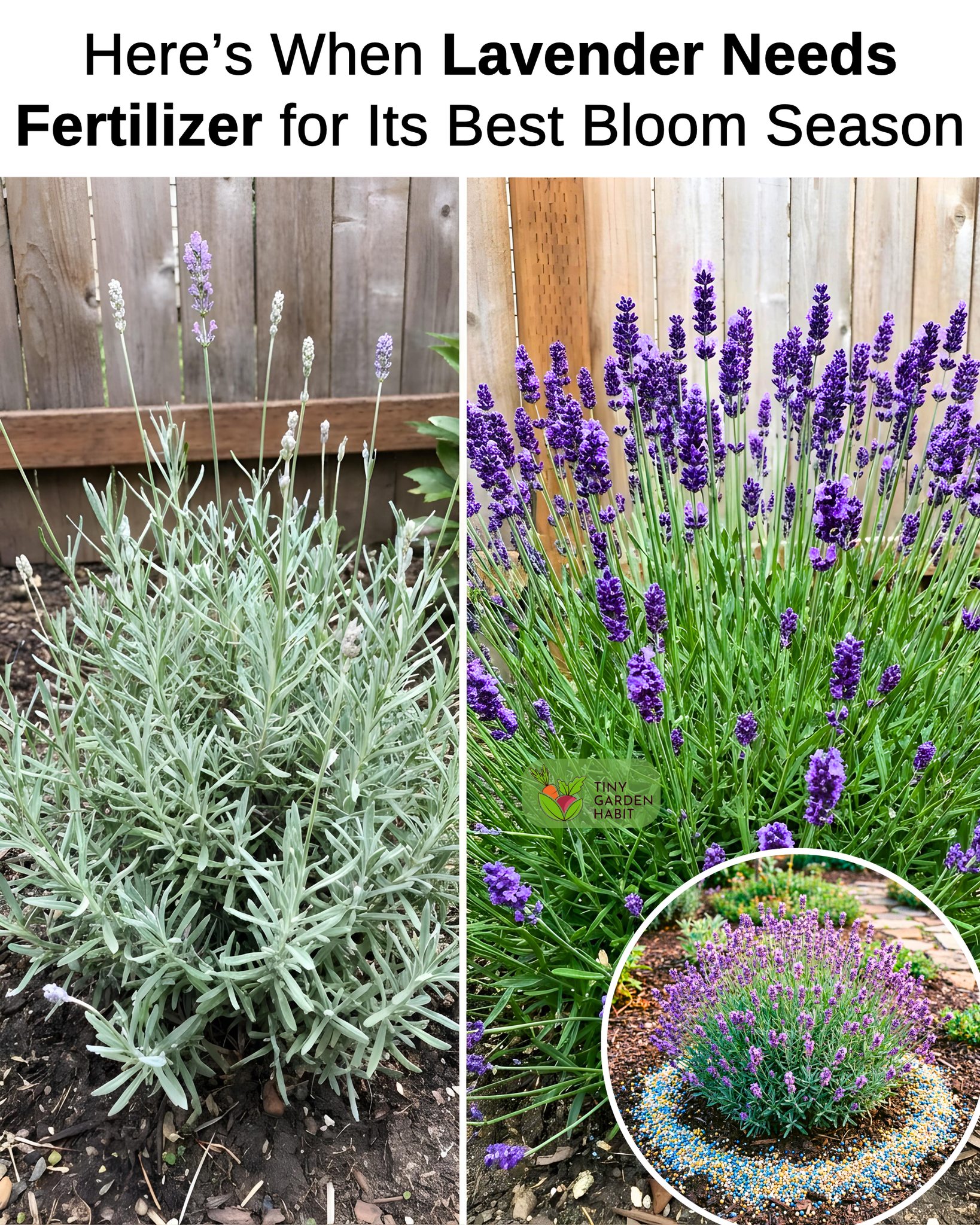

If your lavender is growing slowly, producing fewer blooms, or showing signs of yellowing leaves, it could be a sign of nutrient deficiency. However, most symptoms are likely to be signs of other environmental stressors, so it’s important to rule those out before deciding to fertilize.
Plan your best garden yet! This printable 2026 Sowing Calendar tells you exactly when to plant your favorite vegetables, herbs, and flowers for a thriving garden all year long.
In general, if your lavender is producing vibrant blooms and looking healthy, it probably doesn’t need any extra fertilizer. But if you notice any of these signs, a light feed in early spring could give your plant the boost it needs.

Fertilizing lavender is straightforward, but there are a few common mistakes to avoid:

Plan your best garden yet! This printable 2026 Sowing Calendar tells you exactly when to plant your favorite vegetables, herbs, and flowers for a thriving garden all year long.
To sum up, lavender grows best with minimal fertilizing. At most, feed it once a year in early spring with a low-nitrogen, balanced fertilizer.
Keep an eye on the timing, and don’t overfeed—excess nutrients can reduce fragrance and affect the plant’s resilience. If you stick to these simple guidelines, you’ll be rewarded with beautiful, fragrant lavender season after season.
