
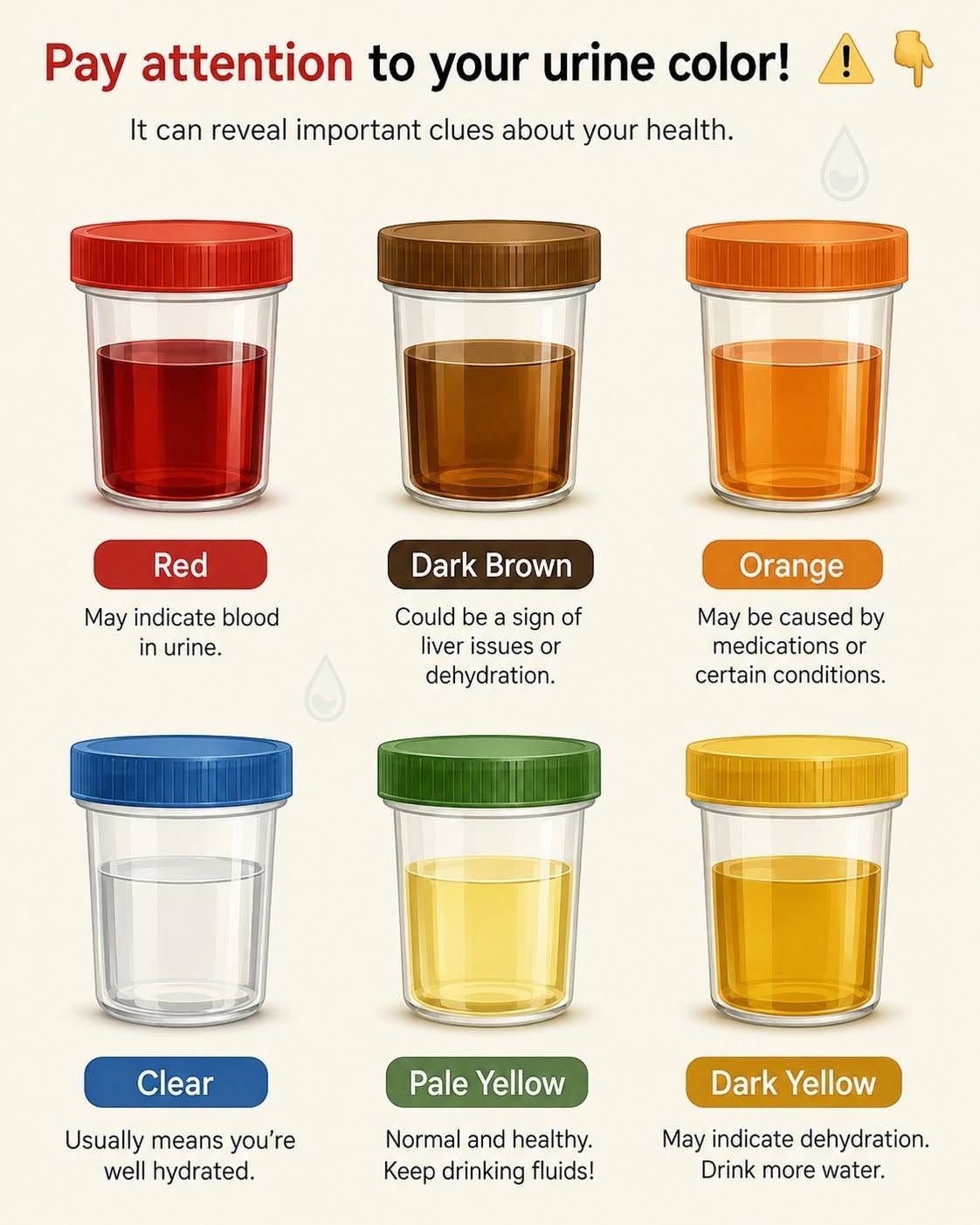
Most of us don’t pay much attention to the color of our urine unless something seems unusual. However, this everyday detail can offer valuable clues about your hydration, diet, medications, and, in some cases, your overall health.
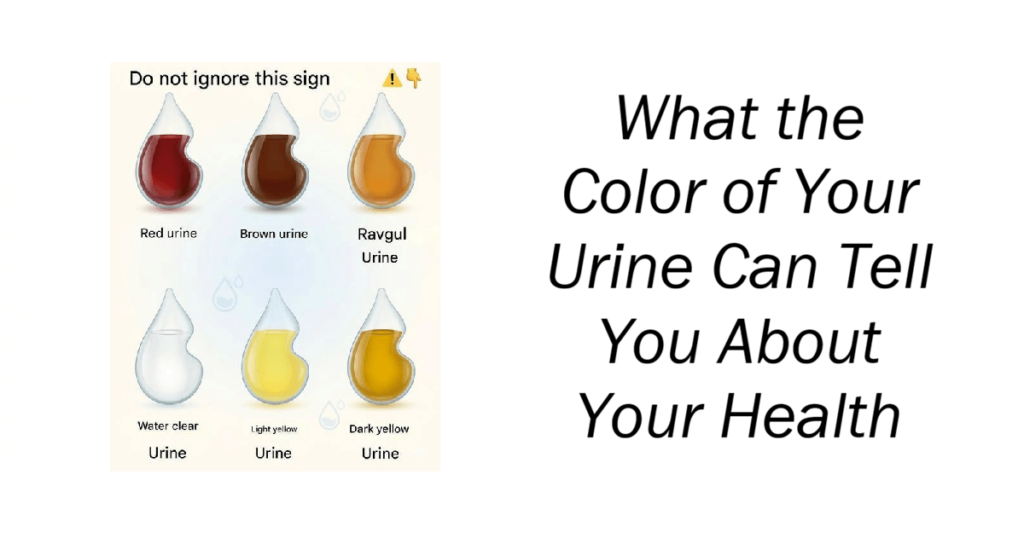
While occasional changes in urine color are often harmless, persistent or dramatic changes shouldn’t be ignored. Understanding what different colors may mean can help you know when a simple lifestyle change is enough—and when it’s time to speak with a healthcare professional.
Why Does Urine Change Color?
Urine gets its yellow color from a natural pigment called urochrome, which is produced when the body breaks down old red blood cells.
The amount of water in your urine determines how light or dark that yellow appears. Well-hydrated people usually have lighter urine, while dehydration causes urine to become darker and more concentrated.
Other factors that can affect urine color include:
Foods
Vitamins and supplements
Prescription medications
Certain medical conditions
Clear or Nearly Transparent Urine
Crystal-clear urine often means you’re drinking a large amount of water.
Continue Reading  Next Page
