
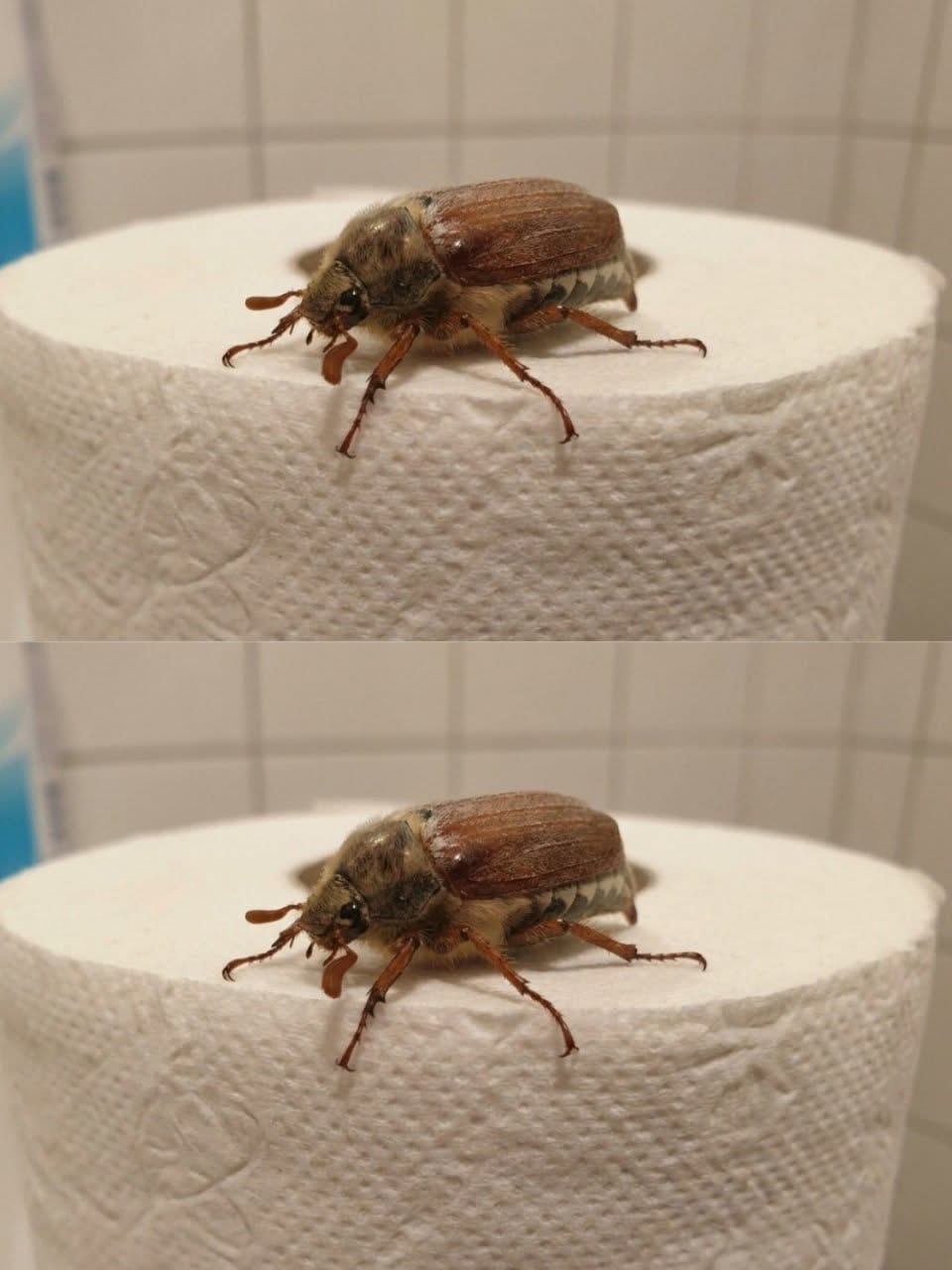
 What NOT to Do
- Don’t squash it (messy and unnecessary)
- Don’t flush it (ineffective and inhumane)
- Don’t use insecticide indoors (overkill and unhealthy)
 Will More Come Inside?
Probably not.
Cockchafers:
- Have a very short active season (4–6 weeks)
- Do not breed indoors
- Require soil and plant roots for their lifecycle
You might see one or two more if lights are on and windows are open at night—but that’s it.
 How to Prevent Future Visitors
- Keep windows closed or screened during spring evenings
- Use dimmer or yellow “bug” lights
- Turn off unnecessary lights at night
 A Final Note
While adult cockchafers can nibble on leaves, they also play a role in ecosystems. Their larvae help break down organic matter, and both stages are an important food source for wildlife like birds and bats.
Their return in some areas is even considered a positive sign of improving biodiversity.
 The Bottom Line
| Question | Answer |
|---|---|
| Is it dangerous? | No |
| Will it bite? | No |
| Is my home infested? | No |
| Should I call pest control? | No |
| What should I do? | Turn off lights, open a window, or release it |
