
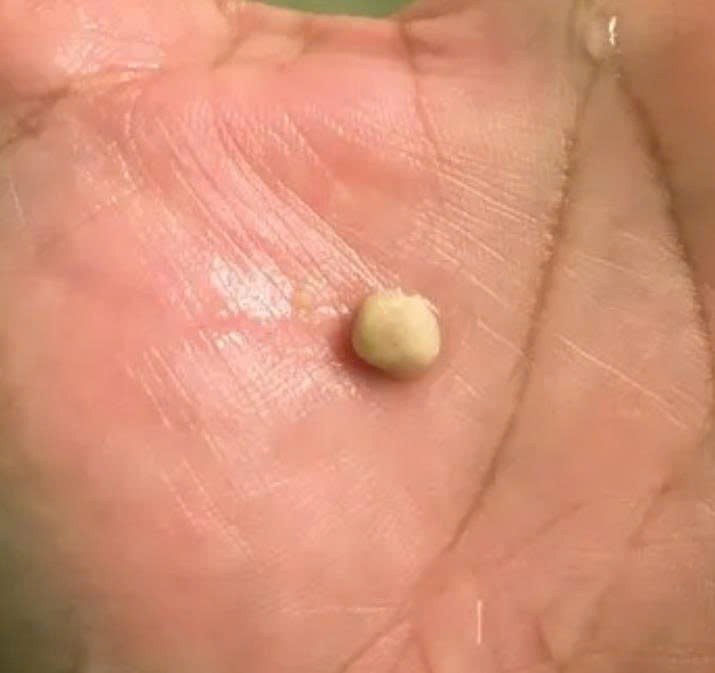
🟡 What is a tonsil stone?


6
A tonsil stone is a small, hardened lump that forms in the tiny crevices (crypts) of your tonsils. It’s made from:
- Food debris
- Dead cells
- Bacteria
- Mucus
Over time, this material builds up and calcifies into a small white or yellow stone—like the one you’re holding.
🔍 Why do they form?
Common reasons include:
- Deep or irregular tonsil crypts
- Poor oral hygiene
- Frequent throat infections
- Bacteria buildup in the mouth
⚠️ Common symptoms


6
Sometimes there are no symptoms, but you might notice:
- Bad breath (very common)
- Feeling something stuck in your throat
- Mild discomfort when swallowing
- Unpleasant taste
🧼 How to deal with it
You can usually manage it at home:
- Gargle with warm salt water
- Maintain good oral hygiene (brush teeth & tongue)
- Stay hydrated
- Gently remove it if it comes out easily
⚠️ Avoid using sharp objects or forcing it out.
🏥 When to see a doctor
Seek medical advice if:
- They happen very frequently
- You feel pain or swelling
- You have fever or signs of infection
- The stone is large or hard to remove
💡 Is it dangerous?
In most cases: No.
They’re more annoying than harmful, and good oral hygiene usually helps prevent them.
