
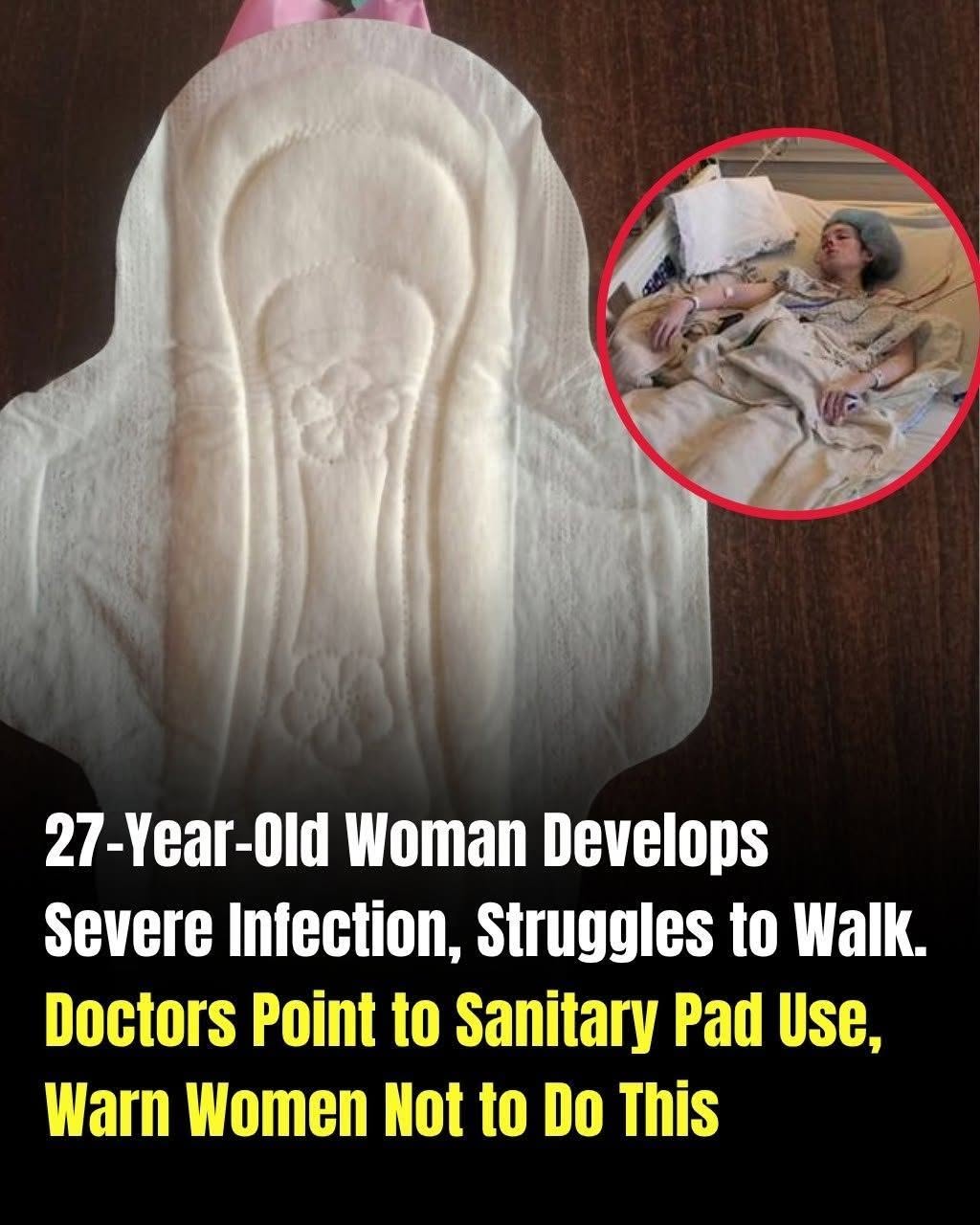


A viral social media post has sparked concern by claiming that a 27-year-old woman developed a severe infection and struggled to walk because of her sanitary pad use. Accompanied by a dramatic image of a woman in a hospital bed and a warning directed at women, the post has been widely shared across social media platforms. As with many viral health stories, however, the headline raises more questions than it answers.
Health experts warn that viral posts often lack important medical details and can sometimes create unnecessary fear. While infections related to poor menstrual hygiene can occur, determining the exact cause of a medical condition requires a thorough medical evaluation rather than a social media caption.
Understanding the Safety of Sanitary Pads
Sanitary pads are among the most commonly used menstrual hygiene products worldwide. They are designed to absorb menstrual flow safely and comfortably during a woman’s period. When manufactured according to safety standards and used correctly, sanitary pads are generally considered safe for the vast majority of users.
Millions of women rely on sanitary pads every month without experiencing serious health complications. Nevertheless, improper use, prolonged wear, poor hygiene practices, or individual sensitivities can sometimes contribute to irritation or infection.
Experts emphasize that menstrual products should not automatically be considered dangerous simply because an isolated health incident is reported online. Instead, each case should be examined based on medical evidence and individual circumstances.
How Problems Can Develop
Although severe infections linked directly to sanitary pads are uncommon, several factors may increase the risk of health issues.
Extended Wear
One of the most common mistakes is wearing the same pad for too long. A warm and moist environment may encourage bacterial growth, particularly during heavy menstrual flow. Regular pad changes help reduce this risk.
Skin Irritation
Friction from prolonged contact with a pad can sometimes cause redness, discomfort, or skin irritation. This is especially common in hot weather or during physical activity.
Allergic Reactions
Some women may be sensitive to fragrances, dyes, adhesives, or other materials found in certain menstrual products. Allergic reactions can lead to itching, rashes, or inflammation.
Inadequate Hygiene
Failing to wash hands before and after changing menstrual products may increase the likelihood of introducing bacteria to sensitive areas. Good hygiene remains one of the most effective methods for preventing infection.
Can Sanitary Pads Cause Severe Infections?


Medical professionals generally agree that severe infections directly caused by sanitary pads are rare. In many reported cases, additional factors are involved, such as underlying health conditions, weakened immunity, skin injuries, or delayed medical treatment.
For example, individuals with diabetes, immune system disorders, or chronic illnesses may be more vulnerable to infections than the general population. In such situations, an infection may develop more rapidly or become more severe.
Without access to medical records, laboratory findings, and a physician’s diagnosis, it is impossible to determine whether a sanitary pad was solely responsible for the illness described in a viral social media post.
This highlights an important principle: correlation does not necessarily mean causation. Just because a person used a sanitary pad before becoming ill does not automatically prove that the pad caused the infection.
Warning Signs Women Should Never Ignore
Continued on next page:<!–nextpage–>
