
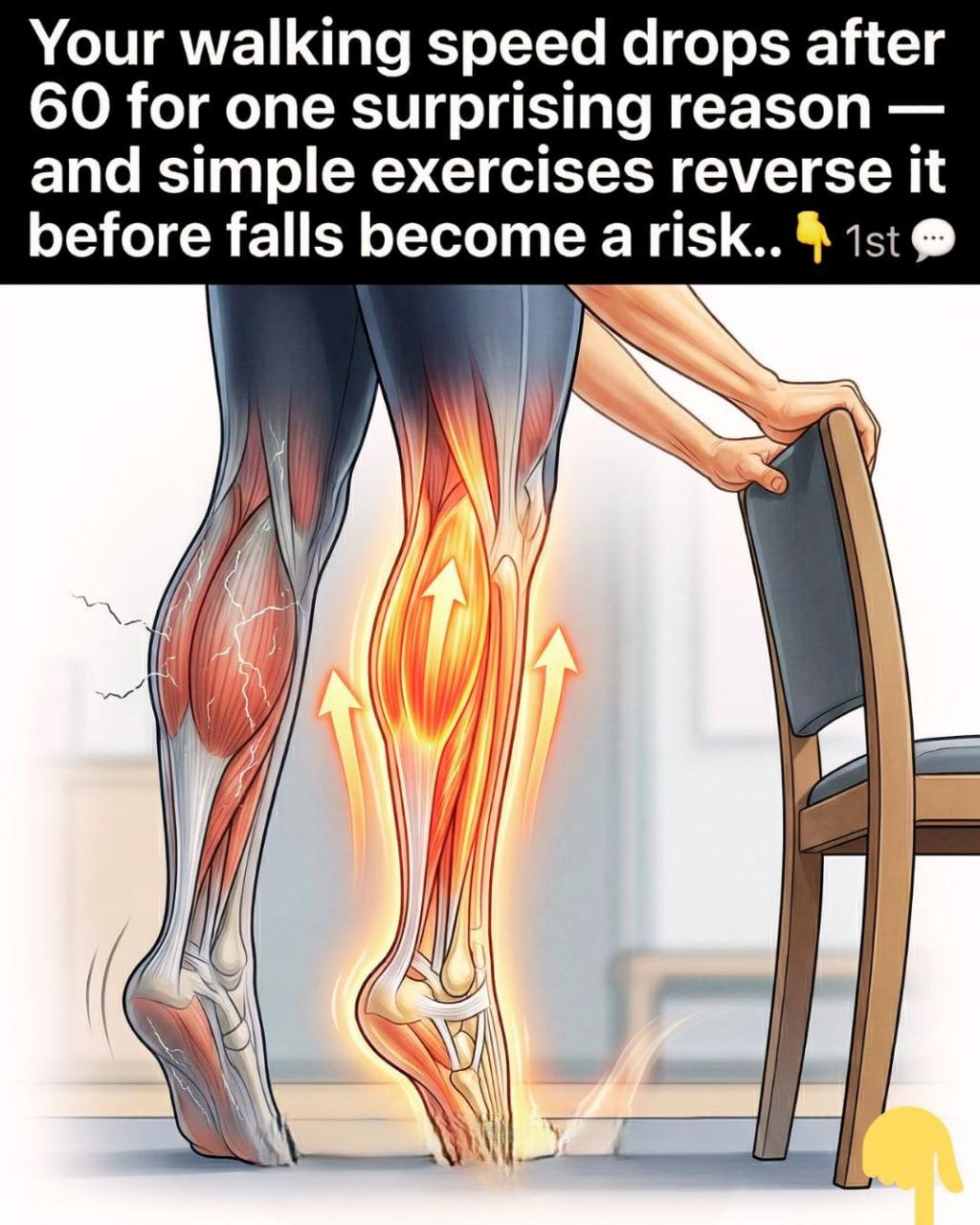
Ever noticed how walking feels tougher as you get older? If you’re over 60 and find that simple strolls aren’t as easy as they used to be, you’re not alone—and it’s not just “getting old.” The reasons might surprise you, and the good news is that you can start improving things today.
Walking is one of the most basic forms of movement we do every day. But did you know that how fast you walk can predict how long you’ll live—even more than your medical conditions? If that caught your attention, keep reading. We’ll explore why walking slows down after 60 and, more importantly, the simple exercises that can help put a spring back in your step.
Key Takeaways
- Slower walking after 60 is a major health warning sign—not just a nuisance.
- Weakened calf muscles are a leading reason people take shorter, slower steps as they age.
- Simple exercises can rebuild calf strength and boost walking speed.
- Just a couple of weeks of targeted exercise can make a noticeable difference.
- Staying active is key to independence and longevity.
1. Walking Speed Drops After 60: It’s Not Just Aging
More than 1 in 4 women and 1 in 6 men over 60 experience a decline in walking speed, and for many, it becomes more noticeable after 70. While it may seem like a normal part of aging, research shows it’s more significant than that. Walking speed is a strong predictor of overall health and even lifespan. People who maintain a brisk pace at 75 are much more likely to live another 5 to 10 years compared to slower walkers.
2. The Surprising Culprit: Weak Calf Muscles
So why do we slow down? It’s not just about fatigue or breathing—the real issue is often the calf muscles. These muscles act like engines that power every step. As we age, they lose strength, making each step require more effort. Studies show that older adults can use up to 16% more energy to walk at the same speed as younger people, largely due to weaker calves.
3. Shorter Steps Make Walking Feel Harder
Slower walking isn’t just about speed—older adults also tend to take shorter steps. With weaker calf push-off, stride length decreases. The shorter the steps, the slower the pace, and the more effort walking requires.
4. Spot the Signs Early
Walking speed often declines gradually, so many people don’t notice until it becomes a real challenge. By then, it can be harder to reverse. That’s why it’s important to act early—if walking feels more tiring than before or your pace slows, take it seriously.
5. Simple Calf Exercises to Boost Your Walking
Continued on next page:
