
Because purslane is a highly resilient plant, it loves to grow in driveway cracks, along roadsides, and in heavily managed lawns.
- The Danger: Plants in these areas are often covered in toxic chemical herbicides, pesticides, motor oil, or animal waste. Because purslane hugs the ground tightly, its sprawling stems also trap a lot of grit, sand, and soil splashing up from the rain.
- How to Avoid It: Only pick purslane from areas you know are completely free of chemical sprays, such as your own organic garden or pesticide-free farm beds. Avoid roadsides entirely.
Checklist for Safe Preparation
To ensure your harvest is safe, clean, and ready for homemade meals, follow these simple preparation steps:
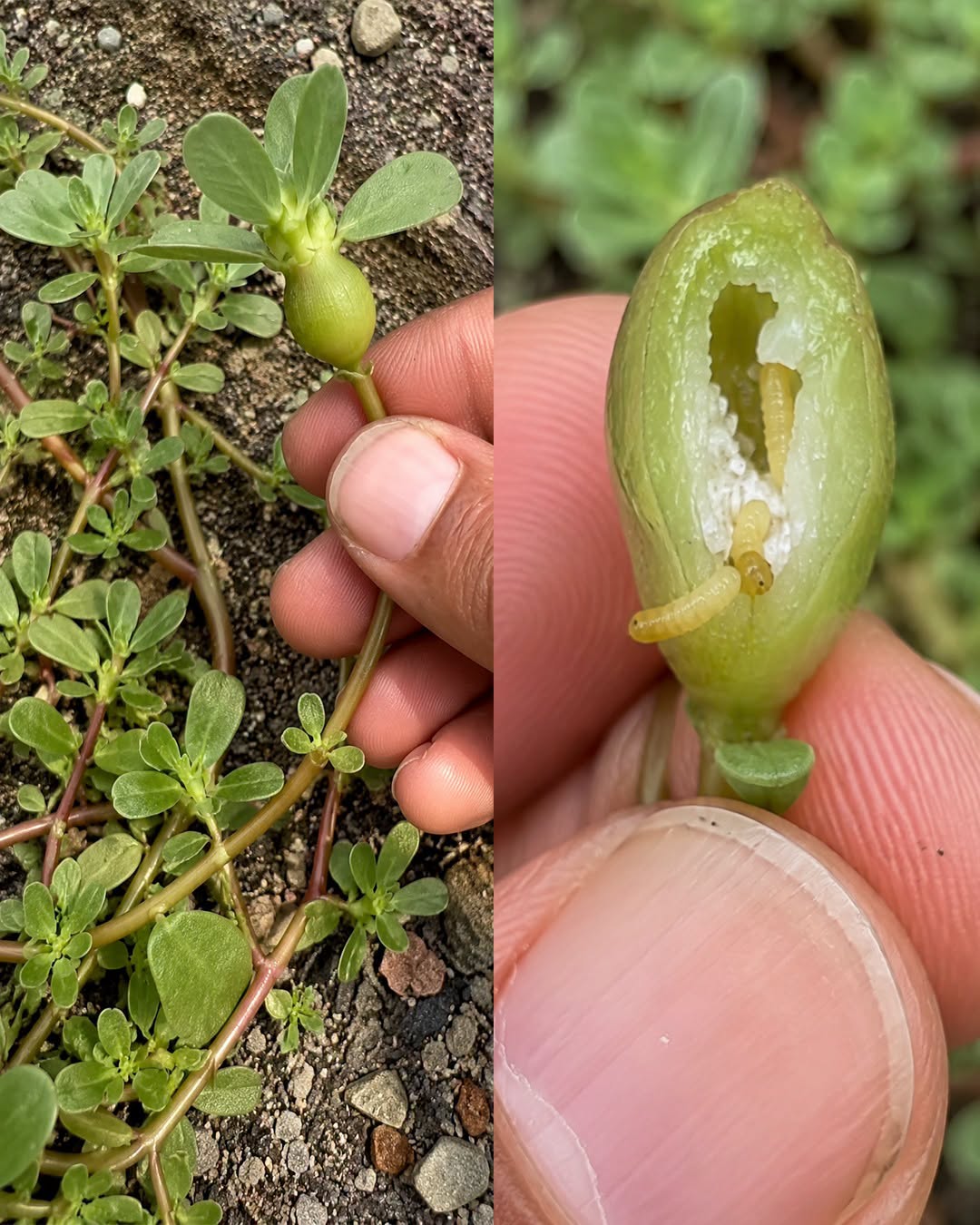
- Isolate and Inspect: Spread your freshly picked harvest out on a bright table. Inspect every single stem for those bulbous galls or hidden insect damage. Discard any swollen stems.
- Verify the Sap: Break a few stems randomly to confirm the sap is clear, guaranteeing no toxic spurge sneaked into your pile.
- Trim the Base: Cut off the bottom roots and the thickest, toughest lower stems, keeping only the tender upper leaves and stems for eating.
- The Deep Soak: Submerge the greens in a large bowl of cold water. Swish them around vigorously to knock loose any hidden dirt, sand, or small surface bugs. Let the dirt settle to the bottom of the bowl, then gently lift the clean purslane out of the top.
Purslane is an incredible wild food that costs nothing to grow. By taking a few extra minutes to check for swollen insect galls, confirming clear sap, and washing the leaves thoroughly, you can safely enjoy this powerful plant in your everyday cooking without any unwelcome surprises.
