
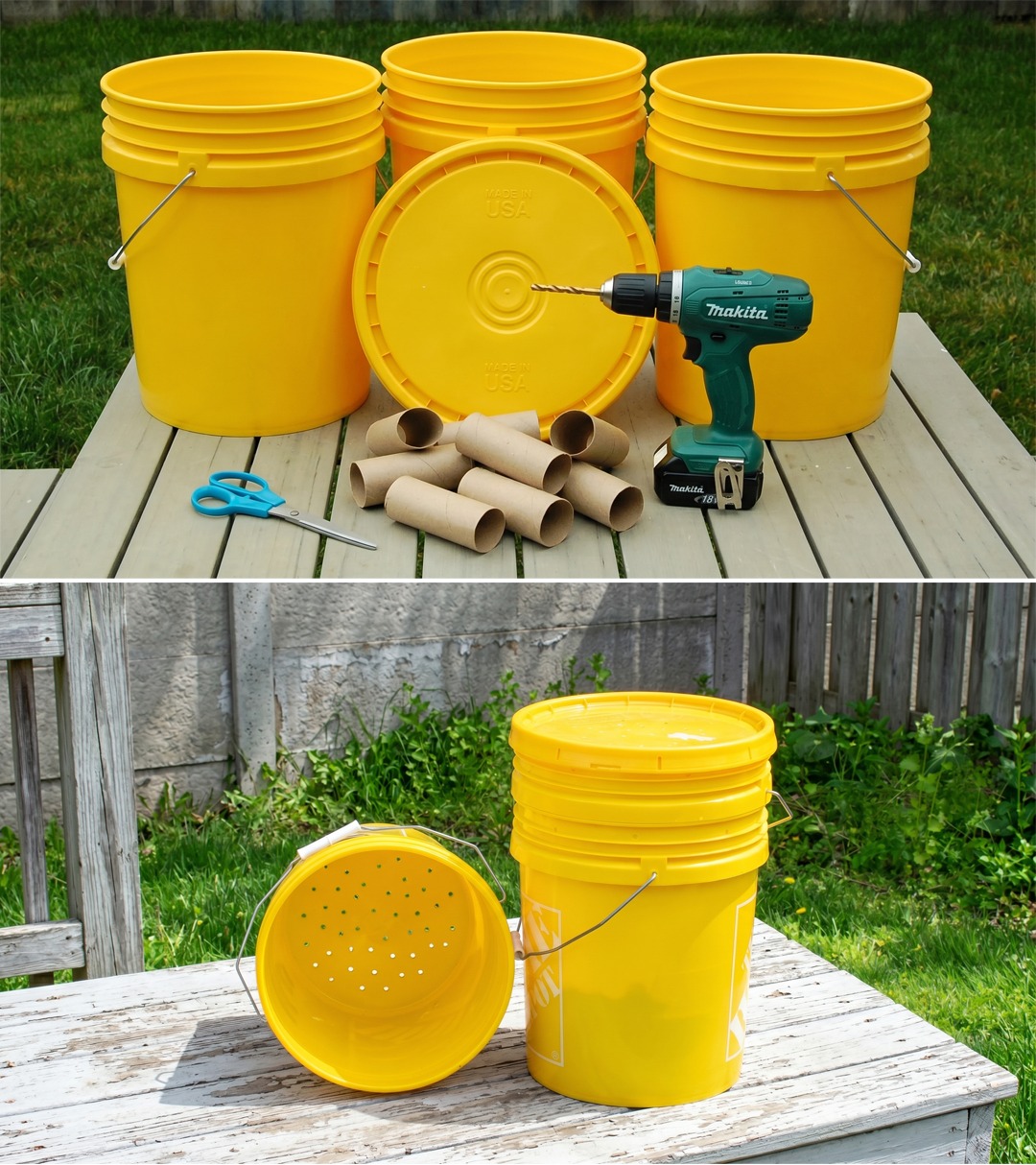
3. Add Organic Material
Start with moist materials like vegetable scraps, fruit peels, shredded paper, leaves, and coffee grounds.
Avoid overloading it all at once.
4. Cover the Top
Use a lid, wood cap, or mesh cover to help prevent pests, excess rainwater, and odors.
5. Let the Worms Work
Within days or weeks, worms begin feeding and transporting nutrients into the surrounding soil.
Over time, the nearby plants often become noticeably healthier.
What You Can Put Inside
Worm towers work best with soft organic materials that break down quickly.
Good materials include:
- Vegetable scraps
- Fruit peels
- Coffee grounds
- Tea leaves
- Crushed eggshells
- Shredded cardboard
- Dry leaves
- Small plant trimmings
What to Avoid
Some materials can attract pests or slow decomposition.
Avoid adding:
- Meat
- Dairy products
- Oily foods
- Large amounts of citrus
- Pet waste
- Diseased plants
Keeping a balanced mix of moist and dry materials also helps prevent odors.
Best Places to Install a Worm Tower
Worm towers work especially well in:
- Raised garden beds
- Tomato beds
- Vegetable gardens
- Greenhouses
- Large containers
- Herb gardens
- Fruit tree guilds
Many gardeners place them near heavy-feeding plants like tomatoes, squash, cucumbers, or peppers because these crops benefit greatly from the steady nutrient supply.
The Secret Happening Underground
The real magic of a worm tower isn’t visible from above the soil.
Below the surface, worms create microscopic highways through the earth. Beneficial bacteria multiply. Fungi spread through root zones. Organic matter transforms into living nutrition.
Instead of forcing fertility into the soil with synthetic products, the garden begins feeding itself naturally.
And perhaps that’s why so many gardeners become obsessed with worm towers after trying one.
Not because they’re complicated.
But because they quietly imitate the way nature has recycled nutrients for millions of years.
