
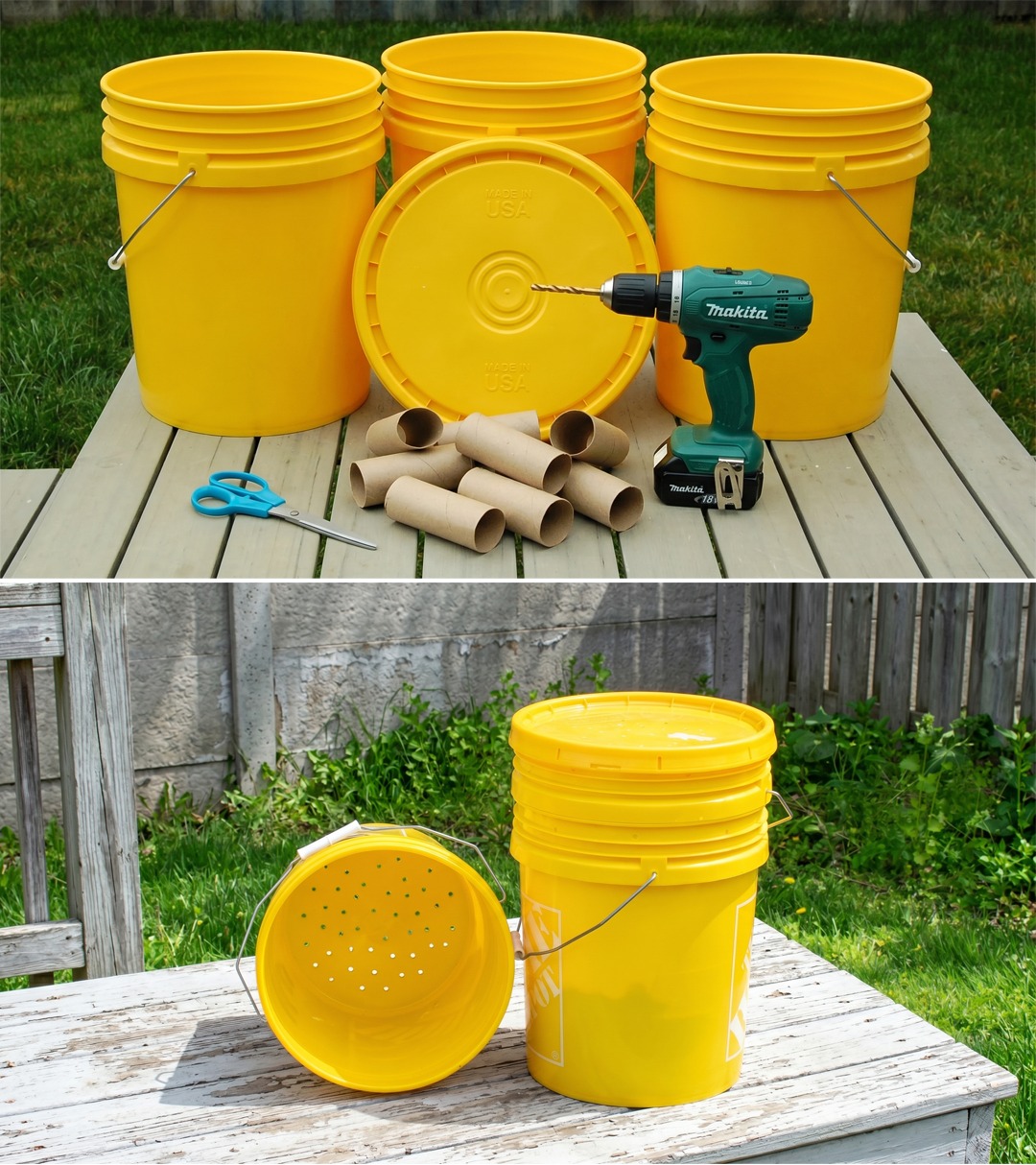
There’s something strangely satisfying about turning food waste into rich, living soil. Instead of tossing vegetable peels, coffee grounds, and wilted lettuce into the trash, gardeners around the world are burying them directly into their gardens using a simple system called a worm tower.
It looks almost too simple to work.
A vertical tube buried in the soil. A few holes drilled into the sides. Kitchen scraps dropped inside. Worms moving quietly underground.
But beneath the surface, an entire ecosystem comes alive.
The worms pull nutrients into the soil, improve drainage, feed beneficial microbes, and naturally fertilize nearby plants — all while helping reduce household waste. And unlike traditional compost piles, worm towers require very little space, maintenance, or turning.
For raised beds, small gardens, or even large containers, they can become one of the easiest low-effort composting systems you’ll ever use.
What Is a Worm Tower?
A worm tower is essentially an underground feeding station for composting worms.
Most gardeners make one using a length of PVC pipe, a large plastic bottle, or another sturdy vertical container with ventilation holes. The bottom section is buried deep into the soil while the top remains above ground with a lid to keep pests and rain out.
Kitchen scraps are added directly into the tube.
Worms and soil organisms enter through the holes, feed on the decomposing material, and carry nutrients into the surrounding soil naturally.
Instead of transporting compost around the garden later, the composting process happens exactly where plants need it most.
Why Gardeners Love Worm Towers
Traditional compost bins can be bulky, slow, and sometimes messy.
Worm towers simplify the process dramatically.
They Feed Plants Naturally
As worms break down organic matter, they produce castings — one of the richest natural fertilizers available. These castings slowly release nutrients into the soil around the tower.
Plants nearby often grow faster, greener, and healthier.
They Improve Soil Structure
Worm tunnels help loosen compacted soil, allowing better airflow and water absorption. This creates healthier root systems and reduces runoff after rain.
They Reduce Household Waste
Fruit peels, vegetable scraps, crushed eggshells, tea bags, coffee grounds, and other organic leftovers can all become part of the system instead of ending up in the trash.
They Work in Small Spaces
Even tiny raised beds or container gardens can support a worm tower. Some gardeners install multiple towers throughout larger beds for even nutrient distribution.
They Require Very Little Maintenance
No turning. No complicated layering systems. No massive compost pile to manage.
Just feed the tower regularly and let nature handle the rest.
How to Make a Simple Worm Tower
One of the reasons worm towers became so popular online is because almost anyone can build one with basic materials.
What You’ll Need
- A PVC pipe or sturdy plastic tube
- Drill or sharp tool for ventilation holes
- A lid or cover
- Soil space or a raised bed
- Kitchen scraps
- Composting worms or naturally occurring earthworms
Step-by-Step Setup
1. Drill Ventilation Holes
Add holes around the lower section of the tube. These openings allow worms and microorganisms to move in and out freely.
Leave the top section mostly solid above the soil line.
2. Bury the Tower
Place the tower vertically into the garden bed so that most of it sits underground while several inches remain above the surface.
The deeper portion should reach close to root level.
3. Add Organic Material
Continued on next page:
