
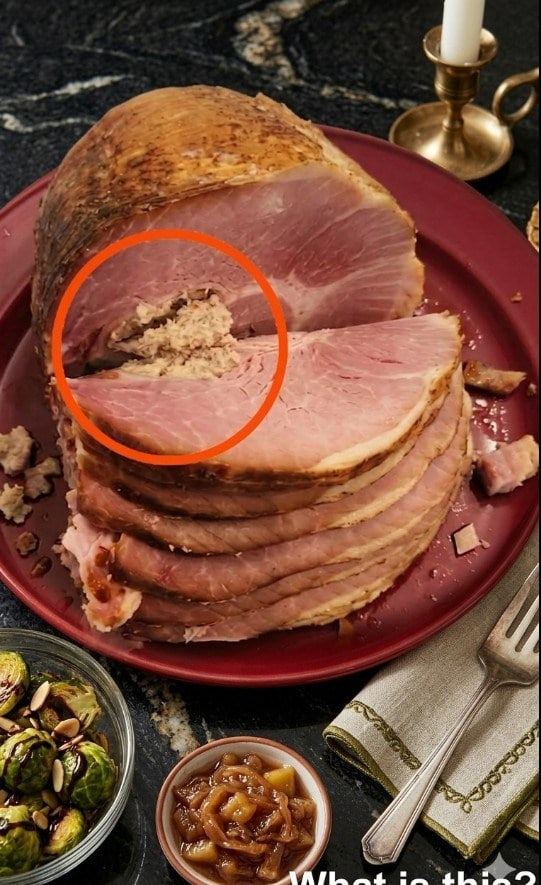
This is often a sign of bacterial growth.
Even if the ham doesn’t smell terrible yet, this texture change is a red flag.
What to do:
Do not eat it
Discard it immediately
This is one of the clearest indicators that the ham has gone bad.
6. Green or Gray Discoloration
Unlike the harmless rainbow sheen, flat green or gray patches are not a good sign.
This type of discoloration can indicate:
1. Smell
Fresh ham should smell:
Mild
Slightly salty or smoky
If it smells:
Sour
Rotten
Like ammonia
Throw it out.
2. Texture
Good ham:
Slightly moist
Firm but tender
Bad ham:
Slimy
Sticky
Excessively mushy
3. Expiration Date
Always check:
“Use by” date for safety
“Best before” for quality
Even if it looks okay, expired ham can still be risky.
4. Storage Conditions
Ham should be:
Refrigerated at all times
Sealed properly
If it’s been left out for more than 2 hours at room temperature, it’s safer to discard it.
Why These Marks Happen in the First Place
It all comes down to how ham is made.
The curing, smoking, and processing methods create a wide range of visual variations. Add in factors like:
