
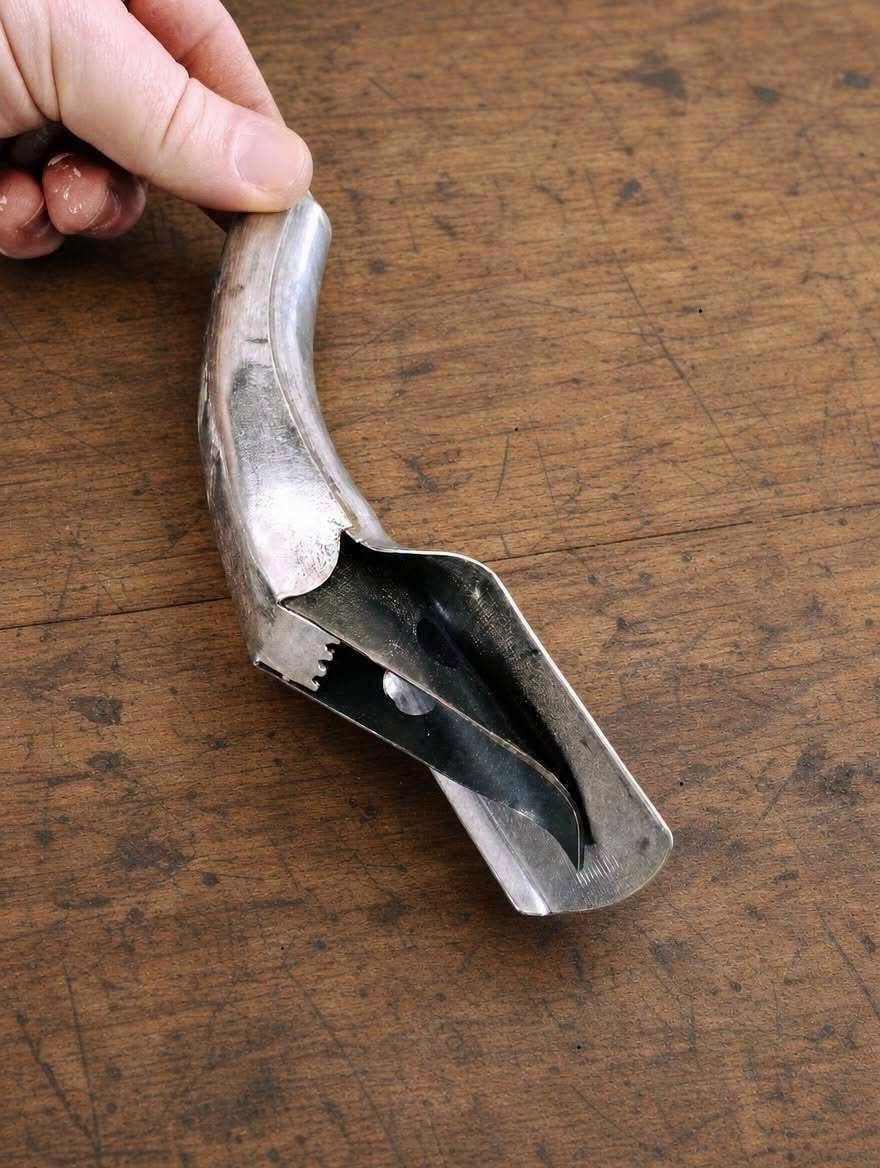
For years, a man kept an unfamiliar metal tool inherited from his father. It had no label, instruction sheet, or obvious modern equivalent. Its unusual shape and complicated-looking parts made him imagine specialized industrial machinery, yet his father never explained it and responded to questions only with a knowing smile.
The object became a family mystery because the everyday context that once made it recognizable had disappeared. Tools are often designed around containers, materials, and routines that later generations no longer use. When the surrounding system vanishes, a practical object can look far more complicated than it ever was.
Eventually, the man showed it to an experienced mechanic. Recognition was immediate. The strange device was a vintage oil can opener, made for the metal cans commonly used before modern plastic bottles, pull tabs, and screw caps changed how oil was packaged and poured.
