
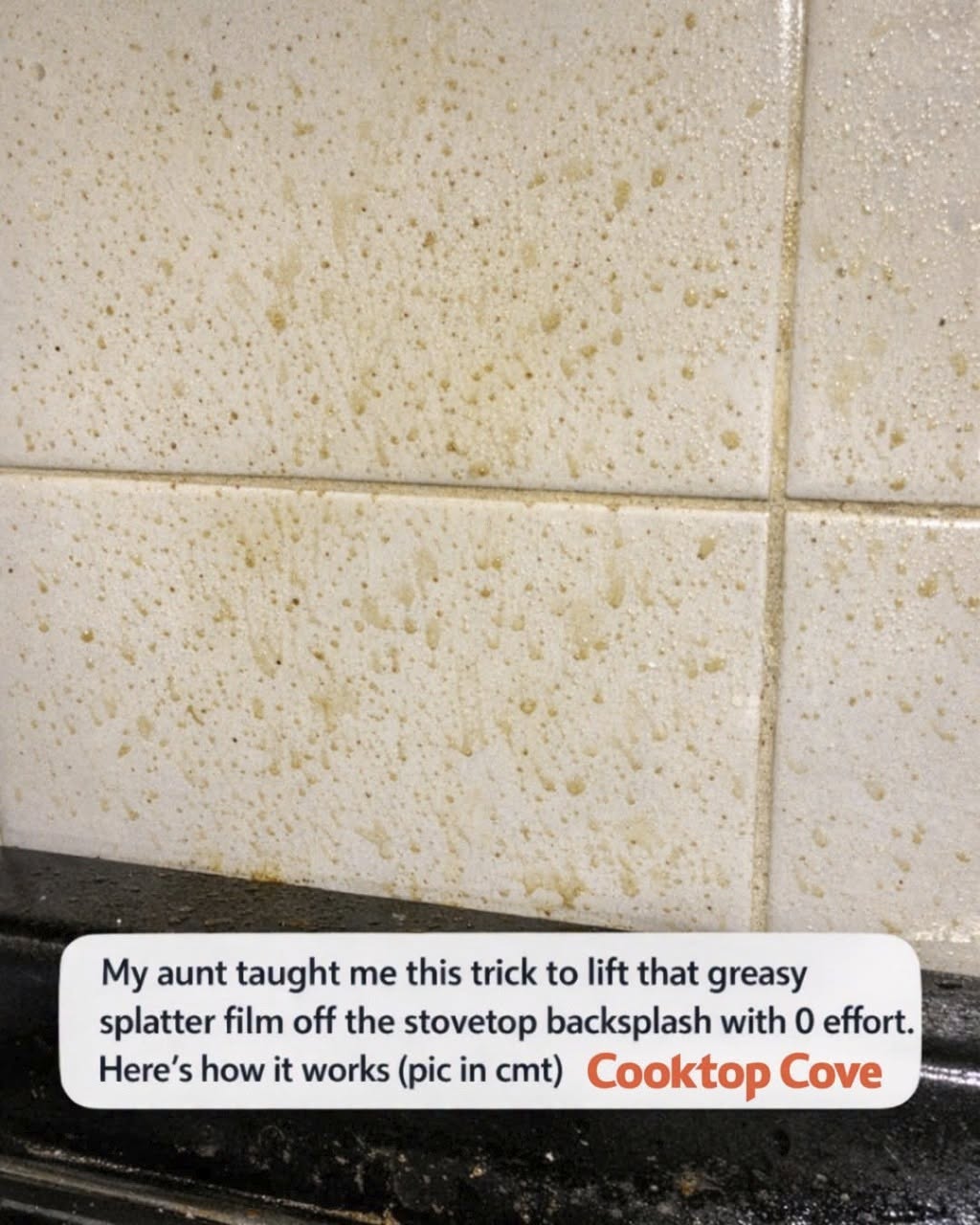
I’ve found microfiber cloths remove that softened film far better than standard cellulose sponges. The fine fibers grab greasy residue instead of just pushing it around. A sponge often smears the film into a thinner invisible layer that still feels sticky when it dries.
Use one cloth for loosening and washing, then switch to a second clean damp microfiber for rinsing. That second pass is what removes the last of the dissolved grease. If your cloth starts dragging, rinse it in hot water and keep going with a clean section.
8. A simple method for tile and grout
Tile is usually the easiest surface because it tolerates moisture well, but grout can hold onto oily residue. After the warm towel step, wipe the tile face first, then go back over grout lines with the corner of a damp cloth. On textured tile, I fold the cloth over my fingertip to press into shallow grooves.
If the grout is still dingy, make a mild paste with 1 tablespoon baking soda and just enough water to form a spreadable texture. Apply it only to the grout, leave it for 5 minutes, then wipe away gently. I avoid this on glossy finishes where excess rubbing can dull the shine.
9. How I handle glass, stainless, and glossy panels
Glass backsplashes and stainless panels show every streak, so the final wipe matters. After cleaning with the warm cloth and a tiny amount of dish soap, rinse with a separate cloth dampened in plain warm water. Then buff dry immediately with a lint-free microfiber.
On stainless steel, wipe with the grain if it is visible. On glass, I finish with long horizontal strokes, then vertical strokes, to catch any missed haze. If you leave water droplets to air-dry, they can create a cloudy look that makes you think grease is still there when it’s really just mineral residue.
10. Painted walls need a lighter touch
If the backsplash area is painted drywall rather than tile, treat it more gently. Use a soft cloth that is only lightly damp, not wet, and test in a hidden spot first. Flat or matte paint is more delicate than satin or semi-gloss. In my experience, semi-gloss in kitchens cleans far more easily than flat paint.
For painted surfaces, I skip anything abrasive and keep the soap concentration low, usually 1 drop in a cup of warm water. Wipe, then dry right away. Too much moisture can soften paint or leave tide marks.
11. What not to use if you want the finish to stay nice
I avoid steel wool, scouring powder, melamine foam used aggressively, and strong degreasers unless the surface manufacturer specifically recommends them. Abrasives can create micro-scratches, especially on glossy tile, stainless steel, enamel, and acrylic panels. Those scratches trap more grease over time and make future cleaning harder, not easier.
I’m also cautious with straight vinegar on natural stone such as marble, travertine, or limestone because acid can etch the surface. If you’re unsure what your backsplash is made of, stick with warm water and a tiny amount of dish soap first.
12. The best way to clean heavy buildup without scrubbing
If the film has been sitting for months, one pass may not be enough. In that case, repeat the warm towel step twice rather than reaching immediately for more force. I’ll do 5 minutes of warm compress, wipe, then another 5 minutes and wipe again. Two gentle rounds nearly always outperform one aggressive scrubbing session.
For especially stubborn spots right behind the largest burner, lay a soapy damp cloth against the area for another 3 minutes before wiping. That extra dwell time can be the difference between “still tacky” and fully clean.
13. A 5-minute maintenance routine that prevents the problem
The easiest way to keep the backsplash from developing that greasy skin again is to wipe it while the kitchen is still slightly warm after cooking dinner. Not hot, just warm. I keep a microfiber cloth under the sink, dampen it with warm water plus a dot of dish soap, and wipe the area behind the burners in about 60 to 90 seconds.
Then I follow with a plain damp cloth and a quick dry towel. Done 2 or 3 times a week, this prevents the buildup that eventually turns into a bigger cleaning job. In practical terms, 90 seconds now can save 15 minutes later.
14. When a splatter screen is worth using
If you fry often, a splatter screen helps more than people think. It won’t stop every fine mist of oil, but it can cut down a surprising amount of mess during bacon, cutlets, sausage, and shallow frying. I still clean the backsplash, but the film builds much more slowly when I use one.
Look for a screen that fits your most-used skillet, usually 10 to 12 inches, and make sure it has a stable handle. It’s a small tool, but for high-splatter cooking it genuinely reduces cleanup.
15. The biggest mistake people make
The most common mistake is trying to remove grease with muscle before softening it. That’s what I used to do: spray, scrub, get annoyed, repeat. All that really achieved was spreading the residue around and making my arm tired.
Once I switched to my aunt’s approach, the job became almost boring, which is exactly what you want from kitchen cleaning. Warmth, moisture, a little soap, and patience for 3 to 5 minutes beat frantic scrubbing every time.
16. My exact quick routine from start to finish
If you want the shortest version, here’s mine. First, clear the items near the backsplash. Second, press a hot damp microfiber cloth against the greasy area for 3 to 5 minutes. Third, wipe with a cloth carrying a tiny drop of dish soap. Fourth, rinse with a fresh damp cloth. Fifth, dry with a towel or buffing cloth.
On an average weeknight mess, the whole thing takes me about 6 to 8 minutes, and only about 2 minutes of that is actual hands-on wiping. That is why I still call it a “0 effort” trick. You’re not working harder. You’re just finally letting the method do the work.
