
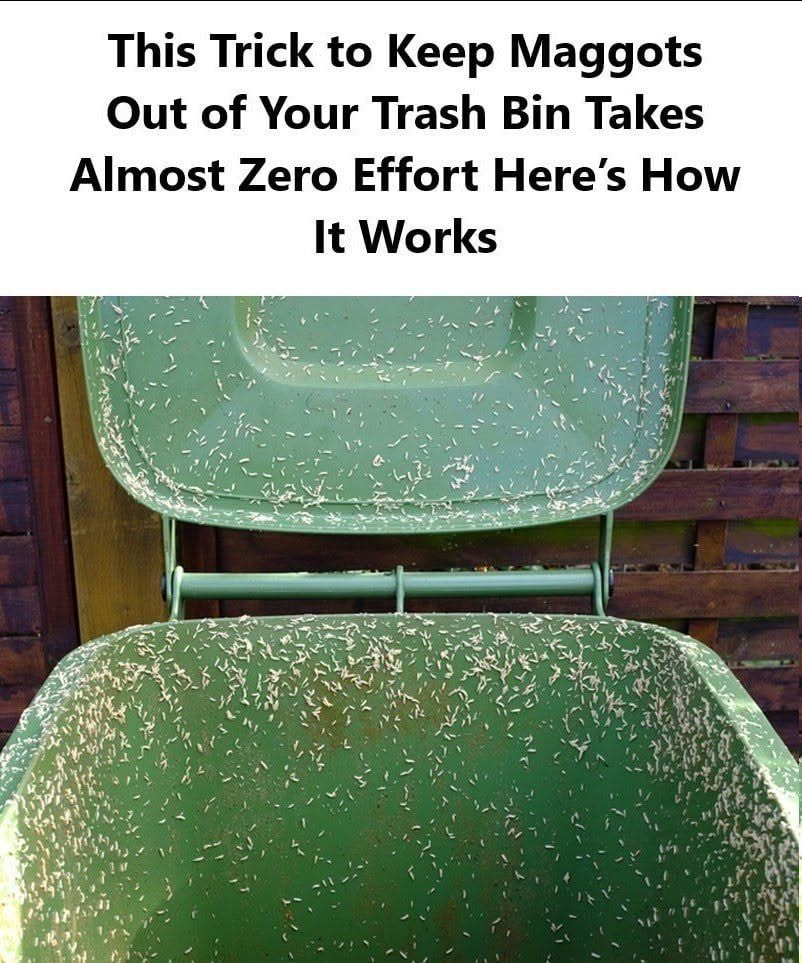
Nothing is more unpleasant than lifting the lid of your garbage bin and discovering small white larvae moving around the bottom, underneath a trash bag, or among discarded food. If you have experienced it before, you probably want to make sure it does not happen again.
The reassuring part is that maggots do not simply appear inside a trash can. In household garbage, they are typically fly larvae that develop after adult flies find suitable organic waste and lay eggs. Warm temperatures, moisture, food residue, and strong odors can make a garbage bin particularly attractive to flies.
Understanding this simple life cycle is the key to prevention. Instead of trying to deal with maggots repeatedly, you can make the trash bin a much less attractive place for flies in the first place.
What Exactly Are Maggots?
Maggots are the larval stage of certain flies. Houseflies and blowflies are among the flies commonly associated with household garbage and decomposing organic material.
Adult flies search for places where their offspring will have access to food after hatching. Rotting food and other organic waste provide an ideal environment.
When a fly reaches exposed garbage, it may lay eggs on or near the decomposing material. Under favorable warm conditions, development can happen quickly. The larvae then feed on the available organic matter before eventually progressing to later stages of the fly life cycle.
This explains why a trash can that looked normal recently can suddenly appear to have a significant maggot problem.
Why Are Flies Attracted to Garbage Bins?
A garbage bin can offer almost everything certain flies are looking for: food, moisture, warmth, and a protected environment.
Some types of household waste are especially attractive because they begin producing strong odors as they decompose.
Common examples include meat scraps, fish and seafood waste, dairy residue, discarded leftovers, spoiled fruits and vegetables, food-covered packaging, and other organic material.
Even apparently empty food containers can retain enough residue and odor to attract flies.
Warm Weather Can Make the Problem Worse
Maggot problems are often more noticeable during warmer months. Higher temperatures accelerate the decomposition of food and can also support faster development of many common flies.
A garbage bag containing meat scraps may begin producing noticeable odors relatively quickly when left inside a warm outdoor bin.
Those odors can attract flies from the surrounding area.
This is why waste-management habits that work perfectly well during cooler weather may need to become more rigorous during summer.
Moisture Matters Too
Temperature is not the only factor. Moisture inside the bin can also create favorable conditions.
Liquids leaking from food packaging, condensation, rainwater entering an outdoor bin, or a garbage bag that tears can leave the bottom of the container wet.
Combined with decomposing organic material, this can produce an environment where flies are more likely to investigate.
Keeping the bin relatively clean and dry therefore plays an important role in prevention.
1. Bag Food Waste Carefully
One of the simplest ways to prevent maggots is to limit flies’ access to food waste.
Avoid throwing loose meat scraps, leftovers, fish waste, or spoiled food directly into the garbage bin whenever possible.
Instead, place food waste inside a securely closed garbage bag. Particularly messy or strongly scented waste can be placed inside a smaller sealed bag before being added to the main garbage bag.
This additional barrier can help contain both liquids and odors.
Before placing the main bag in the bin, check for tears or holes that could allow food residue to leak out.
2. Tie Garbage Bags Securely
A loosely closed garbage bag allows odors to escape and can potentially give flies access to the contents.
Use bags that can be tied securely or bags equipped with drawstrings.
Try not to overfill them. An overfilled garbage bag is more difficult to close properly and more likely to tear when removed.
Closing the bag securely also helps prevent food residue from spreading throughout the inside of the garbage container.
3. Take the Garbage Out Regularly
Allowing organic waste to remain inside a warm garbage bin for extended periods gives it more time to decompose and produce odors.
During particularly warm weather, consider removing kitchen garbage more frequently, especially when it contains meat, fish, dairy products, or other rapidly decomposing foods.
You do not necessarily need to wait until a garbage bag is completely full.
If the bag contains strongly scented food waste and collection or disposal is available, removing it sooner can make the bin considerably less attractive to flies.
4. Keep Meat and Fish Scraps Cold Until Collection Day
One practical strategy can be particularly useful for households where garbage collection occurs only once or twice per week.
Instead of leaving strongly scented meat or fish scraps inside an outdoor garbage bin for several hot days, place them inside a securely sealed container or bag and keep them frozen until shortly before garbage collection.
Freezing slows decomposition and prevents those scraps from producing the same strong odors they would generate in a hot trash container.
On collection day, place the frozen waste into the garbage bag before taking the bin out.
This simple habit can dramatically reduce the amount of decomposing animal-based food sitting inside a garbage bin during warm weather.
But food waste isn’t the only reason maggots keep returning—the condition of the bin itself can make a surprisingly big difference.
5. Clean the Garbage Bin Regularly
Removing the garbage bag does not necessarily remove everything that attracts flies.
Food liquids can leak through small holes and collect at the bottom. Sticky residue may remain on the sides, underneath the rim, or around the lid.
Over time, these residues can produce odors even when the bin appears empty.
Periodic cleaning helps remove this hidden organic material.
A Simple Trash-Bin Cleaning Routine
After emptying the bin, inspect the bottom and sides for visible residue.
Use water and ordinary dish detergent or another cleaner appropriate for the material of your garbage container. Scrub areas where food residue has accumulated, paying particular attention to the bottom, corners, underside of the lid, and rim.
Rinse thoroughly afterward.
The most important final step is often overlooked: allow the garbage bin to dry before installing a fresh liner whenever practical.
Leaving standing water in the bottom creates unnecessary moisture.
Do You Need Vinegar and Baking Soda?
Vinegar and baking soda are frequently recommended online for cleaning garbage bins. They can help with certain cleaning tasks, but combining them causes an acid-base reaction that largely neutralizes both substances.
For routine cleaning, soap or detergent combined with physical scrubbing is often more useful for removing greasy food residue.
Vinegar can be used separately for some household cleaning purposes when appropriate for the surface, but there is usually no need to create complicated mixtures.
Regardless of the cleaning product selected, removing the organic residue itself is more important than masking its smell.
6. Keep the Lid Completely Closed
A garbage-bin lid is one of the primary barriers between flies and household waste.
Make sure the lid closes completely after every use.
Overfilled garbage bags can prevent lids from closing properly, leaving a small opening through which flies can enter.
Check outdoor bins occasionally for damaged hinges, warped lids, or cracks that prevent a good closure.
Even a small improvement in how well the container closes can reduce opportunities for flies to reach the garbage.
7. Keep the Bin as Dry as Possible
If an outdoor garbage container regularly collects rainwater, consider whether it can be positioned somewhere more protected while still complying with local collection requirements.
Do not intentionally leave liquid food waste loose inside the bin.
Containers holding sauces, juices, or other liquids should be emptied appropriately before disposal whenever practical.
If a garbage bag leaks, clean the spill rather than simply placing another bag over it.
A dry, relatively clean container is much less inviting than one containing old food residue and standing liquid.
8. Consider a Shaded Location
If you have flexibility regarding where an outdoor garbage bin is stored, a shaded location may help keep temperatures somewhat lower than an area exposed to intense direct sunlight all day.
Shade alone will not prevent flies, and the lid still needs to remain securely closed.
However, reducing excessive heat can help slow the development of unpleasant odors from waste.
What About Bay Leaves?
Bay leaves are sometimes promoted as a natural fly repellent. Their aroma may be unpleasant to some insects, but they should not be treated as a reliable replacement for proper waste management.
If you want to place a few dried bay leaves near the bottom of a clean bin, there is little reason to expect them to solve a significant infestation on their own.
Containing food waste, cleaning residue, keeping the lid closed, and emptying garbage regularly remain much more important.
What About Peppermint, Citronella, or Eucalyptus?
Strongly scented essential oils are also commonly suggested as fly deterrents.
Some odors may discourage insects under certain circumstances, but results can vary considerably.
If essential oils are used, they should be considered an optional addition rather than the primary prevention strategy.
They should also be stored and used carefully, particularly in households with children or pets, because concentrated essential oils are not harmless simply because they are described as natural.
What About Diatomaceous Earth?
Diatomaceous earth is another product sometimes recommended for crawling insects. If someone chooses to use it, they should follow the manufacturer’s directions carefully and avoid breathing airborne dust.
However, a recurring maggot problem usually indicates that flies continue to have access to decomposing material.
Removing that attraction is more sustainable than repeatedly applying products after larvae appear.
What to Do If Maggots Are Already in the Bin
If maggots have already appeared, start by removing the garbage and eliminating the food material on which they are feeding.
Wear household cleaning gloves and keep children and pets away from the area while you work.
Once the garbage has been removed, thoroughly clean the inside of the container with detergent and water.
Pay particular attention to cracks, corners, the underside of the lid, and areas around the rim because organic material can become trapped there.
Be Careful With Boiling Water
Pouring boiling water over maggots is frequently recommended online because heat can kill fly larvae.
However, very hot water can cause serious burns and may damage some plastic garbage containers.
For many households, physically removing the contaminated waste followed by thorough cleaning with detergent and appropriately warm water is a safer and simpler approach.
If you use very hot water, follow the bin manufacturer’s care instructions and take precautions to avoid splashing or burns.
Do Not Mix Household Cleaning Chemicals
More cleaning chemicals do not necessarily produce a cleaner garbage bin.
Avoid experimenting with mixtures of household cleaning products.
In particular, bleach should never be mixed with ammonia, acids, vinegar, or other cleaners because dangerous fumes can result.
If you use a commercial disinfecting or cleaning product, follow its label instructions regarding dilution, ventilation, contact time, and compatible surfaces.
If the maggots disappear after cleaning but return a few days later, there’s usually one overlooked source keeping the fly cycle going.
Why Do Maggots Sometimes Come Back?
If larvae repeatedly appear despite cleaning, investigate where flies may still be finding organic material.
Look underneath the garbage bin, around the lid and handles, and in nearby areas where a garbage bag may previously have leaked.
Check whether the lid closes completely and whether bags are routinely tearing.
For indoor bins, inspect nearby areas for forgotten food, spilled liquids, pet-food residue, or another source that could be attracting flies.
The goal is to identify the breeding source rather than repeatedly treating individual larvae.
Don’t Forget the Area Under the Bin
The garbage container itself may not always be the only source of odor.
A leaking bag can leave liquid underneath an outdoor trash can or on the floor beneath an indoor kitchen bin.
Even after the container is cleaned, that residue can remain.
Move the bin periodically and inspect the surface underneath it. Clean spills and allow the area to dry.
Kitchen Bins Need Attention Too
Outdoor garbage containers receive most of the attention, but the problem can begin inside the kitchen.
A kitchen trash can containing food waste can attract a fly before the bag ever reaches the outdoor container.
Keep the kitchen bin covered when possible and clean spills promptly.
During warm weather, avoid allowing meat or fish packaging to remain inside for unnecessarily long periods.
Rinse Food Containers When Appropriate
Food residue left inside discarded containers can create odors as it decomposes.
When practical and consistent with local waste or recycling rules, removing significant food residue before placing packaging in the appropriate bin can help.
You do not necessarily need to make disposable containers perfectly clean. The goal is simply to avoid leaving substantial amounts of decomposing food inside the garbage.
Check the Garbage Bag for Leaks
Small leaks can create surprisingly large problems.
When liquids collect underneath a garbage bag, they can remain there after collection day. The next clean bag is then placed directly on top of old residue.
If you notice liquid at the bottom of the bin, clean it rather than allowing it to accumulate.
Using appropriately strong garbage bags and avoiding overloading them can reduce leaks.
Why Masking Odors Isn’t Enough
Air fresheners and scented products may make a garbage area smell better to people, but they do not remove decomposing organic matter.
If food residue remains underneath the bag, masking the odor does not solve the underlying problem.
The most effective strategy is physical removal of the residue followed by cleaning and drying.
A Better Summer Trash Routine
During hot weather, a few adjustments can significantly reduce fly problems.
⏬Continued ⏬on the ⏬next ⏬page
