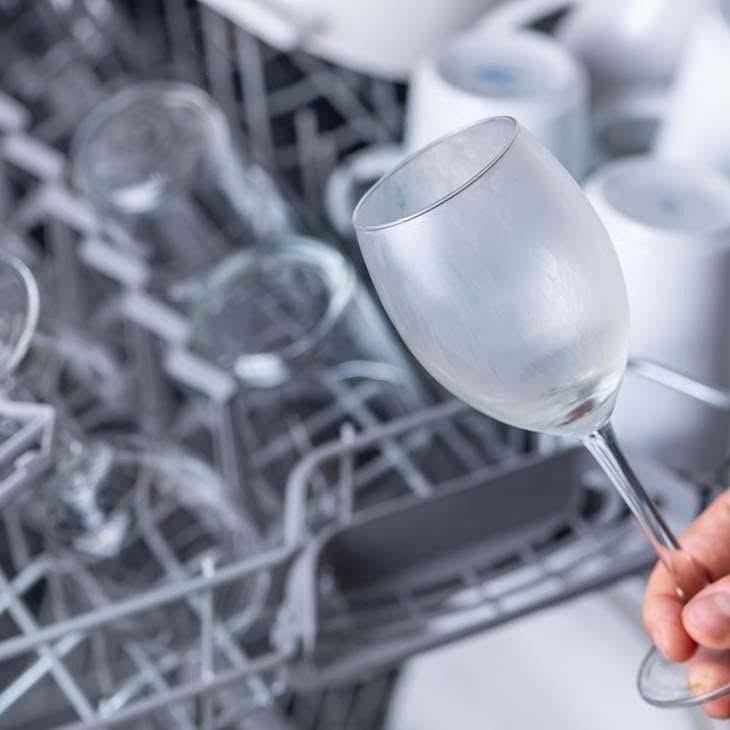
How to Remove White Film From Glasses and Make Them Sparkle Again August 29, 2026 by admin Don’t Use Too Much Dishwasher Detergent More detergent doesn’t necessarily mean cleaner glasses. Follow the manufacturer’s recommended amount for your dishwasher and detergent. Use a Rinse Aid if Appropriate A rinse aid can help water drain more effectively from glass surfaces and may reduce spotting, particularly in areas with hard water. Check Your Water Hardness If your glasses repeatedly develop white mineral deposits, hard water may be the underlying cause. Adjusting your dishwasher settings or using the appropriate water-softening system can make a noticeable difference. Wash Delicate Glassware Carefully Very delicate or valuable glasses may be better washed by hand with a mild dishwashing liquid and warm water. A Quick Method for Cloudy Glasses If you want the simplest approach, start with white vinegar: Soak a soft cloth in white vinegar. Wipe the cloudy areas thoroughly. Leave the vinegar on the deposits for several minutes. Gently wipe again. Rinse thoroughly with clean water. Dry immediately with a microfiber cloth. If the white film disappears, it was most likely a removable mineral deposit. If the glass remains cloudy, the surface may have been permanently etched. Final Thoughts A white film on drinking glasses can make even clean glassware look old and dull. In many cases, however, stubborn limescale and hard-water deposits can be loosened with simple household ingredients such as white vinegar, lemon juice, or a mild baking-soda solution. The key is to clean gently, rinse thoroughly, and dry your glasses immediately after washing. And remember: if the cloudy appearance is actually glass etching, no homemade cleaning trick can reliably reverse the damage. In that case, preventing further etching is the best way to keep your remaining glassware clear and shiny. ← PreviousPage 2 of 2 oth. Avoid using rough scouring pads because they can scratch delicate glass. Pages: 1 2