
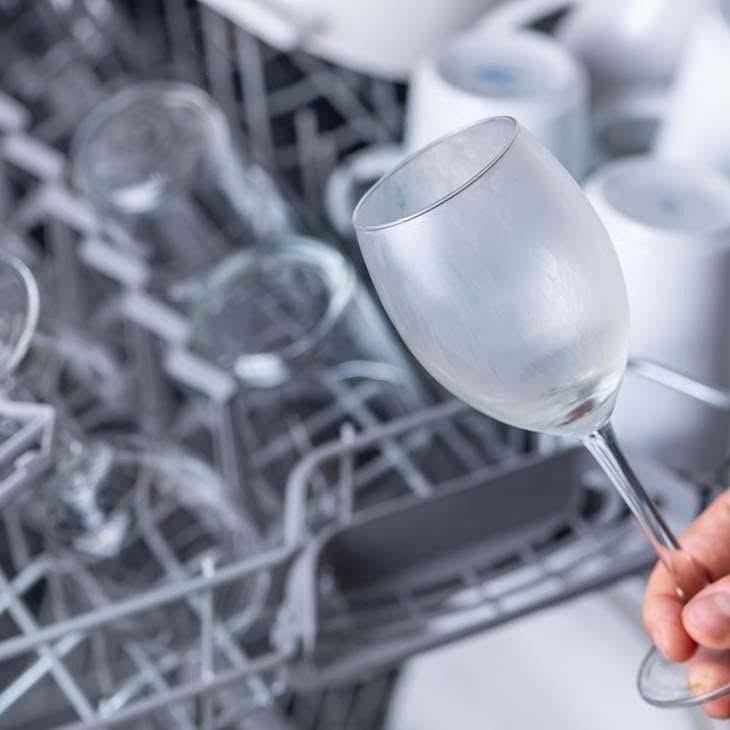
Have your drinking glasses started looking cloudy, dull, or covered with a stubborn white film? Even after washing them, they may still appear frosted or lack their original shine.
This white residue on glassware is often caused by hard-water minerals, limescale, or deposits left behind by repeated washing. In some cases, prolonged exposure to high temperatures and dishwasher detergents can also permanently etch the glass.
Fortunately, if the cloudy appearance is caused by removable mineral deposits, a few simple household ingredients can help restore the shine. Here are three easy methods worth trying.
What Causes Cloudy Glasses?
Before treating your glassware, it’s useful to understand why it becomes cloudy in the first place.
Hard water contains minerals such as calcium and magnesium. When water evaporates from the surface of a glass, these minerals can remain behind and gradually create a white, chalky film.
Dishwasher detergent residue can also contribute to a cloudy appearance. However, if the glass itself has become permanently etched, cleaning products may not be able to restore its original transparency.
For removable limescale and mineral deposits, vinegar and other mild acidic solutions are particularly useful.
3 Simple Ways to Remove White Film From Glasses
1. Baking Soda for Light Cloudiness
Baking soda is a versatile household cleaner and can be useful for removing light residue and surface grime from glassware.
What You’ll Need
Baking soda
A small amount of water
A soft sponge or microfiber cloth
Clean water
How to Use It
Mix baking soda with a little water until you have a soft paste.
Apply a small amount of the paste to the inside and outside of the glass. Let it sit for approximately 10 minutes.
Then gently wipe the glass with a soft, non-abrasive sponge or cl
Rinse thoroughly with clean water and dry immediately with a clean microfiber cloth.
Important Tip
Baking soda is mildly abrasive, so use a gentle touch. It is better suited to surface residue than to heavily mineralized or permanently etched glass.
2. White Vinegar for Limescale and Mineral Deposits
If hard-water stains on glasses are the main problem, white vinegar is one of the simplest options to try.
The acetic acid in vinegar can help dissolve mineral deposits such as limescale.
How to Clean Cloudy Glasses With Vinegar
Pour some white vinegar into a bowl or onto a clean cloth.
Soak the cloudy areas and allow the vinegar to remain in contact with the deposits for a few minutes. For particularly stubborn marks, you can allow a longer contact time, provided the glass is suitable for this treatment.
Gently wipe the surface with a soft cloth or sponge.
Rinse the glass thoroughly with clean water and dry it immediately using a microfiber towel.
This method can be especially effective when the white film is caused by hard-water buildup.
3. Lemon, Vinegar, and Mild Soap Soak
For heavily stained glassware, you can try a longer soaking method using mild soap together with acidic ingredients.
You’ll Need
3 liters of water
2 tablespoons liquid Marseille soap
1 glass of white vinegar
1 glass of lemon juice
Mix the ingredients in a suitable container.
Place the glasses into the solution and allow them to soak for several hours or, for stubborn deposits, overnight.
After soaking, rinse each glass thoroughly with clean water.
Finally, dry the glasses with a clean microfiber cloth to prevent new water spots from forming.
Why Lemon Juice Can Help
Lemon juice contains citric acid, which can help break down mineral deposits and leave glass surfaces looking cleaner.
It also provides a fresh scent, making it a pleasant addition to a homemade cleaning solution.
However, there’s no need to use large quantities of acidic ingredients. For ordinary limescale, white vinegar alone may be sufficient.
What If the Glasses Still Look Cloudy?
Sometimes the problem isn’t limescale at all.
If you’ve tried removing the deposits and the glass remains permanently cloudy, the surface may have experienced glass etching.
Glass etching can occur after repeated exposure to high temperatures, harsh dishwasher detergents, or very soft water combined with aggressive cleaning conditions. Unlike limescale, etching is damage to the glass surface itself and generally cannot be removed with ordinary household cleaners.
In that situation, repeated scrubbing may only make the problem worse.
How to Keep Glasses Shiny After Washing
Prevention is much easier than trying to remove years of mineral deposits.
Dry Glasses Immediately
After washing, don’t leave glasses to air-dry while droplets evaporate on the surface. Dry them with a clean microfiber cloth to reduce water spots.
For Complete Cooking STEPS Please Head On Over To Next Page Or Open button (>) and don’t forget to SHARE with your Facebook friends
