
Use Spur Pruning on Established Vines
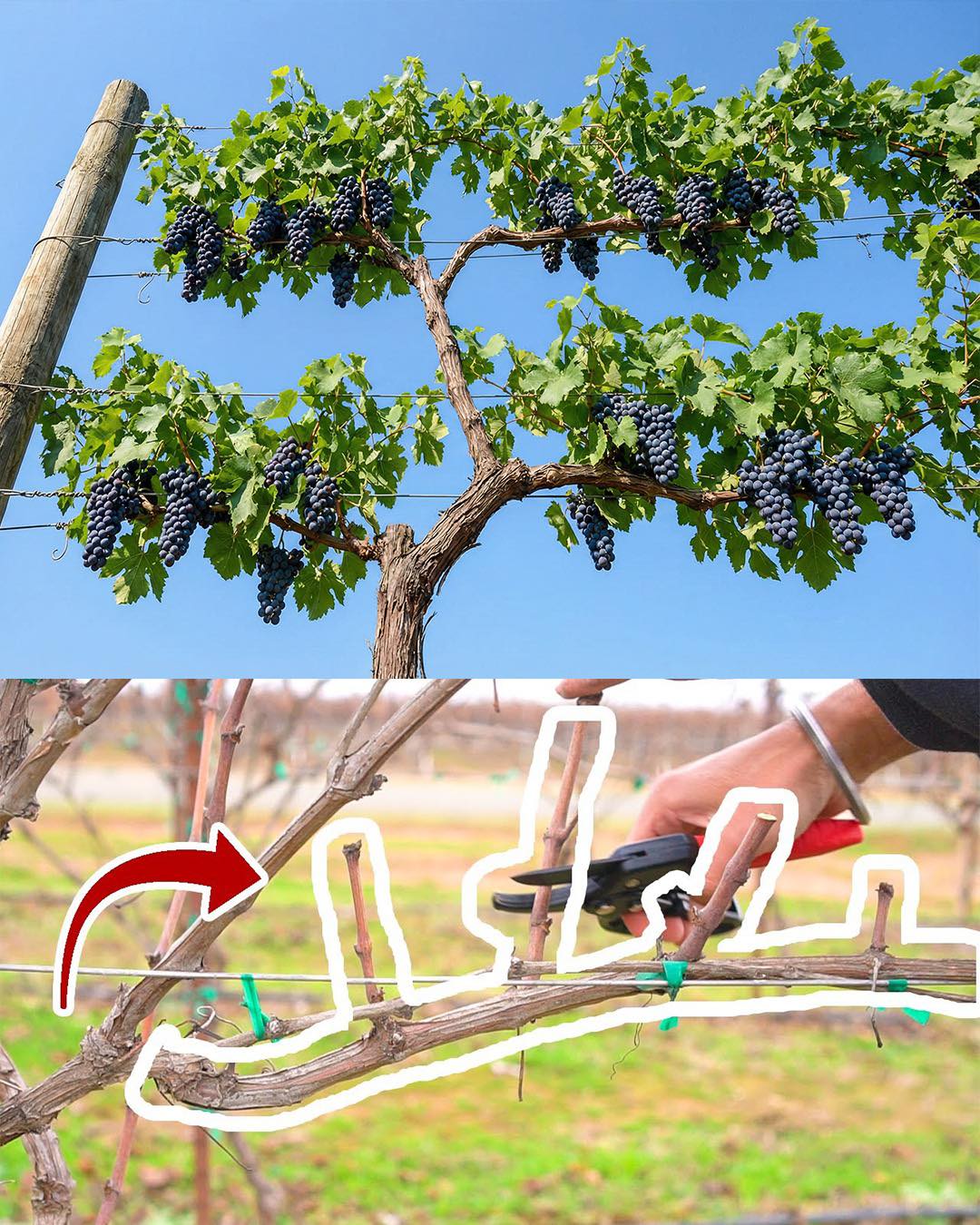
Once the cordons are established, the easiest method for home growers is usually spur pruning. This means leaving the permanent horizontal arms in place and cutting back last season’s canes to short spurs.
On each fruiting cane, keep two buds and remove the rest. Those two buds will push new shoots in spring, and those shoots will carry the coming season’s grapes.
As you move along the cordon:
- Keep spurs spaced apart, ideally around 6 inches from one another
- Remove weak, crowded, or downward-growing canes
- Favor upright, strong canes
- Trim back the ends so the vine stays within bounds
This method keeps the plant productive without allowing it to become overcrowded.
Why Less Growth Means Better Fruit
One of the biggest mistakes with grapes is leaving too many canes. An overloaded vine may produce lots of clusters, but the fruit is often smaller and less sweet because the plant’s energy is divided among too many shoots and bunches.
By keeping the vine compact and limiting the number of productive canes, you direct more energy into fewer clusters. The result is often larger grapes, better ripening, and improved flavor.
For most backyard vines, two cordons are enough, though some growers keep three or four. What matters most is not the exact number, but keeping the structure manageable and open.
Support Matters Too
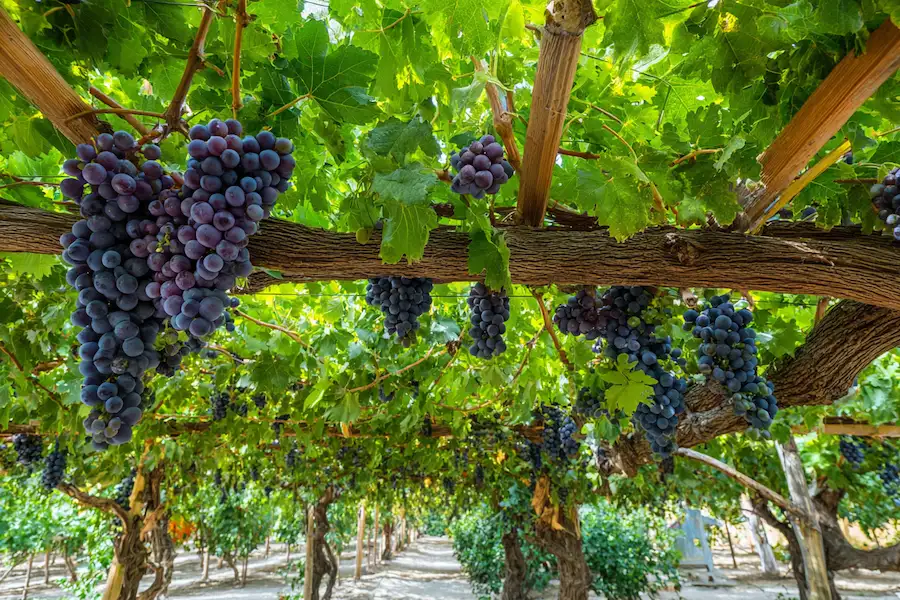
A grapevine carrying a full crop becomes surprisingly heavy. That is why a strong support system is important. Steel wire and sturdy posts are much more reliable than light string or weak materials. A solid trellis helps keep the vine organized, supports the crop, and makes pruning easier year after year.
Keep It Simple
If all of this seems complicated, remember this simple approach:
Let a new vine grow, then select two strong canes to form the main horizontal arms. Once those arms are established, prune each year by keeping short spurs with two buds each, removing weak and crowded growth, and maintaining a neat structure.
That is the real secret to growing excellent grapes at home: keep the vine smaller, stronger, and focused. When the plant puts its energy into a limited number of healthy shoots, it rewards you with bigger, juicier, sweeter grapes.
