
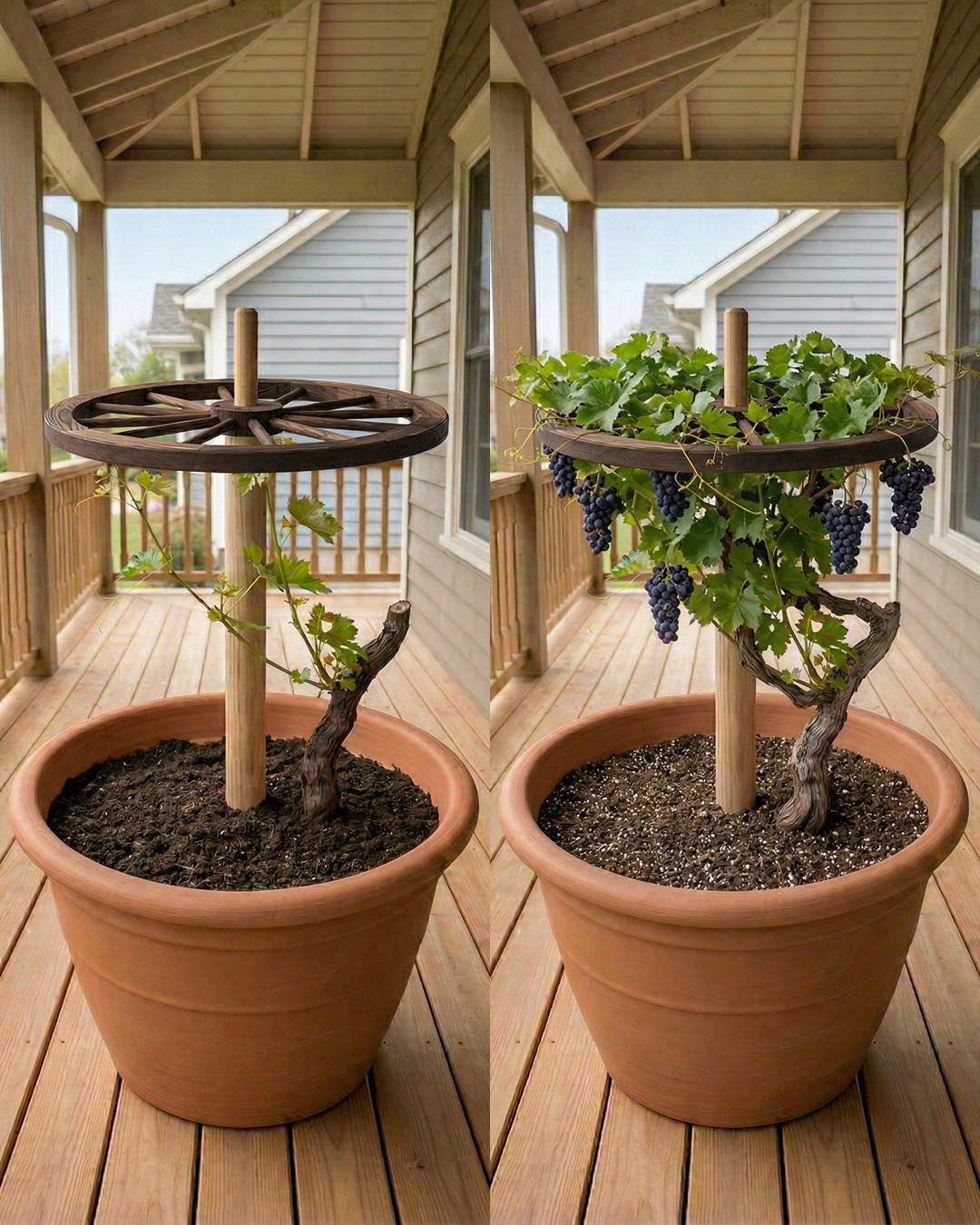
The Golden Rule: Pruning
Pruning is the single most important secret to growing great grapes. Many beginners are afraid to cut their plants, but grapes require heavy trimming to produce fruit.
- Prune in late winter: Do your major cutting when the plant is completely dormant, usually in February or March before new green buds appear.
- Understand where fruit grows: Grapes only grow on one-year-old wood. That means the green shoots that grew last year will produce this year’s fruit. Older, thick brown bark will not grow grapes.
- Cut off up to 90 percent: A healthy vine needs to be cut back drastically. Leave only a few strong canes (branches) from last year, and remove the rest of the messy growth.
- Summer trimming: During the summer, you can snip away excess leaves that are blocking the sun from hitting the grape clusters. Sun directly on the fruit helps it ripen.
Protecting Your Crop
As your grapes start to turn sweet, you will not be the only one who wants to eat them.
- Use bird netting: Birds will ruin a crop in a single afternoon. When the grapes start changing color, drape special plastic bird netting over the vines to keep them away.
- Watch for bugs: Check the undersides of the leaves weekly for small bugs or caterpillars. Remove them by hand or wash them away with a strong spray from the garden hose.
- Keep the ground clean: Rake up any fallen leaves or rotting fruit from under the vine to stop pests and diseases from living in the soil over the winter.
Knowing When to Harvest
Color is not the only way to tell if a grape is ready to be picked.
- Do a taste test: The best way to know if grapes are ripe is to eat one. They should be sweet and easy to pull from the stem.
- Check the seeds: If the variety has seeds, bite into a grape. Ripe grapes generally have brown seeds, while unripe ones have green seeds.
- Cut, do not pull: When they are ready, use sharp scissors or garden clippers to cut the whole cluster off the vine. Pulling them by hand can tear the vine and damage the plant.
Pages: 1 2
