
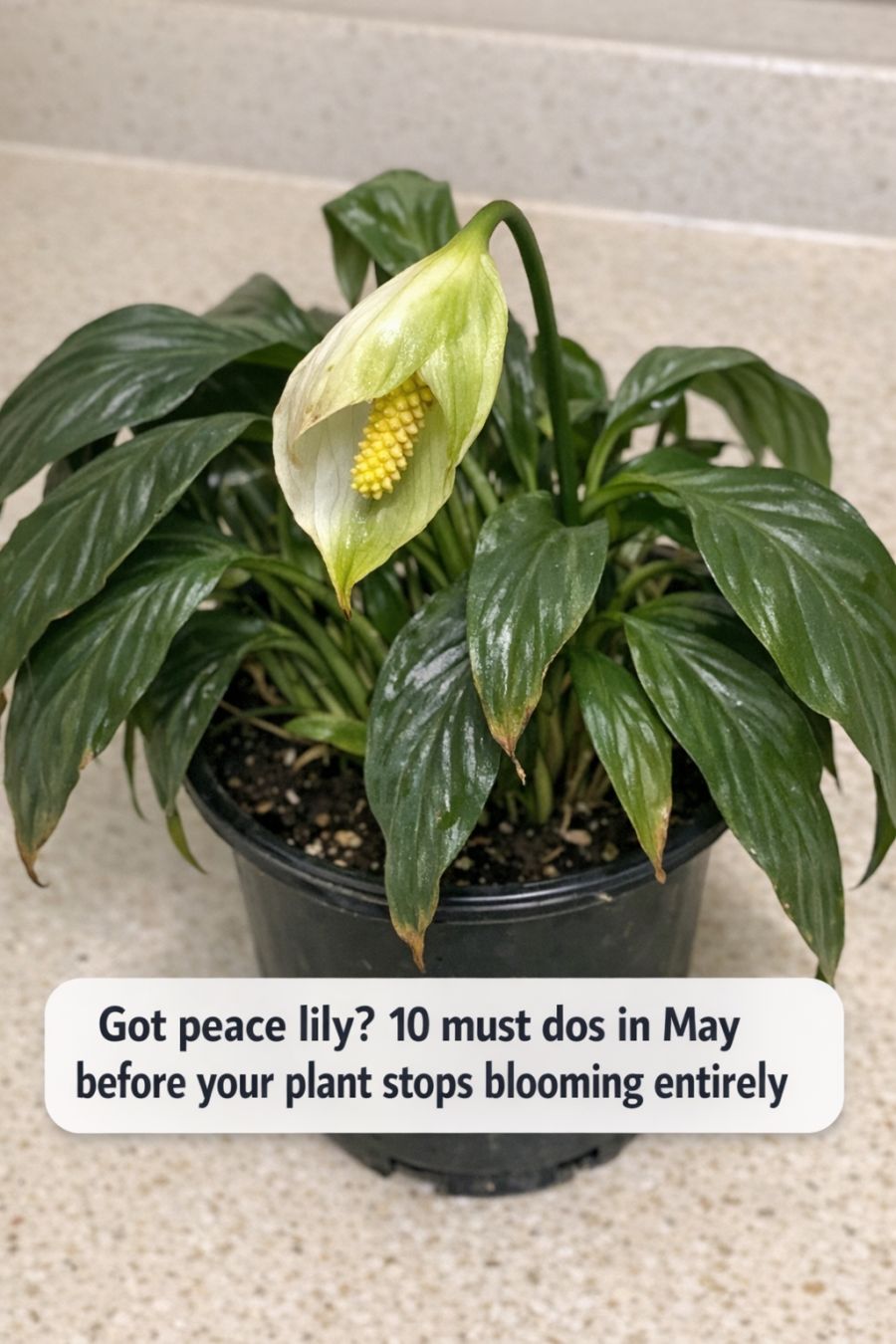
The peace lily, known for its striking white blooms and lush green leaves, is a popular houseplant that adds a touch of elegance to any indoor space. While they are relatively low-maintenance, ensuring that your peace lily continues to bloom requires a bit of attention and care, especially as the seasons change. May is a critical month for these beauties, as they naturally slow down their blooming cycle during the warmer months.
To keep your peace lily flourishing and ensure it doesn’t stop blooming entirely, there are several steps you can take. From adjusting their environment to ensuring adequate nutrition, these tips will help you maintain a healthy and vibrant plant. Follow these ten must-dos to give your peace lily the best chance to thrive and produce those stunning blooms throughout the year.
1. Check Light Levels And Move Your Peace Lily Closer To Bright, Indirect Sun
Peace lilies thrive in bright, indirect sunlight. Placing them too close to direct sunlight can scorch the leaves, while too little light may cause blooming to cease. Ideally, your peace lily should be placed near a window where it can receive filtered light. A north or east-facing window is often ideal. If you notice the leaves are pale, this might be a sign that the plant isn’t getting enough light. Conversely, if the leaves have brown tips, it might be receiving too much direct sun. Aim for a spot where the light is around 200–400 foot-candles to create an optimal growing environment.
2. Refresh The Potting Mix To Boost Nutrients Before Blooming Slows
Over time, the potting mix can become compacted and depleted of essential nutrients. May is a great time to refresh the soil to ensure your peace lily has the nutrients it needs to produce new blooms. Consider repotting your plant with a fresh mix that contains peat moss, pine bark, and perlite, which will provide good drainage and aeration. This is also an excellent opportunity to check for root rot or other issues. If the plant is pot-bound, it might be time to move it to a slightly larger pot with fresh soil.
3. Divide Overgrown Clumps To Encourage Stronger Flower Production
If your peace lily has grown significantly, dividing it can help stimulate new growth and encourage more blooms. Carefully remove the plant from its pot and gently separate the root ball into smaller sections, ensuring each section has a healthy amount of roots and foliage. Plant each section in its own pot with fresh potting mix. Dividing the plant not only prevents overcrowding but also revitalizes it, encouraging a more vigorous flowering response.
4. Prune Spent Blooms And Yellowing Leaves To Redirect Energy
Pruning is essential for maintaining the health of your peace lily. As blooms begin to fade, remove them by cutting the stalk at the base near the soil line. This redirects the plant’s energy to producing new flowers rather than maintaining old ones. Additionally, remove any yellowing or damaged leaves to improve the plant’s overall appearance and health. Use clean, sharp scissors or pruning shears to prevent the spread of disease.
5. Adjust Your Watering Routine For Warmer May Temperatures
As temperatures rise in May, your peace lily’s water needs may change. Peace lilies prefer consistently moist soil but do not tolerate waterlogged conditions. Check the top inch of soil; if it feels dry to the touch, it’s time to water. Be mindful to avoid letting the plant sit in water, as this can lead to root rot. Adjust the frequency of watering based on the temperature and humidity levels in your home, aiming to keep the soil evenly moist but not soggy.
