
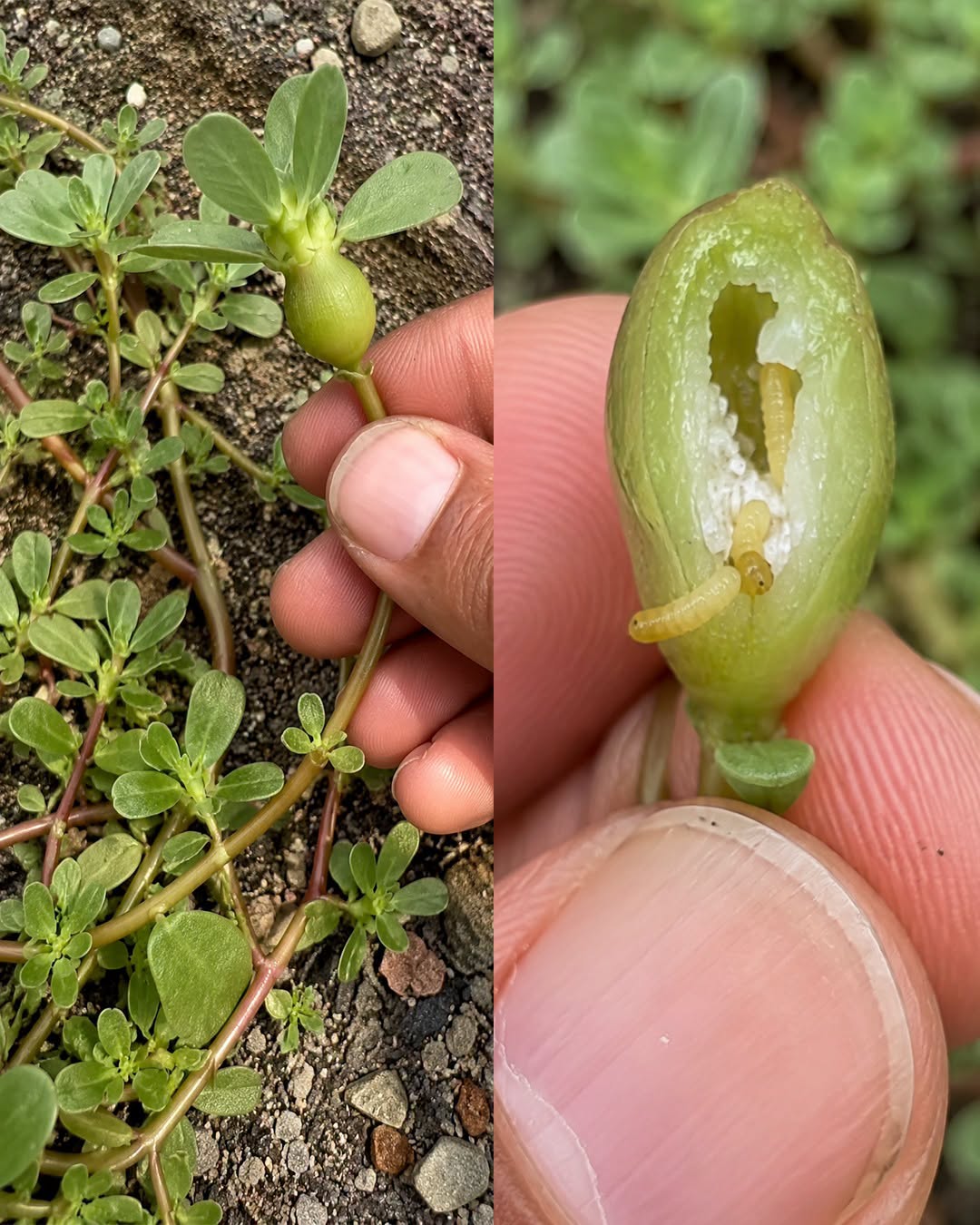
Purslane is a powerful, nutrient-dense plant that grows freely in many gardens, yards, and farm fields. Often viewed as a simple weed, it is actually packed with omega-3 fatty acids, vitamins, and minerals. It is a fantastic, free ingredient for homemade salads, soups, and stews. However, harvesting this wild green comes with a few hidden risks. To safely enjoy the health benefits of purslane, you need to know exactly what to look for and what to avoid before bringing it into your kitchen.

Bulbous Growths and Hidden Larvae
One of the most surprising problems you might find on a purslane plant is a strange, swollen bump on the stem or leaves. These bulbous growths are known as plant galls. They are usually caused by specific insects, such as the purslane sawfly. The adult insect lays its eggs inside the plant tissue, and as the plant reacts, it forms a fleshy, abnormal pocket around the egg to protect it.
- The Danger: If you slice one of these swollen green bumps open, you will often find tiny white worms or larvae living inside. Eating these accidentally is a highly unpleasant experience and can ruin an entire meal.
- How to Avoid It: Before picking, look closely at the stems. Healthy purslane stems are smooth and relatively uniform in thickness. If you see any odd, round, or bulbous swellings, snap off that entire section of the plant and throw it away. Only harvest smooth, unblemished stems and leaves.

The Toxic Lookalike: Hairy Spurge
Purslane has a dangerous neighbor that often grows right next to it in the exact same environments. This plant is known as hairy spurge (or spotted spurge). It is toxic and can make you sick if eaten.
- The Danger: Spurge grows low to the ground in a similar spreading pattern, confusing beginner foragers. Consuming it causes stomach pain, vomiting, and nausea, and its sap can irritate your skin.
- How to Avoid It: The easiest way to test your plant is the “snap test.” Break a stem in half. If a white, milky liquid oozes out, throw it away immediately—that is spurge. True purslane always has a clear, watery sap. Furthermore, purslane leaves are thick, smooth, and fleshy, while spurge leaves are flat, thin, and sometimes have a dark spot in the center.
High Oxalic Acid Content
Even when you harvest perfectly clean and healthy purslane, the plant itself naturally contains a compound called oxalic acid.
- The Danger: Oxalic acid is naturally found in many leafy greens, including spinach and Swiss chard. However, consuming it in very large amounts can lead to the formation of kidney stones, especially in people who are already prone to them. It can also give the plant a slightly sharp, sour taste that some find overpowering.
- How to Avoid It: Do not eat massive bowls of raw purslane every single day. If you want to eat it frequently, boiling or steaming the leaves for a few minutes will significantly lower the oxalic acid levels. Drinking plenty of water when eating raw greens also helps your body process these compounds safely.
Contaminated Soil and Hidden Dirt
⏬Continued ⏬on the ⏬next ⏬page
