
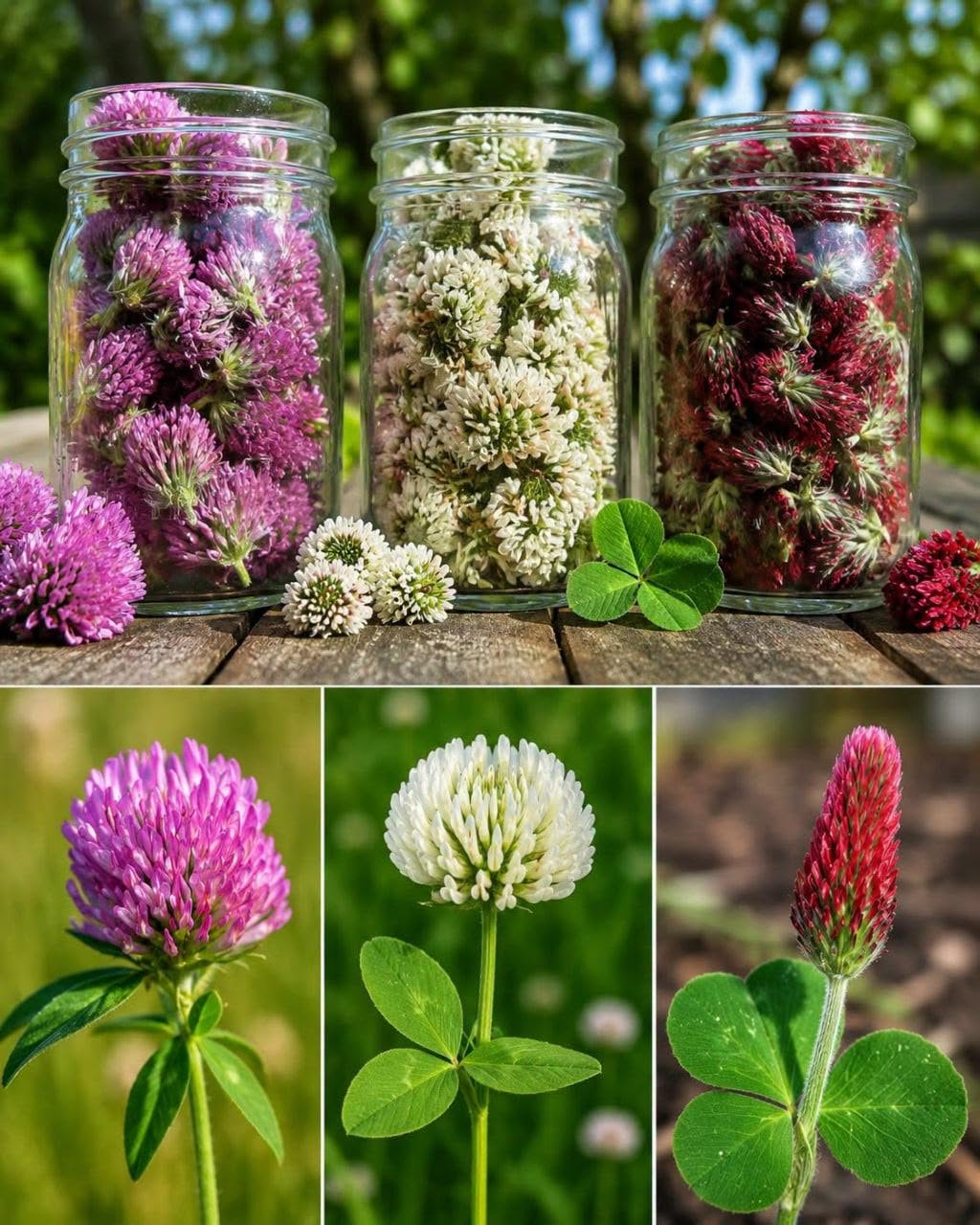
Clover plants are often dismissed as mere ground cover or lucky charms, but white clover (Trifolium repens), red clover (Trifolium pratense), and crimson clover (Trifolium incarnatum) are all remarkable plants with impressive health, soil, and garden benefits. Whether you’re looking to improve your soil, create traditional herbal remedies, or attract pollinators, these clovers deserve a place in your garden—and perhaps even your kitchen.
Below, we explore their unique qualities, practical uses, and the many benefits they share.
White Clover (Trifolium repens)
White clover is a low-growing perennial with white to pinkish-white flowers. It is commonly found in lawns, meadows, and pastures and is known for its ability to tolerate foot traffic and thrive in poor soil conditions.
Benefits of White Clover
1. Traditionally used as a gentle wash for minor cuts and scrapes.
2. Contains mild diuretic properties that may support natural detoxification.
3. Used in folk remedies to support recovery during colds and fevers.
4. One of the best nectar sources for bees.
5. Naturally enriches soil through nitrogen fixation.
6. Serves as a low-maintenance lawn alternative.
7. Young leaves and flowers are edible and can be added to salads or teas.
Red Clover (Trifolium pratense)
Red clover is recognized by its taller stems and rounded reddish-pink flower heads. It has a long history of use in traditional herbal medicine and remains one of the most popular clovers for wellness preparations.
Benefits of Red Clover
1. Contains plant compounds known as phytoestrogens that may support women during menopause.
2. Commonly used in herbal skin preparations for irritated skin.
3. Traditionally valued for supporting circulation and liver function.
4. Contains compounds with anti-inflammatory properties.
5. Frequently prepared as a tea for respiratory support.
6. May help support bone health in postmenopausal women.
7. Rich in antioxidants that help combat oxidative stress.
But the most visually striking member of the clover family may offer some of the greatest benefits for soil health and pollinator support.
Crimson Clover (Trifolium incarnatum)
Crimson clover is admired for its vibrant crimson-red flower spikes and rapid growth. It is widely used as a cover crop and is highly valued in sustainable gardening and agriculture.
Benefits of Crimson Clover
1. Improves soil fertility by adding organic matter and nitrogen.
2. Helps prevent erosion on slopes and exposed soil.
3. Attracts bees, butterflies, and other beneficial pollinators.
4. Can be cut and left in place as a natural mulch.
5. Its flowers may be used in decorative culinary applications and teas.
6. Suppresses weeds through dense growth.
7. Provides excellent forage for livestock and wildlife.
Shared Benefits of All Clover Types
Regardless of the species, white, red, and crimson clover offer several common advantages:
• Natural nitrogen fixation that improves soil quality.
• Valuable nectar sources for pollinators.
• Edible leaves and flowers suitable for teas and salads.
• Traditional use in herbal wellness practices.
• Effective ground cover that reduces erosion.
• Natural weed suppression.
• Drought tolerance once established.
Homemade Uses and Preparations
Clover Tea (White or Red Clover)
Dry the flower heads and steep 1–2 teaspoons in hot water for about 10 minutes. Traditionally enjoyed for respiratory support and general wellness.
Red Clover Infused Oil
Fill a clean jar with dried red clover flowers and cover with olive oil or another carrier oil. Allow the mixture to infuse for 2–3 weeks before straining. The oil may be used in homemade skin-care preparations.
Clover Salve
Combine clover-infused oil with melted beeswax to create a soothing salve for dry or irritated skin.
Beyond personal wellness uses, clover may be one of the most valuable plants you can grow for the long-term health of your garden and soil.
