
Introduction
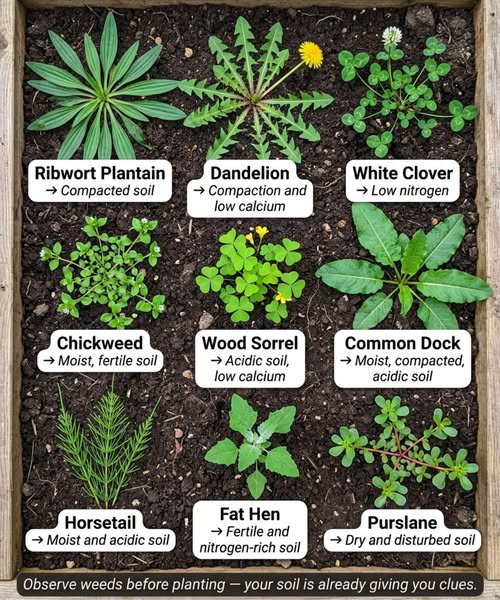
Most people see weeds in gardens or farms as nothing more than unwanted plants. However, many wild weeds are actually powerful indicators of soil health. Nature often gives clues through the plants that naturally grow in a specific area.
Certain weeds thrive in compacted soil, while others prefer acidic, dry, wet, or nutrient-poor conditions. By learning to identify these plants, gardeners and farmers can better understand their soil before planting crops.
Instead of fighting every weed immediately, it is often smarter to observe what the soil is trying to tell you.
Why Do Weeds Grow?
Wild plants adapt to specific environmental conditions. Their presence usually reflects:
- Soil structure
- Moisture levels
- Nutrient availability
- Soil acidity
- Drainage quality
- Compaction problems
Because weeds naturally select the conditions they prefer, they can act like a free soil test.
1. Ribwort Plantain
What Does It Mean?
Ribwort Plantain commonly indicates compacted soil.
Compacted soil prevents:
- Proper air circulation
- Root development
- Water penetration
- Healthy microbial activity
Common Causes
- Heavy foot traffic
- Machinery use
- Clay-heavy soil
- Poor aeration
How to Improve the Soil
- Loosen the soil carefully
- Add compost
- Avoid walking on planting beds
- Introduce organic matter
2. Dandelion
What Does It Reveal?
Dandelions often indicate:
- Soil compaction
- Low calcium levels
Their deep taproots search for nutrients far below the surface.
Hidden Benefits
Despite being considered weeds, dandelions can:
- Break up compacted soil naturally
- Attract pollinators
- Improve biodiversity
Soil Solutions
- Add calcium if needed
- Improve aeration
- Reduce compaction
- Apply lime to acidic soil
3. White Clover
What Does It Mean?
White Clover is usually a sign of low nitrogen levels.
This plant can actually help the soil because it fixes nitrogen from the air.
Benefits
- Improves soil fertility
- Supports pollinators
- Reduces erosion
How to Improve Nitrogen Levels
- Add compost
- Use organic fertilizers
- Grow cover crops
- Rotate crops regularly
4. Chickweed
What Does It Reveal?
Chickweed prefers:
- Moist soil
- Fertile soil
Its presence often means the soil contains good nutrients but may hold too much moisture.
What You Can Do
- Improve drainage
- Reduce overwatering
- Monitor fungal diseases
- Increase airflow between plants
5. Wood Sorrel
Continued on next page:
