
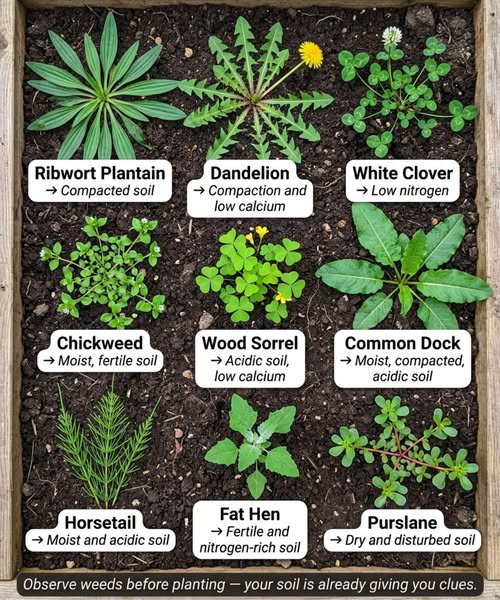
5. Wood Sorrel
What Does It Indicate?
Wood Sorrel commonly grows in:
- Acidic soil
- Low-calcium conditions
How to Correct Acidic Soil
- Add agricultural lime
- Test soil pH regularly
- Increase calcium levels carefully
6. Common Dock
What Does It Mean?
Common Dock usually signals:
- Wet soil
- Compacted soil
- Acidic conditions
Why Is It Difficult to Remove?
Its strong roots grow deep underground, making it hard to eliminate unless the soil issue is fixed.
Solutions
- Improve drainage
- Aerate the soil
- Reduce waterlogging
7. Horsetail
A Serious Soil Warning
Horsetail often indicates:
- Poor drainage
- Highly acidic soil
- Excessive moisture
Why Is It Persistent?
This plant spreads through deep underground rhizomes that can survive for years.
How to Control It
- Improve drainage systems
- Reduce standing water
- Add organic matter
- Increase soil aeration
8. Fat Hen
What Does It Reveal?
Fat Hen usually grows in:
- Fertile soil
- Nitrogen-rich conditions
Is It Good or Bad?
Its presence can actually indicate excellent fertility, though too much of it may compete with crops.
9. Purslane
What Does It Mean?
Purslane thrives in:
- Dry soil
- Disturbed soil
- Hot conditions
Interesting Fact
Purslane is edible and highly nutritious, containing omega-3 fatty acids and antioxidants.
Soil Improvement Tips
- Increase watering efficiency
- Add mulch
- Improve organic matter content
How to Use Weeds as Soil Indicators
Before removing weeds, observe:
- Which species dominate the area
- Soil moisture levels
- Soil texture and hardness
- Crop performance nearby
- Sun exposure and drainage
This information can help diagnose soil problems naturally.
The Connection Between Healthy Soil and Healthy Plants
Balanced soil leads to:
- Stronger root systems
- Better nutrient absorption
- Fewer plant diseases
- Higher crop yields
- Improved drought resistance
Healthy soil is the foundation of successful gardening and farming.
Golden Tips for Improving Any Soil
Add Compost Regularly
Organic matter improves:
- Soil structure
- Moisture retention
- Beneficial microbes
- Nutrient availability
Avoid Excessive Tilling
Too much tilling damages soil structure and destroys beneficial organisms.
Cover the Soil
Mulching helps:
- Preserve moisture
- Reduce weed growth
- Protect against heat
- Prevent erosion
Test Soil pH
Knowing your soil’s acidity helps you choose the right plants and amendments.
Conclusion
Wild weeds are not always enemies. In many cases, they are natural messengers revealing the condition of your soil.
By learning to identify these plants and understand their meaning, gardeners and farmers can improve soil health naturally and grow stronger, healthier crops.
Before planting, take a moment to observe the weeds around you — your soil may already be giving you valuable clues.
