
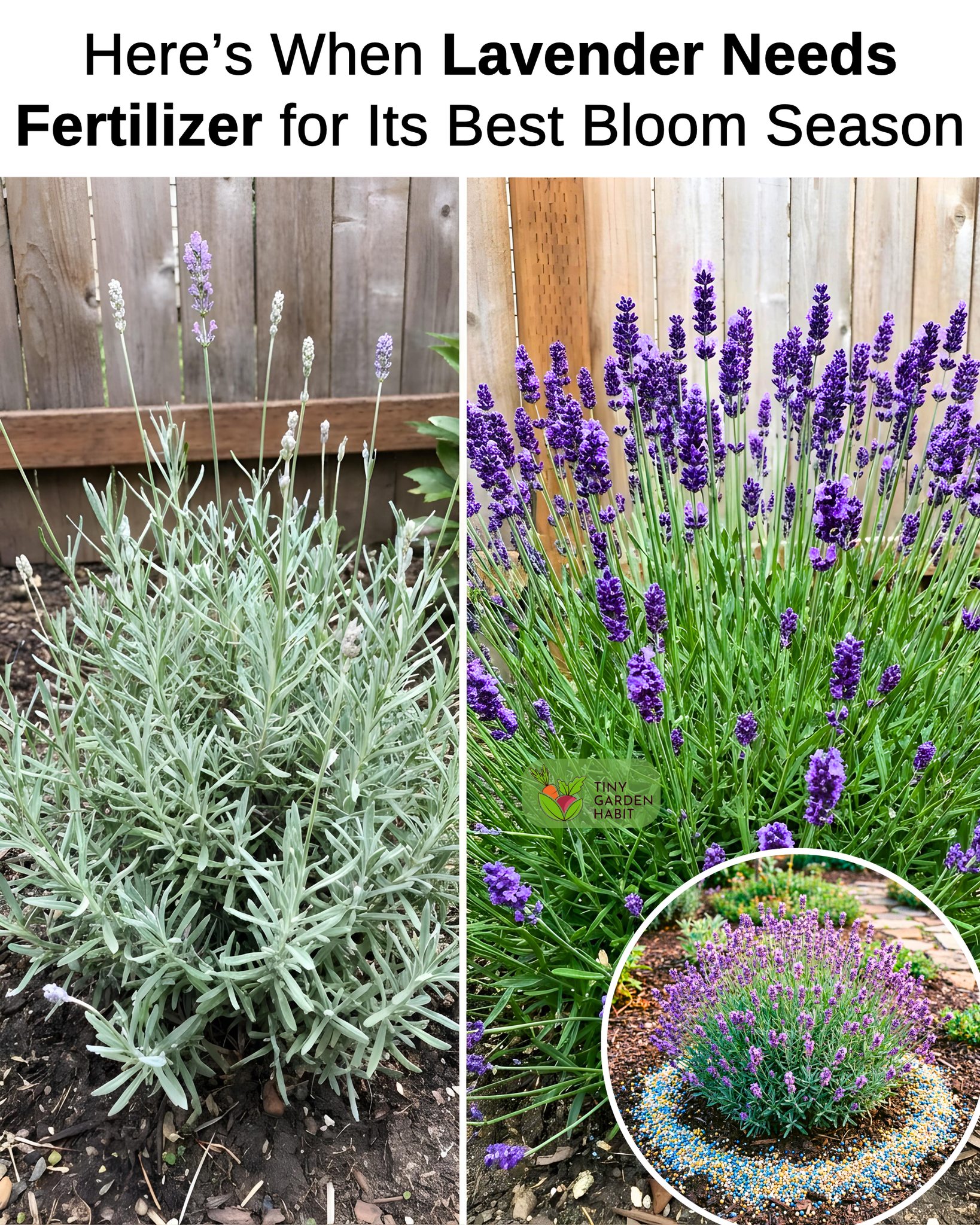
Lavender is a quintessential garden herb known for its fragrant flowers and foliage.
In its native Mediterranean habitat, this aromatic shrub is found growing in rocky, nutrient-poor soils. This means that lavender typically needs little fertilizer to flourish.
Knowing how and when to fertilize lavender will ensure this aromatic plant stays looking and smelling its best.
Understanding Lavender’s Nutritional Needs


Lavender is a hardy plant that grows best in poor, well-drained soil.
Plan your best garden yet! This printable 2026 Sowing Calendar tells you exactly when to plant your favorite vegetables, herbs, and flowers for a thriving garden all year long.
Lavender prefers minimal nutrients, with overfeeding leading to too much foliage, fewer flowers, and increased susceptibility to pests and diseases. Excess nutrients can even dampen the plant’s signature scent.
The key to growing healthy, fragrant lavender is to provide just enough nutrients to support healthy growth while keeping its aroma intact.
Best Time of Year to Fertilize Lavender

Lavender plants only need to be fed once a year. Early spring, as the plant emerges from dormancy, is the ideal time to feed lavender. This will provide the plant with the nutrients it needs as it begins producing new growth through the spring and summer.
Also, pruning is a big part of keeping lavender happy and looking its best. I recently put together a guide that breaks it all down, you can read it here: when and how to prune lavender, so it stays healthy and full of blooms.
Choosing the Right Fertilizer for Lavender

A low-nitrogen, balanced fertilizer or organic compost is suitable for your lavender. Stay away from high-nitrogen fertilizers, as they can cause the plant to grow too fast, resulting in weak stems, fewer flowers, and a reduced fragrance.
Granular vs Liquid Fertilizer
Fertilizers come in two main forms: granular and liquid.
Granular fertilizers release nutrients slowly, making them a great choice for lavender. They can be applied around the base of the plant and will gradually break down over time.
Liquid fertilizers, on the other hand, provide a quicker nutrient boost.
Plan your best garden yet! This printable 2026 Sowing Calendar tells you exactly when to plant your favorite vegetables, herbs, and flowers for a thriving garden all year long.
For lavender, a slow-release granular option is usually the better choice, as it won’t overwhelm the plant.
Organic vs Non-Organic Options
Organic fertilizers are derived from natural materials, whereas non-organic fertilizers are chemically formulated.
If you prefer a commercial fertilizer, look for one made specifically for herbs or flowers. These tend to be lower in nitrogen and offer the right balance of nutrients that lavender needs.
Organic compost is an excellent option for feeding lavender because it breaks down slowly and releases nutrients steadily.
Other organic low-nitrogen options include bone meal and eggshells, which, like compost, can either be applied as a top dressing or incorporated into the soil when planting in the spring.
Signs Your Lavender May Need Fertilizing

Lavender is a low-maintenance plant, but there are a few signs that it might need a little extra attention.
