
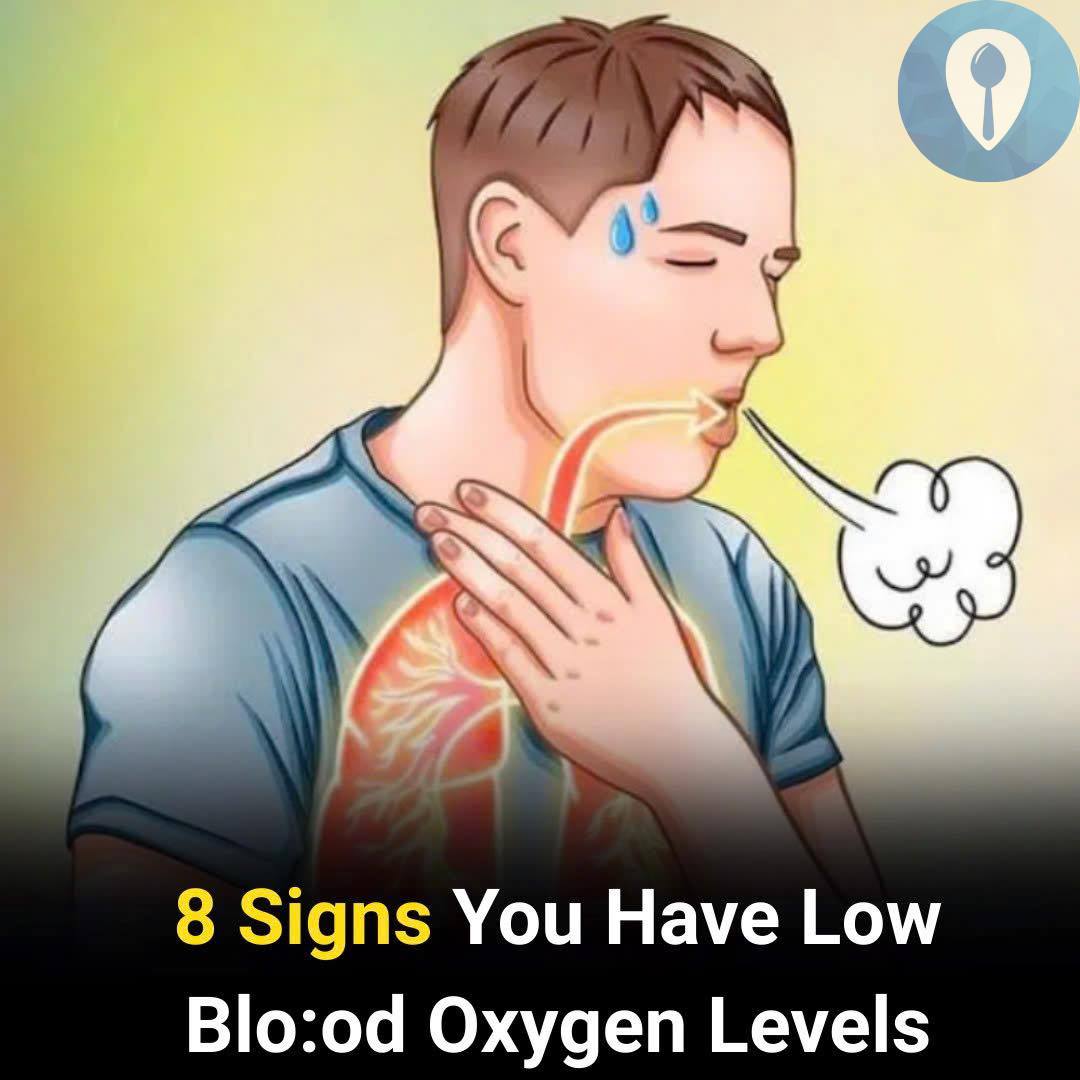
4. Rapid Heartbeat
When oxygen is low, the heart works harder to deliver oxygen-rich blood throughout the body. This can lead to:
- Fast heartbeat
- Heart palpitations
- Chest discomfort
You may notice your heart racing even while resting.
5. Bluish Lips or Fingertips


A bluish color in the lips, skin, or fingernails is called cyanosis. It can happen when blood is not carrying enough oxygen.
This sign should be taken seriously because it may indicate a significant oxygen problem requiring medical attention.
6. Sweating Without Heavy Activity
Excessive sweating, especially when combined with breathing difficulties, can sometimes indicate that the body is under stress due to low oxygen.
Cold sweats may appear during:
- Breathing problems
- Lung infections
- Heart-related issues
7. Confusion or Difficulty Thinking Clearly
Low oxygen affects brain function quickly. Some people experience:
- Memory problems
- Slow thinking
- Confusion
- Trouble speaking clearly
Older adults are especially vulnerable to these symptoms.
8. Persistent Cough


A long-lasting cough may signal an underlying lung condition that reduces oxygen exchange in the lungs.
Conditions such as:
- Asthma
- Pneumonia
- Chronic bronchitis
- COPD
can interfere with the body’s ability to absorb oxygen properly.
What Is a Normal Oxygen Level?
A healthy blood oxygen saturation level is usually between 95% and 100% when measured with a pulse oximeter.
Levels below 90% are generally considered low and may require medical evaluation.
How to Improve Oxygen Levels Naturally
Here are some healthy habits that may help support better oxygen levels:
- Avoid smoking
- Exercise regularly
- Stay hydrated
- Improve indoor air quality
- Practice deep breathing exercises
- Sleep well
- Eat iron-rich foods
- Treat underlying lung or heart conditions
When to Seek Medical Help
You should seek medical attention immediately if you experience:
- Severe shortness of breath
- Chest pain
- Blue lips or face
- Confusion
- Difficulty staying awake
These symptoms may indicate a serious medical emergency.
Final Thoughts
Low blood oxygen levels can affect the entire body and should not be ignored. Early warning signs like fatigue, dizziness, shortness of breath, and bluish lips may indicate that the body is struggling to get enough oxygen.
Paying attention to these symptoms and seeking medical advice when necessary can help prevent serious complications and improve overall health.
