
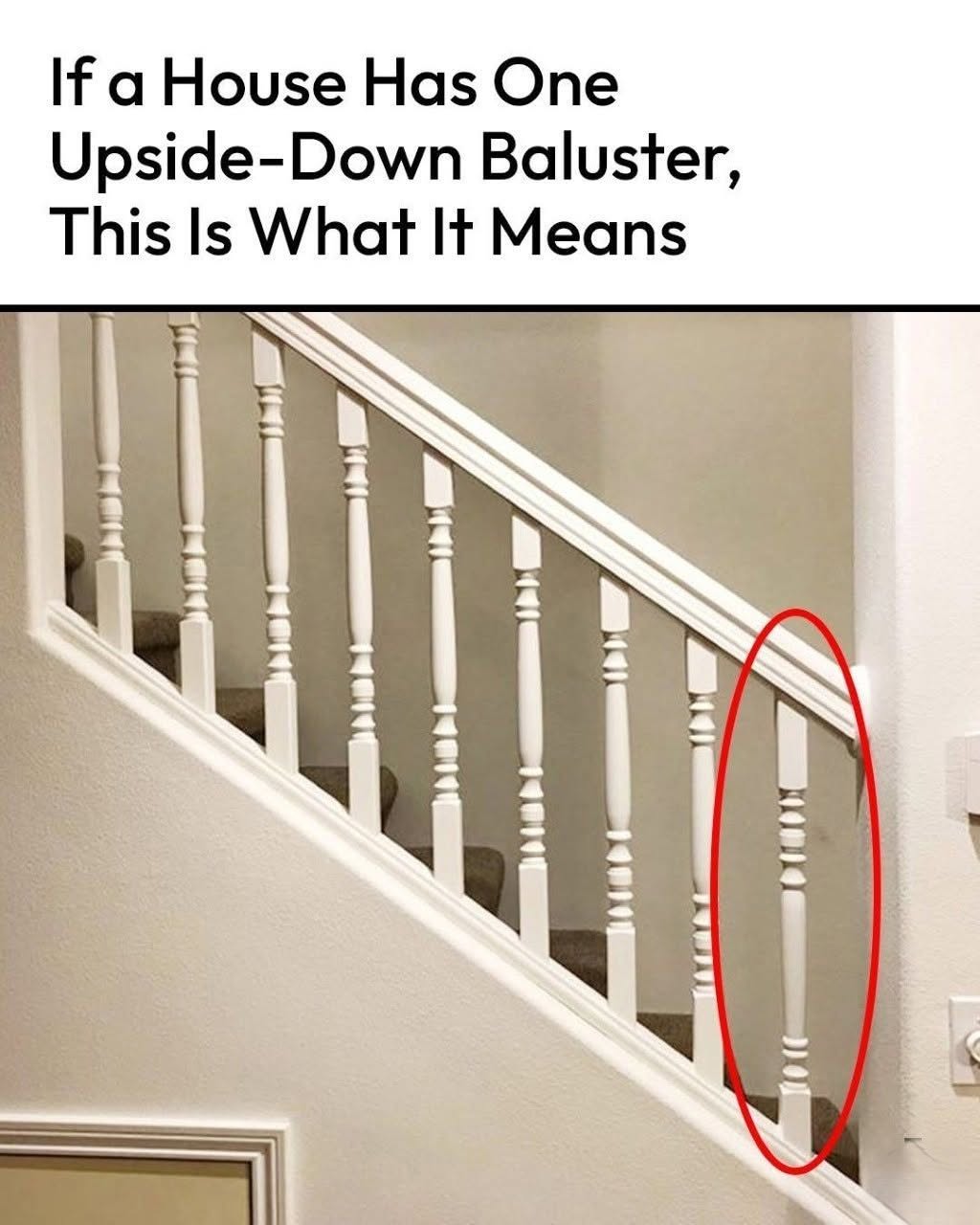
Where to Find It
You are unlikely to find an upside-down baluster in a new home—unless a homeowner has intentionally installed one for historic authenticity. In historic homes, look closely at the staircase:
On the main stair run
Often on a back stair or servants’ staircase
Sometimes hidden in plain sight on the most visible baluster
DIY Idea
If you love the charm and storytelling of this tradition, consider installing one upside-down baluster in your own staircase—even in a modern home. It is a small, personal detail that adds history, humor, and conversation to your space.
Summary Table: 3 Unique Staircase Features
Feature Purpose Found In Modern Use
Dust Corners Prevented dust accumulation in stair corners Stair risers, near walls Decorative; protects awkward corners
Stair Rods Secured carpet runners Across each stair tread Decorative; classic aesthetic
Upside-Down Baluster Superstition; acknowledgment of imperfection One baluster in the staircase Historic authenticity; conversation piece
Final Thoughts
Historic staircases are more than just functional structures. They are storytellers, preserving the practical solutions, superstitions, and craftsmanship of past generations.
Dust corners speak to a time before electricity and vacuum cleaners, when sweeping was a daily chore.
Stair rods remind us of an era when carpet was an investment worth protecting.
The upside-down baluster invites us to reflect on humility, faith, and the human touch behind every structure.
Whether you are restoring a historic home, adding character to a modern one, or simply appreciating the beauty of old architecture, these three unique staircase features offer a glimpse into the past—and plenty of inspiration for the future.
