
7. Begonias (Begonia spp.)
Why they love coffee grounds: Begonias prefer well-aerated, moisture-retentive soil – exactly what coffee grounds help create. They also benefit from the extra organic matter and nutrients.
How to apply:
- Mix grounds into potting soil at a 1:3 ratio with compost.
- For potted begonias, add grounds sparingly to prevent soggy soil.
- Composting coffee first often works best for container begonias.
8. Marigolds (Tagetes spp.)
Why they love coffee grounds: Marigolds are robust but enjoy nitrogen and phosphorus. Coffee grounds also provide a side benefit: deterring slugs, snails, and root pests that sometimes target marigolds.
How to apply:
- Sprinkle dried grounds in a ring around each plant.
- Reapply every 2–3 weeks, especially after rain.
- Mix into garden beds before planting for a nutrient boost.
9. Geraniums (Pelargonium spp.)
Why they love coffee grounds: Geraniums bloom heavily, especially in pots, and deplete soil nutrients quickly.
Coffee grounds enrich the soil, keeping geraniums vibrant and encouraging continuous flowering.
How to apply:
- Add used grounds directly to potting mix before planting.
- For in-ground plants, sprinkle lightly around roots every month.
- Always mix into soil to avoid surface crusting.
10. Impatiens (Impatiens walleriana)
Why they love coffee grounds: Impatiens love moist, shaded conditions. Coffee grounds enhance water retention in soil, keeping them consistently hydrated while improving fertility.
How to apply:
- Mix grounds into the top inch of soil when planting.
- Brew a “coffee tea” (1 tablespoon grounds in 1 liter water) and use to water plants weekly.
- Avoid direct thick layers that can mold in shade.
11. Fuchsias (Fuchsia spp.)
Why they love coffee grounds: Fuchsias thrive in slightly acidic soils rich in organic matter. Coffee grounds feed the soil and help maintain the right pH for abundant, colorful blooms.
How to apply:
- Work used grounds into compost or soil around the root zone every few weeks.
- For container fuchsias, mix sparingly into potting mix.
- Avoid fresh grounds, which are too acidic.
Tips for Success With Coffee Grounds
- Less is more: Think of coffee grounds as a supplement, not a replacement for fertilizer.
- Mix, don’t layer: Always blend into soil or compost instead of piling on top.
- Compost first for containers: Container plants are more sensitive; composted coffee grounds are safer.
- Monitor your plants: If leaves yellow or growth slows, reduce coffee applications and rebalance with other fertilizers.
- Know your soil: Acid-loving plants thrive, but neutral or alkaline lovers (like lavender or clematis) won’t benefit.
Coffee grounds are a simple, sustainable way to recycle waste while giving your garden a boost.
When used correctly, they can enrich soil, support beneficial microbes, deter pests, and improve the health of acid-loving flowers.
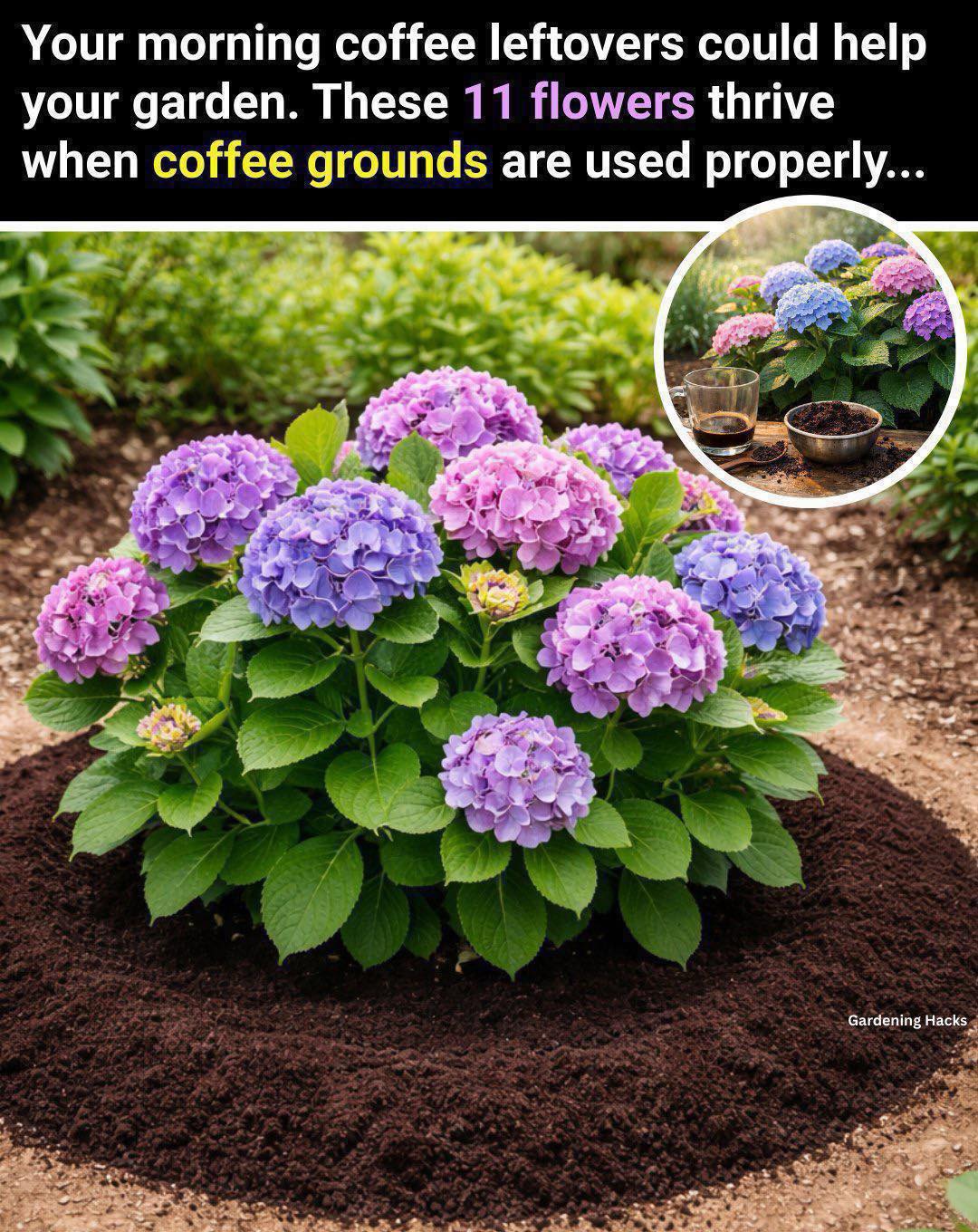
From roses and hydrangeas to fuchsias and begonias, the 11 flowers in this guide are proven to thrive when given a modest dose of used coffee grounds.
The key is balance – use moderately, mix into soil or compost, and always tailor your approach to each plant’s needs.
