
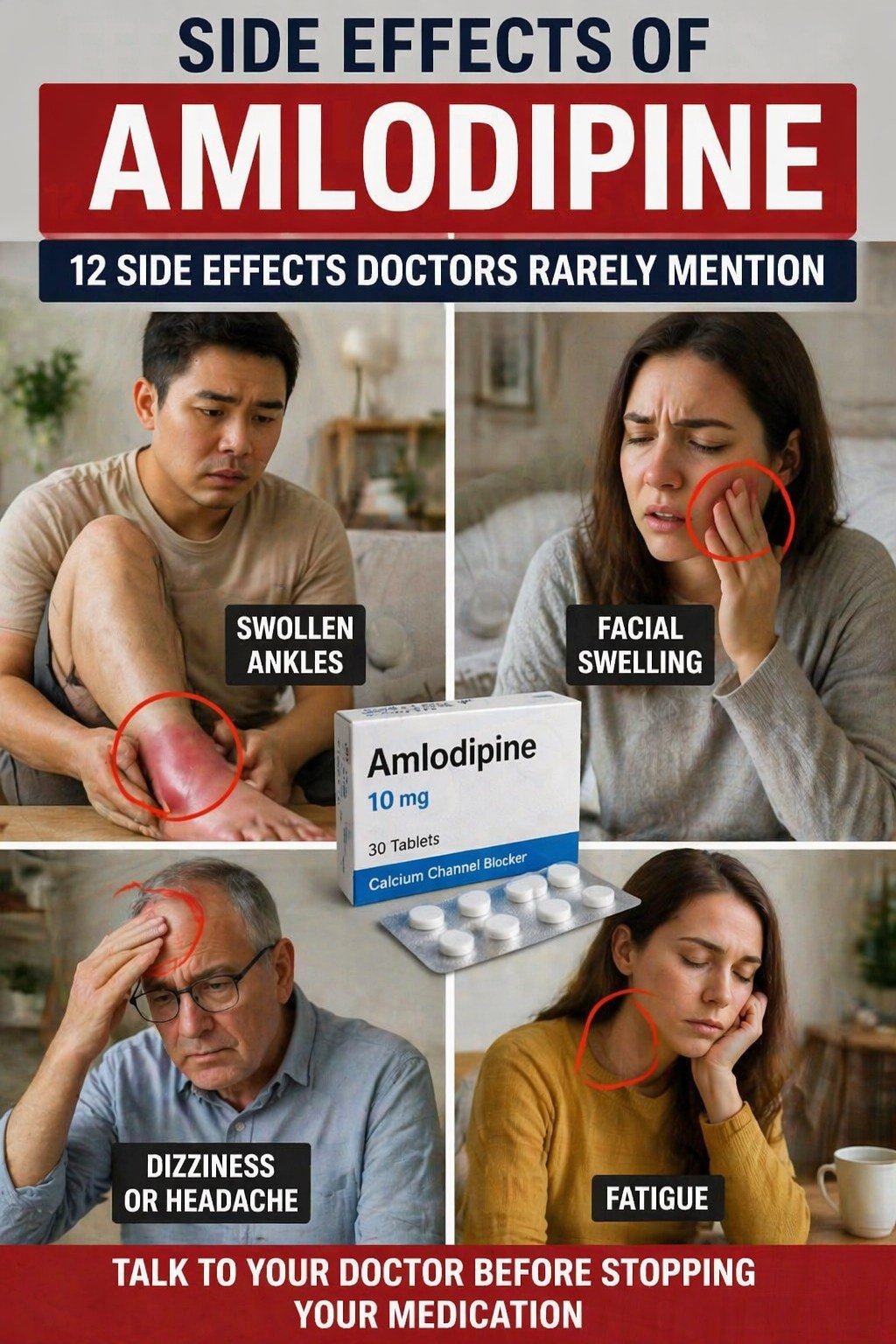
You’re doing everything right—taking your blood pressure medication every day, watching your diet, and trying to stay active. Yet something feels off. Your ankles look puffy by the end of the day, your shoes feel tighter, or you catch yourself looking tired in the mirror even after a full night’s sleep. If you’re on amlodipine (also known as Norvasc), you’re not alone. Many people experience changes they didn’t expect when they started the medication.
The good news is that understanding what’s happening can help you manage it better and feel more in control. In this article, we’ll walk through 12 side effects people commonly report with amlodipine, based on clinical observations and patient experiences. You’ll also find practical, everyday tips that may help ease discomfort. And at the end, we’ll share one often-overlooked conversation to have with your doctor that could make a real difference in how you feel.

Why Amlodipine Can Cause Noticeable Changes
Amlodipine is a calcium channel blocker that relaxes blood vessels to help lower blood pressure and improve blood flow. While this mechanism is helpful for heart health, it can also lead to fluid shifting in the body. The most well-known effect is swelling in the lower legs and ankles, but other areas and sensations can appear too. These effects are usually dose-related and tend to be more noticeable in the first few weeks or with higher doses.
Let’s break down what many people notice—and why it happens.
1. Swelling in the Ankles and Feet (Peripheral Edema)

This is the most frequently reported side effect. You might see or feel puffiness around your ankles, feet, or lower legs, especially in the evening after standing or sitting for long periods. It happens because the medication relaxes arteries more than veins, allowing fluid to move into surrounding tissues.
Practical tips to try
- Elevate your legs above heart level for 15–30 minutes several times a day.
- Reduce salt intake and stay well hydrated with plain water.
- Wear compression socks (talk to your pharmacist about the right level).
Many people find these simple habits make the swelling more manageable.
2. Facial Swelling or Puffiness
Some individuals notice their face looks fuller or feels swollen, particularly around the cheeks or jawline. While less common than leg swelling, it can still affect how you look and feel. This is another example of fluid retention linked to how the drug affects blood vessels.
If the swelling appears suddenly or is accompanied by other symptoms, always check with your healthcare provider right away.
3. Dark Circles or Tired-Looking Eyes
You may see darker circles under your eyes or feel like you look more fatigued than usual. This can stem from overall fluid shifts, poor sleep due to other discomforts, or simply the body adjusting to the medication. It’s often one of those subtle changes that affects confidence more than anything else.
4. Flushing or Warmth in the Face

A sudden warm or reddish feeling in your face, neck, or upper chest is common, especially when you first start or increase the dose. It usually comes and goes and is tied to blood vessel dilation.
Quick relief ideas:
Continued on next page:
