
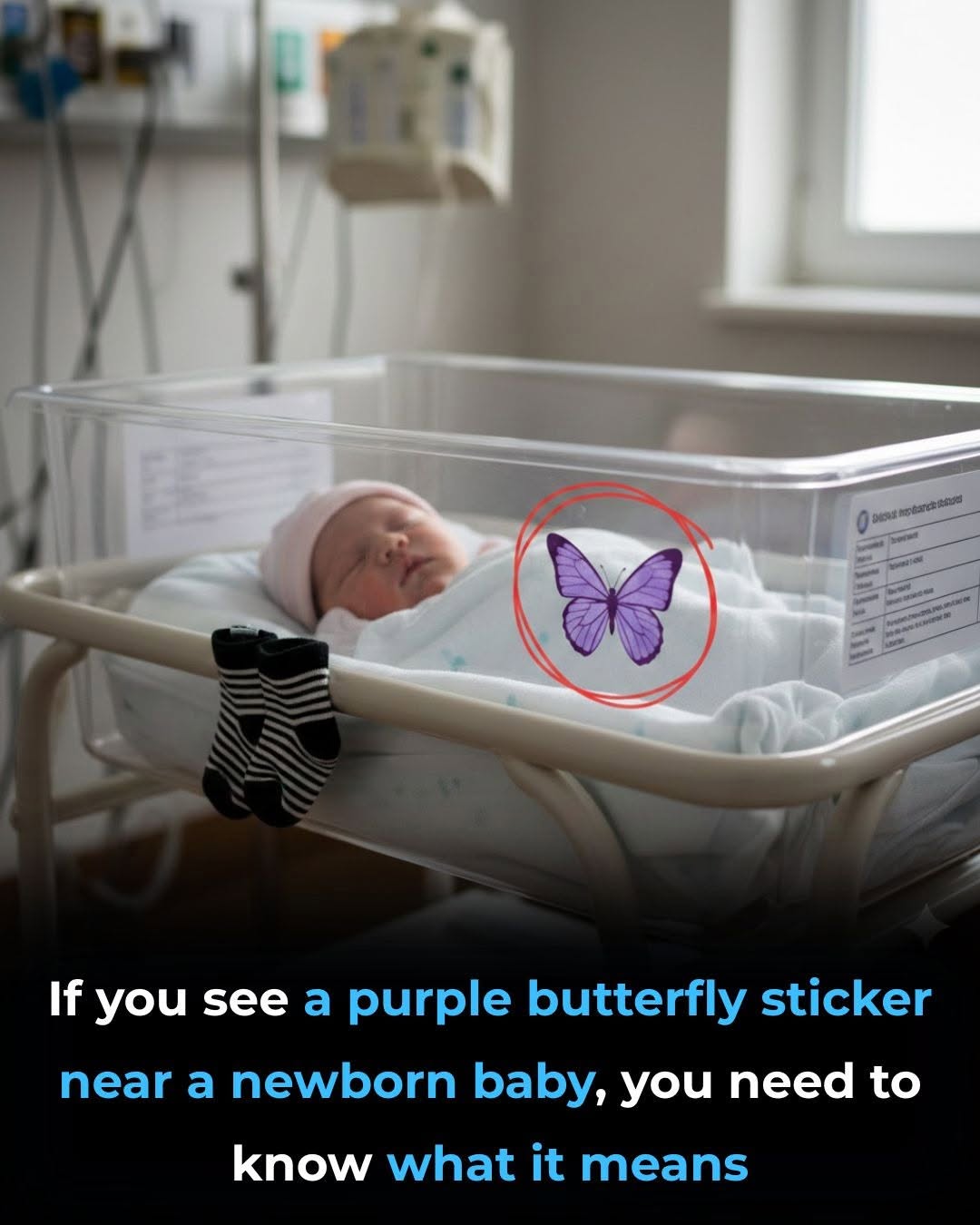
In hospitals around the world, especially in maternity wards and neonatal intensive care units (NICUs), you may occasionally notice a small purple butterfly sticker placed on a newborn baby’s crib, incubator, or hospital bassinet. At first glance, it may seem like a simple decoration, but this symbol carries a deeply emotional and important message. For many families, the purple butterfly represents love, loss, remembrance, and compassion.
The Purple Butterfly Initiative was created to raise awareness about families who have experienced the loss of one or more babies in a multiple pregnancy. If a baby is born as part of a set of twins, triplets, or other multiples, and one or more siblings pass away during pregnancy, at birth, or shortly afterward, a purple butterfly may be displayed near the surviving baby. The symbol helps communicate this sensitive information to healthcare staff, visitors, and other parents without requiring the grieving family to repeatedly explain their loss.
The Origin of the Purple Butterfly Initiative
The initiative began in the United Kingdom through the efforts of a mother named Millie Smith. During her pregnancy, she was expecting identical twin girls. Unfortunately, one of the twins was diagnosed with a fatal condition and was not expected to survive after birth. Following delivery, the baby lived only a short time before passing away, while her twin sister survived.
While staying in the neonatal unit, Millie frequently encountered well-meaning people who unknowingly made comments or asked questions about her twins. These conversations often reopened emotional wounds and forced her to relive the painful experience of losing one of her daughters. Wanting to prevent other families from going through similar situations, she worked to create a simple visual symbol that would quietly inform others of the family’s loss.
Thus, the purple butterfly was born.
Why a Butterfly?

The butterfly has long been associated with transformation, hope, the soul, and remembrance. Across many cultures, butterflies symbolize life’s fragility and beauty. They are often viewed as representations of loved ones who have passed away.
The color purple was chosen because it is gender-neutral and conveys dignity, compassion, and respect. Together, the purple butterfly became a meaningful emblem for babies who have lost a twin or sibling from a multiple pregnancy.
What Does the Sticker Mean?
When a healthcare worker, visitor, or family member sees a purple butterfly sticker near a newborn, it generally means:
- The baby was part of a multiple pregnancy.
- One or more siblings have died.
- The parents may be grieving while also celebrating the birth of their surviving child.
- Extra sensitivity and compassion should be shown when interacting with the family.
The symbol serves as a silent message that acknowledges both the joy and sadness present in the family’s experience.
The Emotional Reality for Parents
Losing a child is one of the most devastating experiences any parent can endure. For parents of multiples, the emotional situation can be especially complex. They may be overjoyed that one baby survived while simultaneously mourning the loss of another.
This mixture of happiness and grief can be difficult for others to understand. Family members often find themselves celebrating milestones with one child while remembering the sibling who is no longer there. The purple butterfly helps validate these feelings and reminds others that the family’s story includes both life and loss.
How the Symbol Helps
The purple butterfly initiative provides several important benefits:
1. Prevents Painful Questions
Without the symbol, visitors or hospital staff may innocently ask questions such as:
- “Where is the other twin?”
- “I thought there were two babies.”
- “How many babies did you have?”
Although these questions are not intended to cause harm, they can be extremely painful for grieving parents.
2. Encourages Compassion
The sticker gently informs others that special care and sensitivity are needed. It helps create an environment of understanding and respect.
3. Supports Healing
Parents often feel comforted knowing that their baby’s life is being acknowledged. Even though the child may not have survived, the butterfly symbolizes that the baby mattered and will not be forgotten.
4. Raises Awareness
 Continued on the next page
