
3. Natural Detox Support
Traditional herbal medicine often used Wood Sorrel to help the body remove toxins naturally. It was believed to support liver and kidney function when consumed carefully in small amounts.
4. Anti-Inflammatory Properties
Some natural compounds found in the plant may help calm minor inflammation. Folk remedies sometimes applied crushed leaves to insect bites or irritated skin.
Can You Eat It?


Yes — Wood Sorrel is edible in small quantities. It has a refreshing lemon-like flavor that many people enjoy in:
- Salads
- Soups
- Herbal teas
- Fish dishes
- Garnishes
However, because it contains oxalic acid, it should not be eaten excessively. People with kidney problems should consult a doctor before consuming it regularly.
Why Most People Ignore This Plant
Many useful wild plants are labeled as “weeds” simply because they grow freely. Modern lifestyles caused people to forget the traditional knowledge that older generations once used every day.
Wood Sorrel is a perfect example of nature hiding valuable treasures in plain sight.
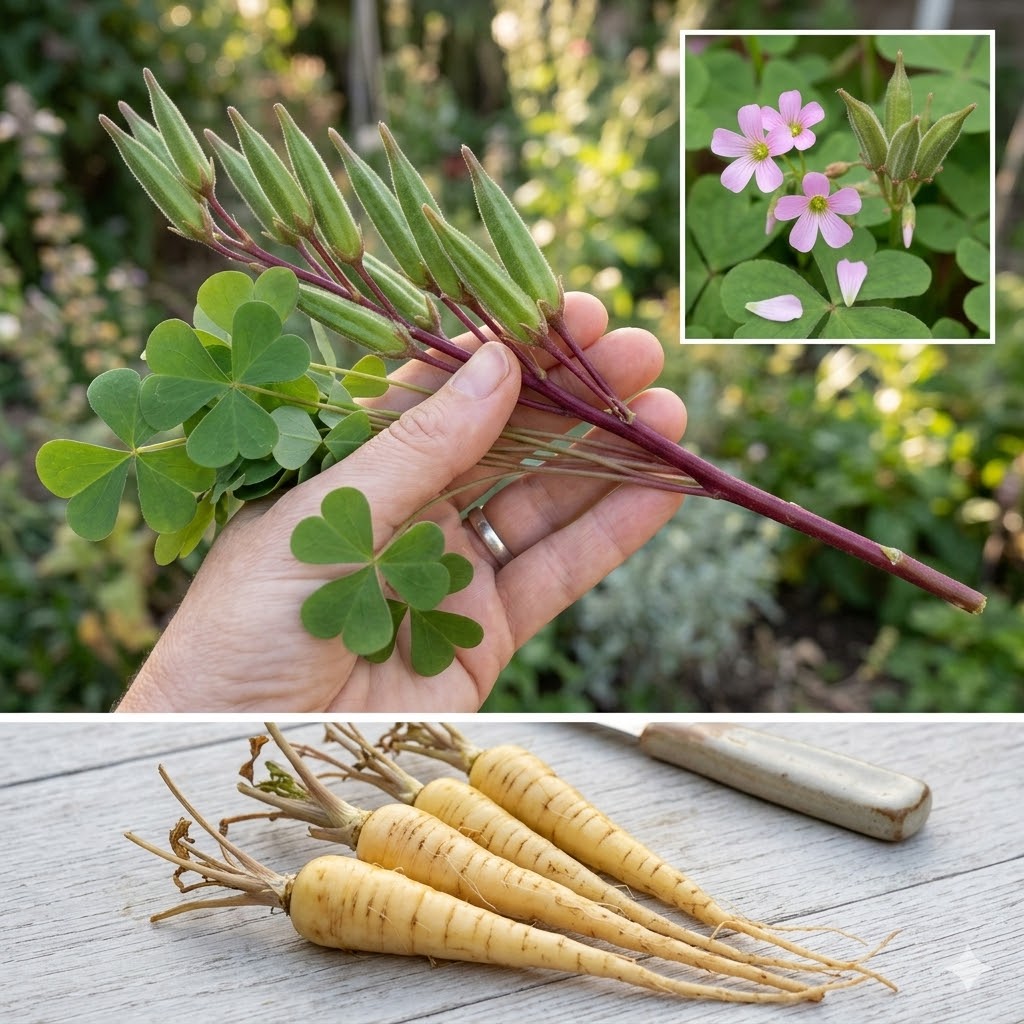
How to Identify Wood Sorrel Safely


Here are some easy identification tips:
- Heart-shaped leaves
- Three leaflets similar to clover
- Sour lemon-like taste
- Small delicate flowers
- Thin reddish stems
Always make sure the plant has not been sprayed with chemicals before harvesting.
Final Thoughts
The next time you see this tiny plant growing in your garden or near the sidewalk, don’t dismiss it too quickly. Wood Sorrel is proof that nature often hides extraordinary value inside the simplest things.
What many people call a useless weed may actually be one of the most fascinating wild plants growing around us today.
