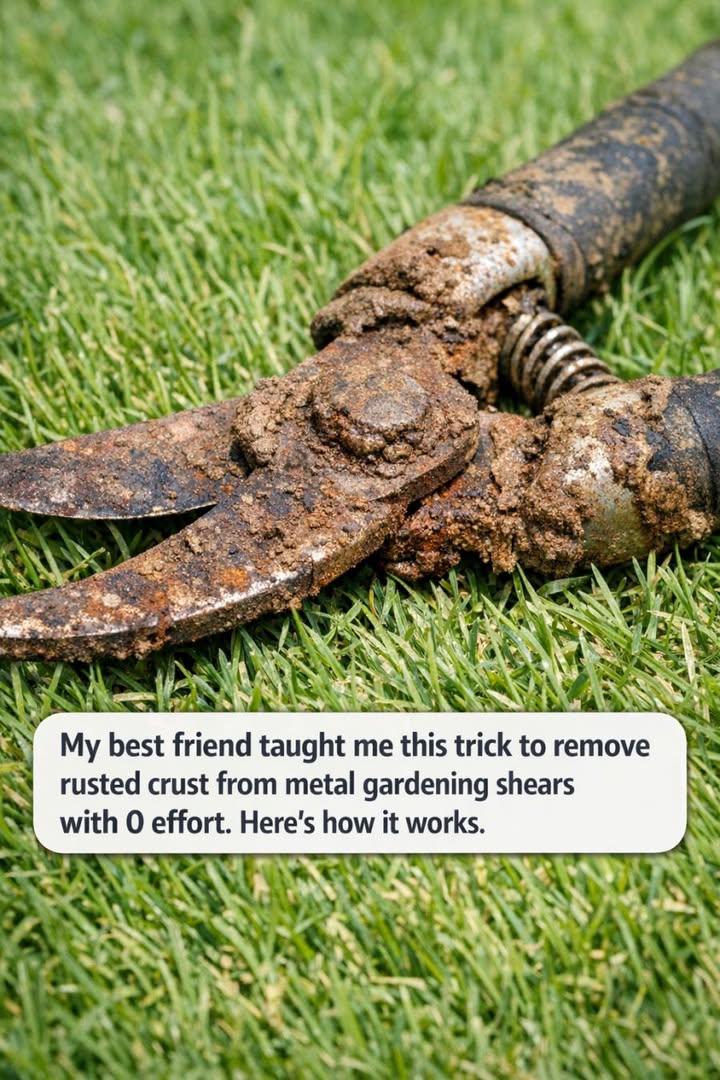
7. The Satisfying Rinse-And-Wipe Reveal
After the soaking period, remove the shears from the vinegar and rinse them thoroughly with water. You’ll likely see that much of the rust has already lifted away during the soak.
For any remaining residue, sprinkle a bit of baking soda on the shears and use a soft cloth or sponge to gently scrub the blades. The baking soda acts as a mild abrasive, helping to remove any lingering rust particles. Once cleaned, rinse the shears again and dry them thoroughly to prevent any new rust from forming.
8. A Quick Sharpen-And-Oil To Make Them Feel Brand-New
With the rust gone, it’s time to sharpen and oil the blades to restore their cutting efficiency and protect them from future rust. Use a sharpening stone or file to hone the edges, ensuring a clean and precise cut.
After sharpening, apply a few drops of mineral oil or any light machine oil to a cloth and rub it over the blades. This thin oil layer acts as a barrier against moisture, keeping your shears rust-free and in prime condition for your next gardening session.
9. Common Mistakes That Make Rust Removal Way Harder Than It Needs To Be
One common mistake is not allowing the shears to soak long enough, which can result in incomplete rust removal. Be patient and give the vinegar time to work its magic.
Another mistake is neglecting to dry the shears thoroughly after rinsing. Any remaining moisture can lead to new rust forming, undoing all your hard work. Always ensure the shears are completely dry before storing them.
10. How To Keep Your Shears Rust-Free With Almost No Maintenance
To keep your shears rust-free, store them in a dry place away from moisture. Wipe them down after each use to remove any plant sap or soil that could promote rusting.
Regularly oiling the blades with a light machine oil can also prevent rust formation. A quick wipe after each use will add a protective layer, ensuring your shears remain in top condition with minimal effort.
11. When This Trick Isn’t Enough—And What To Try Next
In some cases, particularly with severe rust damage, this vinegar and baking soda method might not be enough. If your shears are heavily corroded, you may need to use a commercial rust remover or rust converter to tackle the problem.
If the blades are still not functioning well after rust removal, consider taking them to a professional for sharpening. Additionally, if the rust has caused significant pitting or damage, it may be time to invest in a new pair of shears to ensure your gardening tasks are completed effectively.