
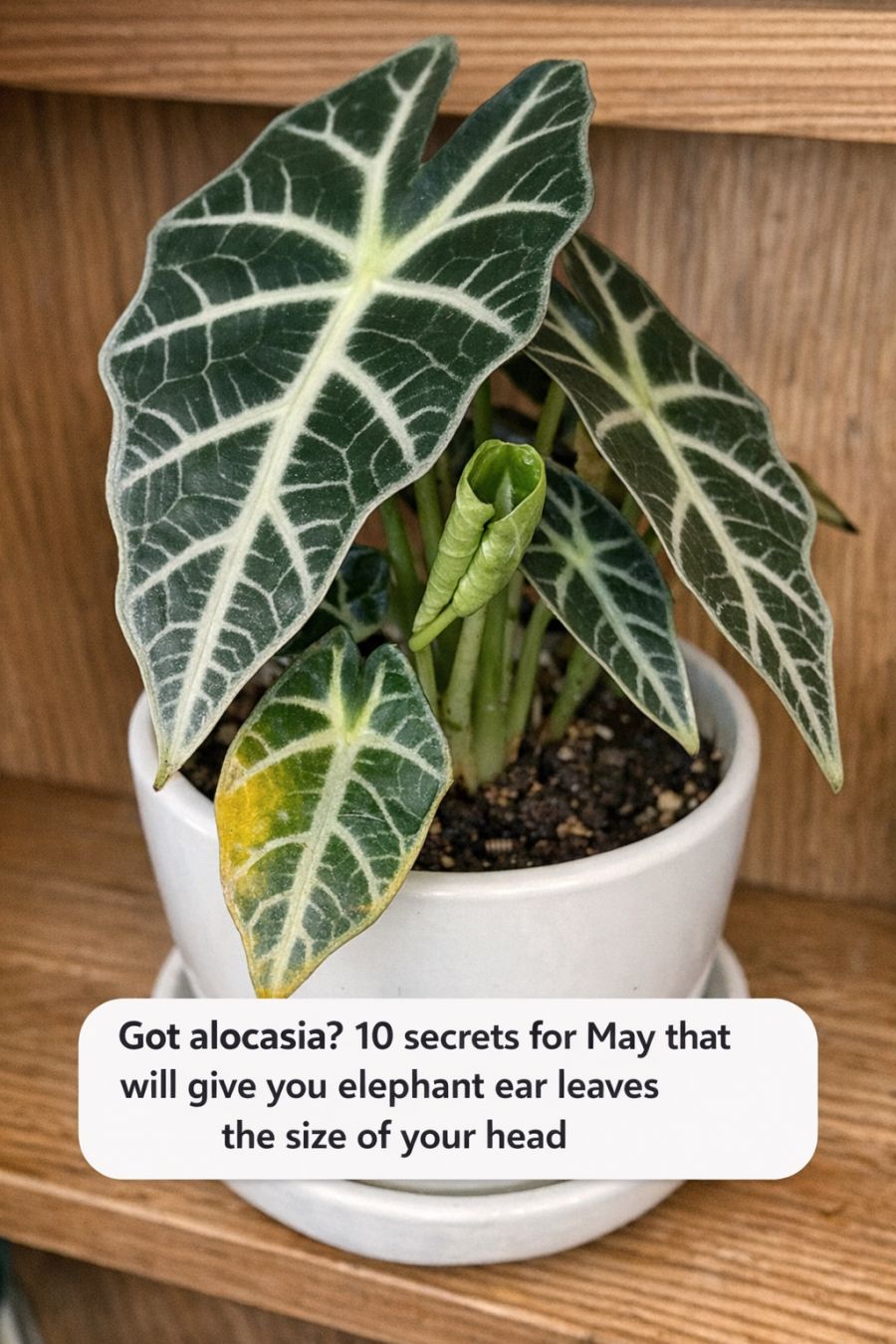
5. Repot at the Perfect Moment to Unlock Bigger Elephant Ears
Repotting gives your alocasia more room to grow, which is essential for larger leaves. May is an excellent time to repot if your plant is root-bound. Choose a pot that is 2 inches larger in diameter than the current one.
Use a well-draining soil mix, incorporating materials like perlite or orchid bark to improve aeration. Be gentle with the roots during the process, and water thoroughly after repotting to help the plant settle into its new home.
6. Create Jungle Humidity Without Expensive Gadgets
Alocasias thrive in high humidity, ideally around 60-80%. If you don’t have a humidifier, there are several simple ways to increase humidity. Grouping plants together creates a microclimate with higher humidity levels.
You can also place a tray filled with pebbles and water beneath the pot—just make sure the pot isn’t sitting directly in water. Misting is another option, but do it in the morning to allow leaves to dry by evening and prevent fungal issues.
7. Warm Roots, Cooler Leaves: The Temperature Trick for Massive Foliage
Keeping your alocasia warm is key to its health. Aim for a consistent temperature between 65°F and 85°F (18°C to 29°C). While alocasias enjoy warmth, they appreciate cooler nights, which mimic their natural habitat.
Avoid placing them near cold drafts or air conditioning vents, as sudden temperature changes can stress the plant. If needed, use a heat mat under the pot to keep the roots warm, which can encourage more robust growth.
8. Use Strategic Pruning to Force Your Plant to Go Big, Not Many
Pruning can help direct your plant’s energy towards growing larger leaves. In May, focus on removing smaller, weaker leaves and any spent foliage.
This not only improves the plant’s appearance but also redirects nutrients to the newer, healthier growth. Always use sterilized pruning shears to prevent disease spread, and avoid removing more than 20% of the plant at once to reduce stress.
9. Leaf-Cleaning and Dust Control: The Overlooked Growth Booster
Dust accumulation can block light from reaching your alocasia’s leaves, hindering photosynthesis. Regularly clean the leaves with a damp cloth or give them a gentle shower to remove dust and debris.
This not only enhances light absorption but also keeps the leaves looking glossy and healthy. Be gentle to avoid damaging the delicate leaf surface, and dry them off afterward to prevent water spots.
10. Spot and Stop Pests Early So They Don’t Stunt New Monster Leaves
Common pests like spider mites and aphids can quickly stunt your alocasia’s growth. In May, inspect your plant closely for any signs of infestation, such as webbing or sticky residue.
If you spot pests, isolate the plant and treat it with insecticidal soap or neem oil. Regular checks and prompt action can prevent these pests from
causing significant damage and ensure your alocasia continues to thrive.
