
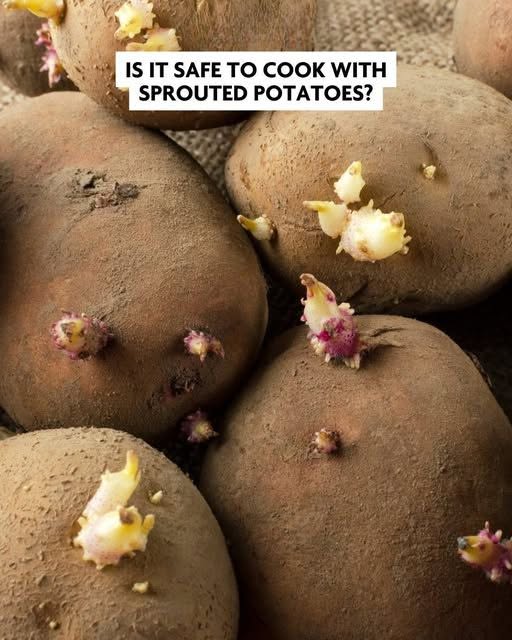
Potatoes are one of the most commonly used foods in kitchens around the world. However, if you’ve ever left a bag of potatoes sitting in your pantry for a few weeks, you’ve probably noticed small shoots or “eyes” beginning to grow. These sprouts often make people wonder whether the potatoes are still safe to eat or if they should be thrown away.
The good news is that sprouted potatoes are not always dangerous, but their safety depends on how much they have sprouted and their overall condition.

Why Do Potatoes Sprout?
Potatoes are living tubers that naturally begin a new growth cycle over time. When stored in warm temperatures or exposed to light, they start producing sprouts as they prepare to grow into a new plant. This process is completely natural, but it also causes changes inside the potato that can affect both its taste and safety.
What Happens When a Potato Sprouts?
As sprouts develop, the potato uses its stored nutrients to support new growth. This can cause the potato to become softer, wrinkled, and less nutritious. At the same time, levels of naturally occurring compounds called glycoalkaloids may increase, especially around the sprouts and any green-colored areas.
These compounds help protect the potato from insects and disease, but in large amounts they can be harmful to humans.
Are Sprouted Potatoes Safe to Eat?
In many cases, yes. A potato that has only a few small sprouts and remains firm can usually be eaten safely. Simply remove the sprouts and cut away any green sections before cooking.
However, safety decreases as sprouting becomes more extensive. Potatoes that are heavily sprouted, shriveled, soft, or largely green should be discarded because they may contain higher levels of glycoalkaloids.
Understanding Green Potatoes

Many people assume that green potatoes are simply unripe, but the green color is actually caused by chlorophyll production when potatoes are exposed to light. While chlorophyll itself is harmless, its presence often indicates increased glycoalkaloid levels.
If only a small area is green, it can be cut away. If much of the potato is green, it is best not to eat it.
Symptoms of Glycoalkaloid Poisoning
Eating potatoes with high levels of glycoalkaloids may cause symptoms such as:
- Nausea
- Vomiting
- Diarrhea
- Stomach cramps
- Headaches
- Dizziness
Severe cases are rare, but consuming large amounts can lead to more serious health effects.
Can Cooking Make Sprouted Potatoes Safe?

Unfortunately, cooking does not completely destroy glycoalkaloids. Boiling, baking, frying, or microwaving may reduce some compounds slightly, but significant amounts can remain if the potato contains high toxin levels.
For this reason, removing sprouts and green areas before cooking is important, and heavily sprouted potatoes should be discarded rather than cooked.
How to Tell If a Potato Should Be Thrown Away
Continued on next page:
