
You crack open an egg — and suddenly, your kitchen fills with a sulfurous stench.
We’ve all been there.
But what if you could test an egg before cracking it — and know for sure whether it’s fresh, usable, or spoiled?
Good news:
👉 You can.
With a few simple, science-backed tricks, you can check egg freshness in seconds — no smell test required.
Whether you buy from the store, farmers market, or raise chickens yourself, these 5 proven methods will help you:
- Avoid bad eggs
- Reduce food waste
- Cook with confidence
Let’s crack into it!
🧪 The Science Behind Egg Freshness
As eggs age:
- The air cell inside grows larger
- The inner membranes weaken
- The pH rises, making the white thinner
- Moisture escapes through pores in the shell
These changes affect texture, smell, and safety — but you can detect them early with the right tests.
🔍 5 Ways to Test Egg Freshness
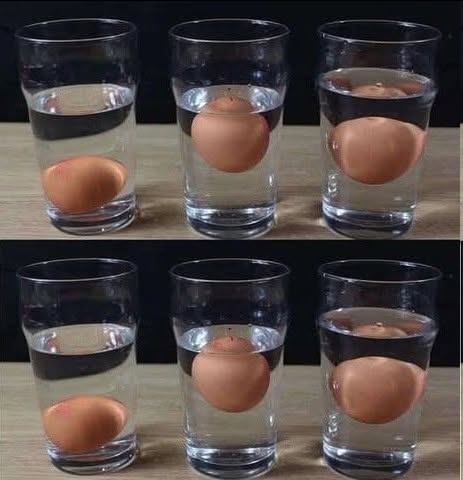
1. The Float Test (Best for Unbroken Eggs)
- Fill a bowl with cold water
- Gently place the egg in the water
- Observe what happens:
- ✅ Sinks and lies flat → Fresh (1–6 days old)
- ✅ One end lifts up → A few weeks old, still good
- ❌ Floats to the top → Old or spoiled — discard
📌 Why it works: Older eggs have larger air cells — they float!
🚫 Don’t eat floating eggs — even if they smell okay.
2. The Shake Test (Quick & Silent)
- Hold the egg close to your ear
- Gently shake it
- What you’ll hear:
- ✅ No sound → Fresh
- ❌ Sloshing sound → Old — moisture has separated, air cell is large
📌 Not 100% reliable, but useful for quick checks.
3. The Crack Test (Visual Check)
- Crack the egg onto a plate
- Look at the yolk and white:
- ✅ Yolk is round and high, white is thick and clumped → Fresh
- ❌ Yolk is flat, white is watery and spreads out → Older
- ❌ Pink, green, or cloudy white → Spoiled — discard immediately
📌 Never eat eggs with off colors or foul odor.
4. The Sniff Test (Final Safety Check)
- Crack the egg and smell it
- Fresh egg → Neutral or slightly eggy smell
- ❌ Rotten egg → Strong, sulfur-like (rotten egg) smell — toss it!
📌 The smell comes from hydrogen sulfide — a sign of bacterial breakdown.
🔥 Cooking won’t make a rotten egg safe.
5. The Spin Test (For Hard-Boiled Eggs)
- Place a hard-boiled egg on a flat surface
- Spin it like a top
- What happens:
- ✅ Spins smoothly and fast → Freshly boiled
- ❌ Wobbles or spins slowly → Older or spoiled
📌 Works because fresh eggs have tighter, more centered yolks.
✅ What to Do With Older (But Still Good) Eggs
see continuation on next page
