
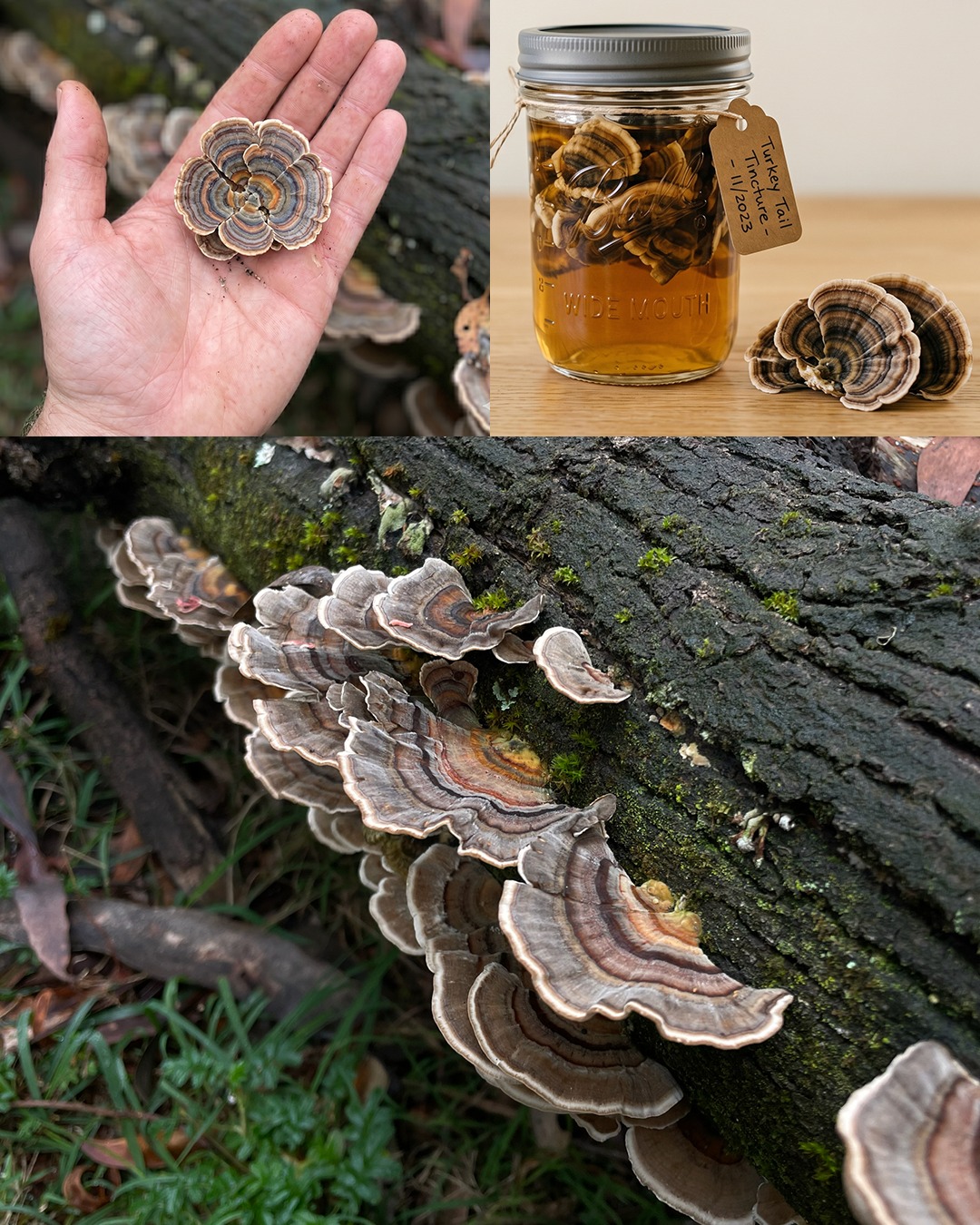
If you spend time looking at fallen logs in the woods, you might notice small, fan-shaped growths with colorful stripes. This is the turkey tail mushroom. For generations, people have valued this simple mushroom not as a food, but as a real treasure for overall wellness. Instead of complex laboratory products, many people prefer to make their own homemade preparations to capture its worth.
What Makes It Worth Gold?
Why do so many people consider this mushroom such a valuable find? The secret lies in its natural compounds that support the body in several key ways.
- Building Your Natural Shield: It is famous for supporting your body’s natural defenses. Think of it as a daily reinforcement for your immune system, helping you stay resilient and strong year-round.
- Inner Balance: The mushroom is packed with beneficial natural fibers. These act as nourishment for your gut, keeping your digestive system happy, calm, and balanced.
- Skin and Vitality: Traditionally, people have applied homemade extracts topically to calm troubled or upset skin. Meanwhile, taking it internally is often linked to a steady, grounded sense of daily energy without the crash of caffeine.
- Long-Term Resilience: While research is always ongoing, many herbalists view it as a deep-level support system when the body is facing heavy physical stress or deep fatigue, acting as a golden support for your overall vitality.
How to Find and Source It
You do not need to buy expensive products if you know what to look for outdoors. Finding it yourself is a rewarding activity that gets you out into fresh air.
- Where it grows: Look for dead or decaying hardwood logs, like oak, beech, or maple. They grow all over the world in wooded areas.
- What it looks like: The top of the mushroom is fuzzy and velvety, with concentric rings of alternating colors—often browns, tans, grays, and whites. It looks exactly like the fanned tail feathers of a wild turkey.
- The key test: Flip the mushroom over. The underside should be bright white or cream and covered in thousands of tiny, almost invisible pores. If it has lines or gills (like a standard grocery store mushroom) or if it is completely smooth, leave it alone.
- Harvesting: Use a small knife or scissors to cleanly cut the fans from the wood. Only take what you need, leaving some behind so the fungi can continue growing.
Making Your Own Extract
Because the beneficial parts of the mushroom are locked behind tough cell walls, you cannot just eat it raw or sprinkle it on food. The most popular homemade method is creating a liquid extract using two simple steps.
- Step 1: Chop and Dry. Cut your fresh mushrooms into small pieces and let them dry completely on a paper towel for a few days.
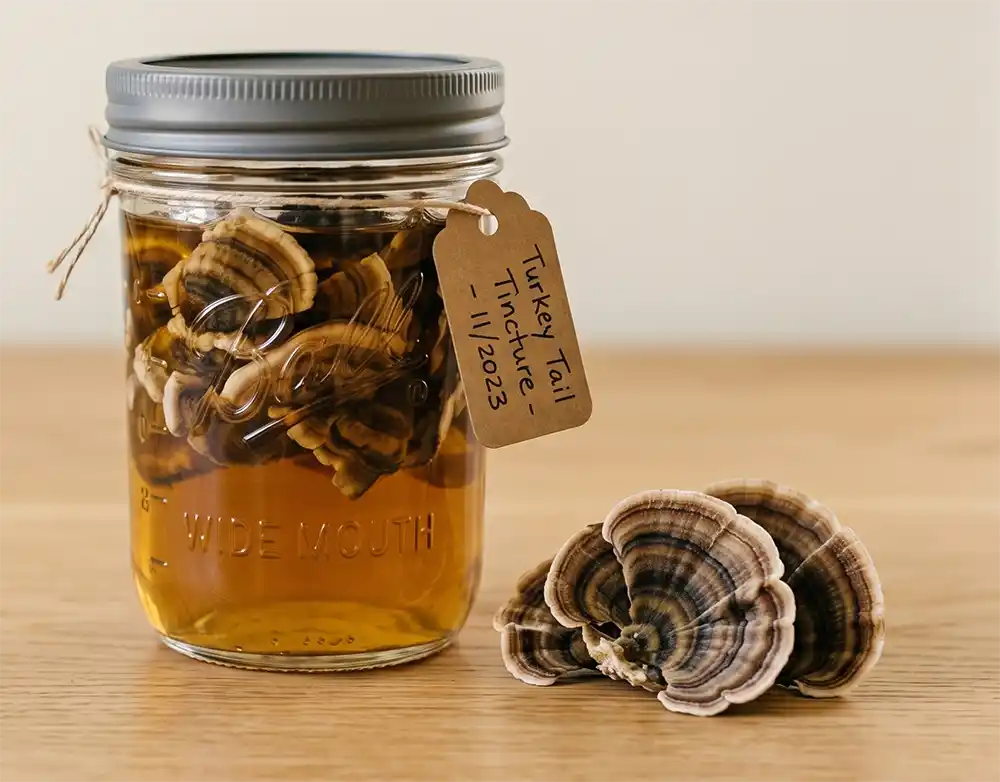
- Step 2: The First Soak. Fill a glass mason jar halfway with the dried pieces. Cover them completely with high-proof, clear alcohol (like standard vodka). Put the lid on, place it in a dark cupboard, and shake it every few days for about four to six weeks.
- Step 3: Strain and Save. Strain the dark liquid into a clean jar and set it aside. Do not throw away the soaked mushrooms!
- Step 4: The Water Simmer. Take those same mushroom pieces and simmer them in a pot of water on your stove for about two hours. You want the water to slowly boil down into a strong, dark, earthy tea.
- Step 5: Combine the Treasure. Let the water cool completely. Strain out the mushrooms (you can throw them in your compost bin now), and mix the dark water with your set-aside alcohol extract. You now have a complete, homemade extract.
Using It Safely
Using your homemade supply is very simple and easy to add to a normal morning routine.
- Daily Routine: Most people take one or two dropperfuls of the combined liquid daily. Because it has a strong, earthy taste, it is best mixed into a morning cup of coffee, tea, or a small glass of water.
- Safety Keep-in-Minds: Turkey tail is considered very safe for most people. However, it is always smart to start with just a few drops to see how your body reacts. If you are pregnant, nursing, or managing a serious health condition, you should always talk to a professional before adding new herbs or wild plants to your daily routine.
