
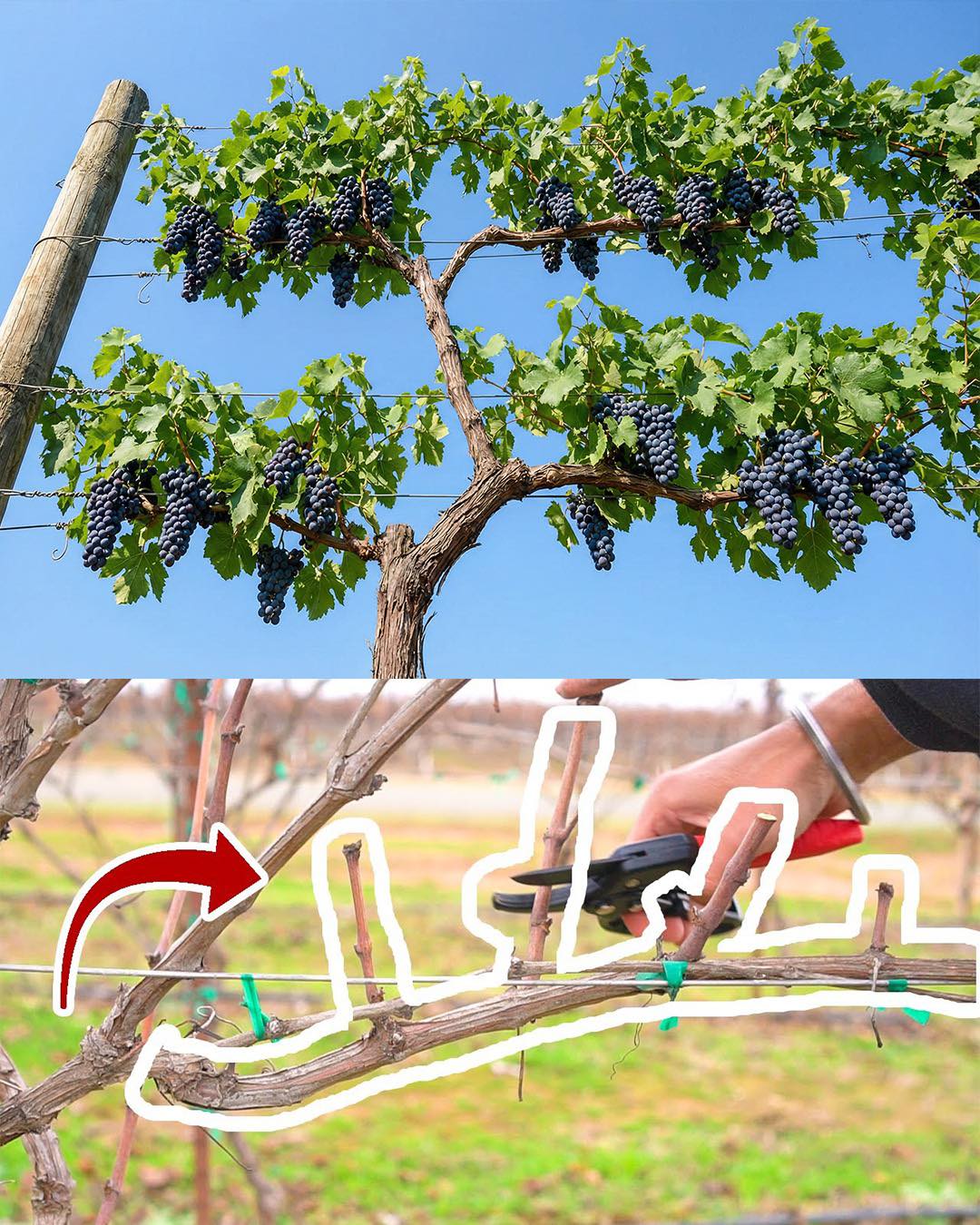
If you want grapevines that produce large, flavorful, sweet fruit, pruning is one of the most important jobs in the garden. Many home growers let vines become tangled and overgrown, thinking more growth means more grapes. In reality, the opposite is often true. A vine with too many canes and too much old wood spreads its energy too thin, which can lead to smaller clusters, less sweetness, and weaker overall production.
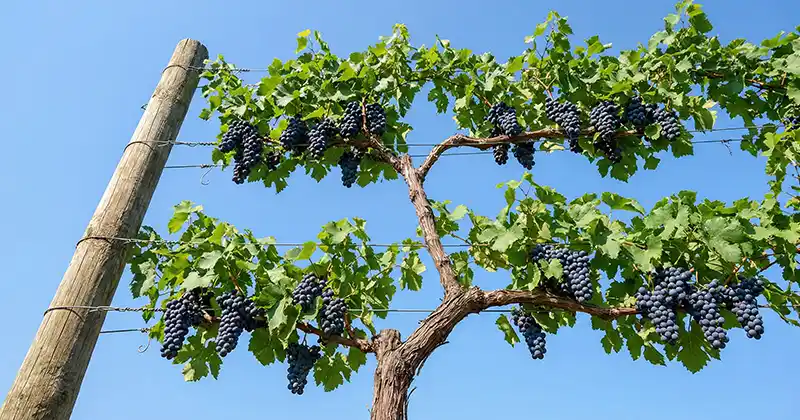
The good news is that grapevines are vigorous and forgiving. Even a heavily overgrown plant can usually be brought back into shape with the right winter pruning. The key is understanding where grapes form, which wood to keep, and how to guide the plant so it focuses its strength on a manageable number of fruiting shoots.
Prune at the Right Time
The best time to prune grapevines is during winter dormancy, after the leaves have dropped and the structure of the vine is easy to see. This is when the plant is resting, and pruning encourages strong new growth once spring arrives.
Dormant pruning makes it easier to identify the main parts of the vine:
- Trunk – the main vertical stem
- Cordons – the permanent horizontal arms trained along a wire or support
- Canes – the shoots that grew during the previous season
- Buds – the small points on the canes where new shoots will emerge
Before you begin, always use clean, sharp pruning shears. Sanitized tools reduce the risk of spreading disease from one plant to another.
Know Which Wood Produces Fruit
This is the most important rule of grape pruning: grapes grow on new shoots that emerge from last year’s canes. Older wood may support the vine, but it is not the most productive for fruiting. That is why annual pruning is essential.
A simple way to tell the difference is by color and age. One-year-old wood is usually lighter brown and smoother. Older wood, two years or more, is darker and thicker. When pruning, your goal is to preserve the best one-year-old growth and remove excess older material.
Start Young Vines with Cane Selection
For a young grapevine that is still being trained, begin by selecting two strong canes that can be guided horizontally in opposite directions. These will become the future cordons.
Choose canes that are:
- Strong and healthy
- Fairly thick
- Well positioned
- Growing in the direction you want to train them
Remove weak, thin, or poorly placed shoots. Once the two main canes are selected, tie or wrap them gently along a sturdy wire support. This creates an organized framework and sets the vine up for future production.
If the vine sends out too much growth in different directions, do not be afraid to cut hard. Grapevines recover quickly, and controlled structure is far better than chaotic growth.
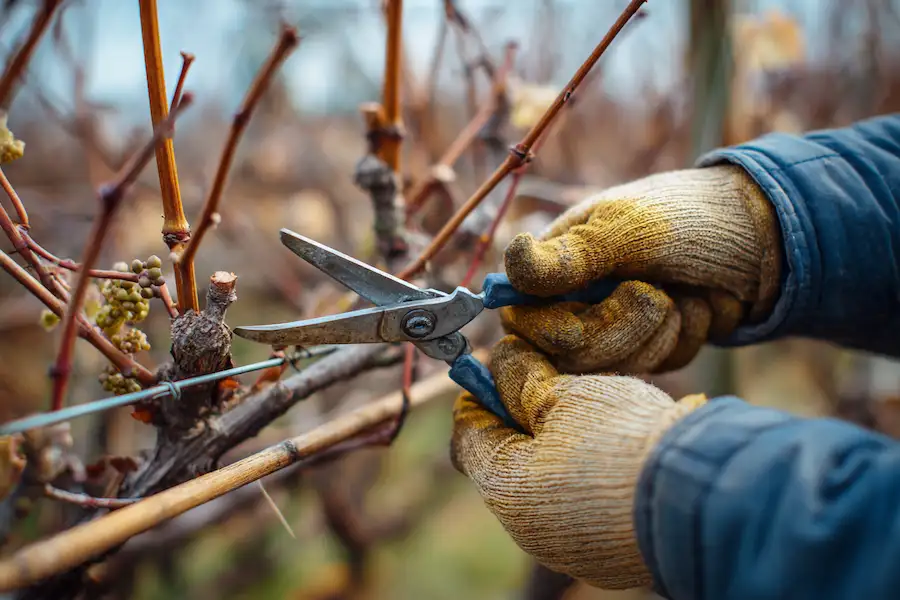
Use Spur Pruning on Established Vines
Continued on next page:
