
My mower belongs in a museum, not a garage. And yet, until a few years ago, I really thought it would come in handy one day. It didn’t. I was given a packet of teeny-tiny seeds that changed my little landscape… and my weekend routine.
No Mow Struggle Ever


I see most of my neighbors transitioning from traditional turf to ground covers. I think it’s partly about looks, but mostly about reclaiming their Saturday from a loud, thirsty, and ultimately ungrateful green lawn.
I’ve joined them, almost by accident. What started small turned into a full shift! Now a lot of homes on my block are trading noisy, sunburned, and patchy struggles for low-growing plants that mostly take care of themselves.
Our plants stay short and green, and, most importantly, they don’t demand a weekly haircut. The best part is the sweet perfume rising from every footstep, which sure beats the smell of gasoline and sweat on a summer afternoon.
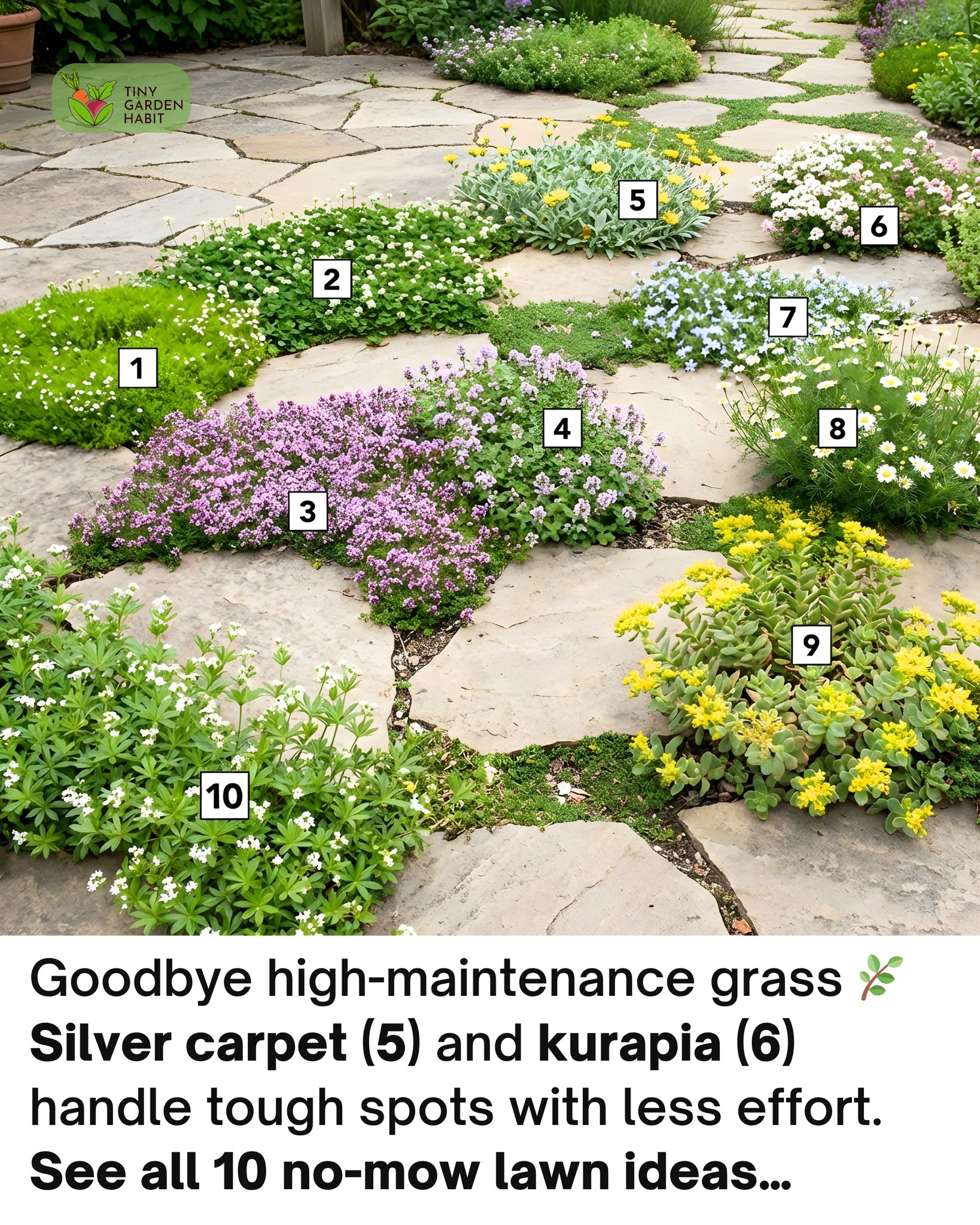
1. Irish Moss (USDA Zones 4-8)

🌱 Get Your FREE 2026 Sowing Calendar! 🌱
Plan your best garden yet! This printable 2026 Sowing Calendar tells you exactly when to plant your favorite vegetables, herbs, and flowers for a thriving garden all year long.
Emerald mounds thrive best in USDA Zones 4-8, which feels like a personal snub since my garden is in zone 9. I’d need to provide it with partial shade and consistently moist, well-draining soil or the plant would suffer in my giant air fryer of a yard.
I imagine it feels like walking on a soft cloud, but gardeners who grow it successfully suggest keeping foot traffic light. It’s more of a visual carpet than a play surface.
One thing to watch, especially in humid parts of the U.S., is drainage. Heat combined with soggy soil is the real enemy, that’s what leads to crown rot pretty quickly. Good airflow and sharp drainage make all the difference.
Quick note: Irish moss isn’t considered invasive, and it’s generally non-toxic to dogs and cats, making it a safe choice for ornamental areas.
2. Microclover (USDA Zones 3-10)

I love how this low-growing clover fixes nitrogen, which naturally improves the soil over time. It stays remarkably green during dry spells that usually stress standard fescue.
It also handles moderate foot traffic. My neighbor’s dogs run across it daily without leaving a single bare patch, which honestly surprised me.
Just be ready for bees. Even though they don’t bloom as much as the traditional white clover, when those tiny blossoms appear, they’ll attract pollinators all summer long.
Quick note: Microclover isn’t considered invasive, but it does spread steadily. It’s also generally non-toxic to pets.
3. Creeping Thyme (USDA Zones 4-9)

