
7. Thyme (Thymus vulgaris)
Thyme repels mosquitoes and whiteflies with its earthy scent.
- Best Uses:
- Use thyme essential oil or rub crushed thyme leaves on your skin.
- Plant it as a ground cover in garden beds.
- Growing Tips:
- Thyme loves full sun and dry, well-drained soil.
8. Citronella Grass (Cymbopogon nardus)
Citronella grass is famous for its ability to repel mosquitoes.
- Best Uses:
- Plant it around outdoor living areas.
- Use its leaves to create homemade mosquito-repellent candles.
- Growing Tips:
- Citronella prefers warm climates and full sun.
9. Chrysanthemums (Chrysanthemum spp.)
Chrysanthemums contain pyrethrum, a natural insecticide that deters ants, roaches, fleas, and ticks.
- Best Uses:
- Plant them near entryways or in garden beds to repel pests.
- Use dried chrysanthemum flowers in natural pest sprays.
- Growing Tips:
- These flowers thrive in full sun and rich, well-drained soil.
10. Sage (Salvia officinalis)
Sage is another herb that repels mosquitoes, flies, and other insects.
- Best Uses:
- Add fresh sage leaves to outdoor fires for a smoke that deters bugs.
- Keep potted sage plants near windows and doors.
- Growing Tips:
- Sage prefers well-draining soil and full sun.
11. Petunias (Petunia spp.)
Petunias are natural pest repellents for aphids, tomato worms, and squash bugs.
- Best Uses:
- Plant petunias in garden beds or hanging baskets near vegetable crops.
- Use them as decorative yet functional borders.
- Growing Tips:
- Petunias require full sun and regular watering.
12. Garlic (Allium sativum)
Garlic deters aphids, mosquitoes, and Japanese beetles with its strong sulfuric odor.
- Best Uses:
- Plant garlic in vegetable gardens to protect crops.
- Use garlic-infused sprays to repel insects.
- Growing Tips:
- Garlic grows best in full sun and loose, well-drained soil.
13. Bay Leaves (Laurus nobilis)
Bay leaves repel flies, moths, and cockroaches.
- Best Uses:
- Place dried bay leaves in cupboards and pantry shelves to deter pests.
- Grow bay laurel plants near windows or patios.
- Growing Tips:
- Bay laurel prefers full sun and well-drained soil.
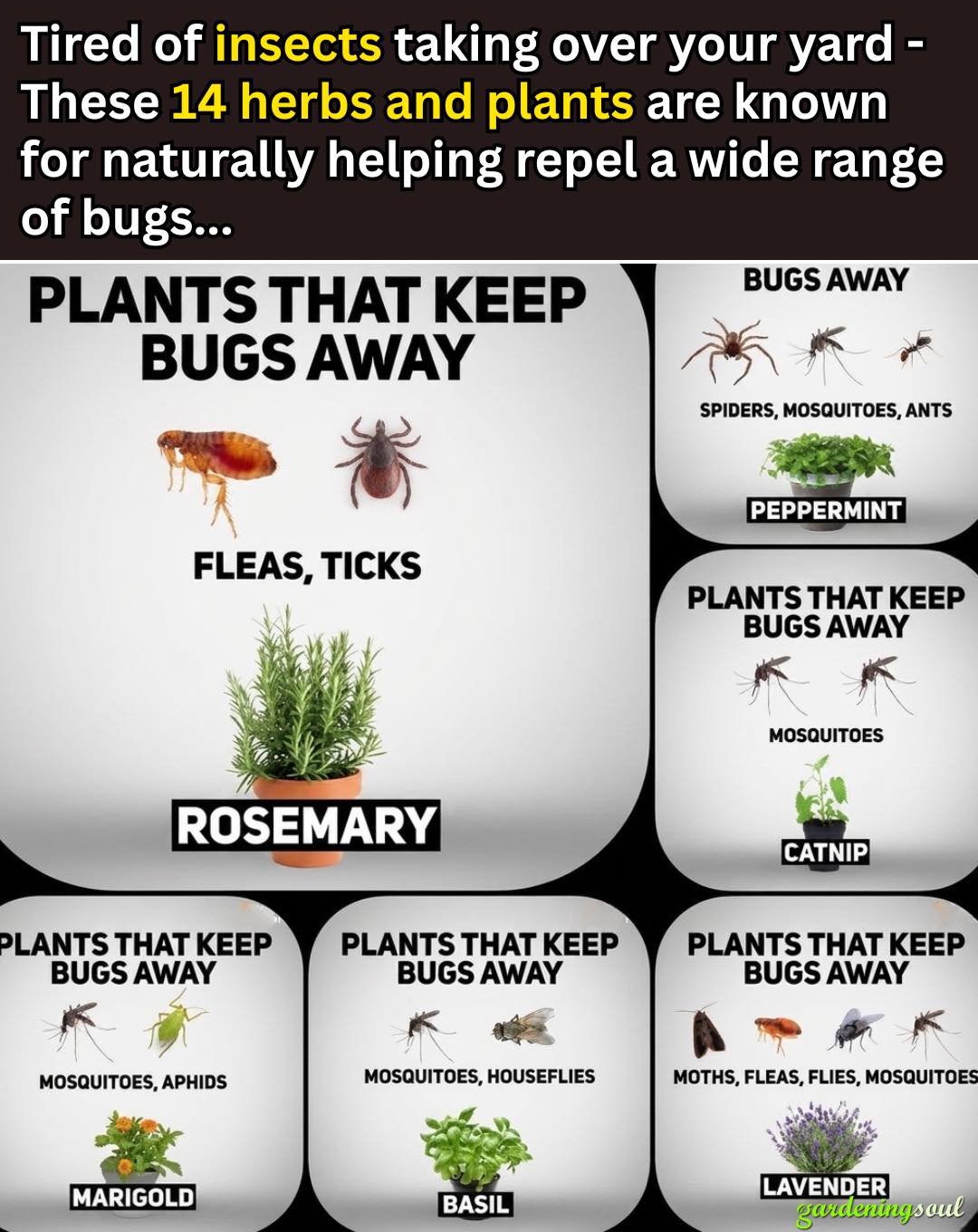
14. Catnip (Nepeta cataria)
Catnip contains nepetalactone, a compound that repels mosquitoes, flies, and cockroaches.
- Best Uses:
- Plant catnip in garden beds or containers.
- Use catnip leaves to create natural insect-repellent sprays.
- Growing Tips:
- Catnip thrives in full sun and well-drained soil.
How to Maximize the Effectiveness of Insect-Repelling Plants
- Strategic Placement:
- Place insect-repelling plants near entry points, patios, and areas where you spend time outdoors.
- Combine Plants:
- Use a mix of plants to target a variety of insects.
- Harvest Regularly:
- Prune plants often to release their natural oils and keep them healthy.
- Create DIY Sprays:
- Use leaves and essential oils from these plants to make homemade insect repellents.
Incorporating these 14 herbs and plants into your garden is a natural and effective way to keep insects at bay.
Not only do they repel pests, but many also offer additional benefits like culinary uses, medicinal properties, and aesthetic appeal.
