
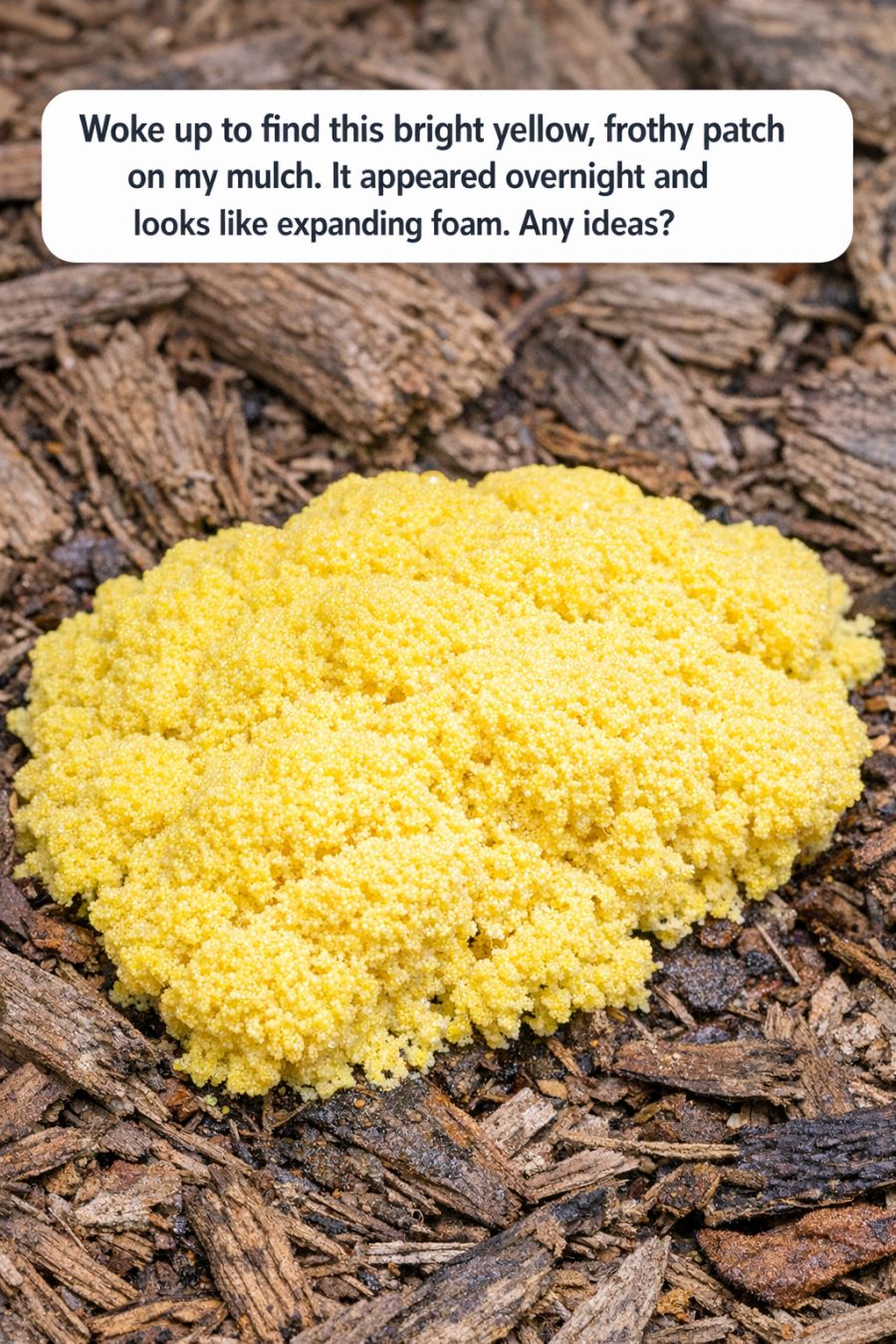
6. Common Conditions That Make Slime Mold Explode Across Mulch
Dog vomit slime mold tends to thrive in environments where the mulch is consistently moist and warm. This usually happens in regions with frequent rain followed by warm, sunny days. The organic matter in mulch provides an ideal substrate for the slime mold to grow and feed.
Excessive watering or poor drainage can also contribute to the ideal conditions for slime mold growth. Mulches made from wood chips or bark are particularly conducive to slime mold because they retain moisture well and provide ample organic material for the mold to consume.
7. Simple Ways to Remove or Control Dog Vomit Slime Mold
If you find the appearance of dog vomit slime mold unsightly, there are several simple ways to manage it. One method is to physically remove it using a rake or shovel. This can help prevent it from forming spore-producing structures, reducing its spread.
Improving air circulation around your mulch and avoiding overwatering can also help control slime mold growth. Allowing the mulch to dry out between watering reduces the moisture level that slime molds thrive on, making it less likely for them to appear.
8. When You Should Leave Slime Mold Alone—and Why
In most cases, it’s perfectly fine to leave dog vomit slime mold alone. It will naturally dry up and disappear as conditions change, often within a few days. By allowing it to complete its life cycle, you’re contributing to the natural decomposition process and nutrient cycling in your garden.
Leaving slime mold undisturbed also encourages biodiversity, as it provides a food source for certain insects and other microorganisms. Unless its presence is particularly bothersome to you, letting it be is often the best course of action.
9. Natural and Chemical Treatments: What Actually Works
For those who prefer intervention, natural treatments such as increasing sunlight exposure and improving garden airflow can be effective. Changing the type of mulch to one that dries out more quickly, like pine needles, can also help.
Chemical treatments are generally unnecessary and not recommended for slime mold, as they are not fungi and do not respond to fungicides. Instead, focusing on environmental controls and physical removal will yield better results.
10. How to Prevent Future Slime Mold Blooms in Your Garden
Preventing future slime mold blooms involves managing the moisture levels and organic content in your garden. Ensure that your mulch is not too thick, as a thinner layer allows for better drying and air circulation. Regularly turning the mulch can also help by disrupting the mold’s growth.
Consider using mulch types that dry out more quickly after rain, such as straw or pine needles. Improving drainage around your garden beds and avoiding excessive watering will also create less hospitable conditions for slime mold.
11. When a Strange Patch on Your Mulch Warrants Expert Help
While dog vomit slime mold is usually harmless, there are instances where you might want to seek expert help. If you’re unsure whether the organism is indeed slime mold or if it’s growing excessively large and persistent, consulting with a local extension service or a professional gardener can provide clarity.
Additionally, if you notice other issues in your garden, such as plant diseases or unusual pest activity alongside the slime mold, it might be worth getting a professional opinion to ensure that your garden’s health is not compromised.
