
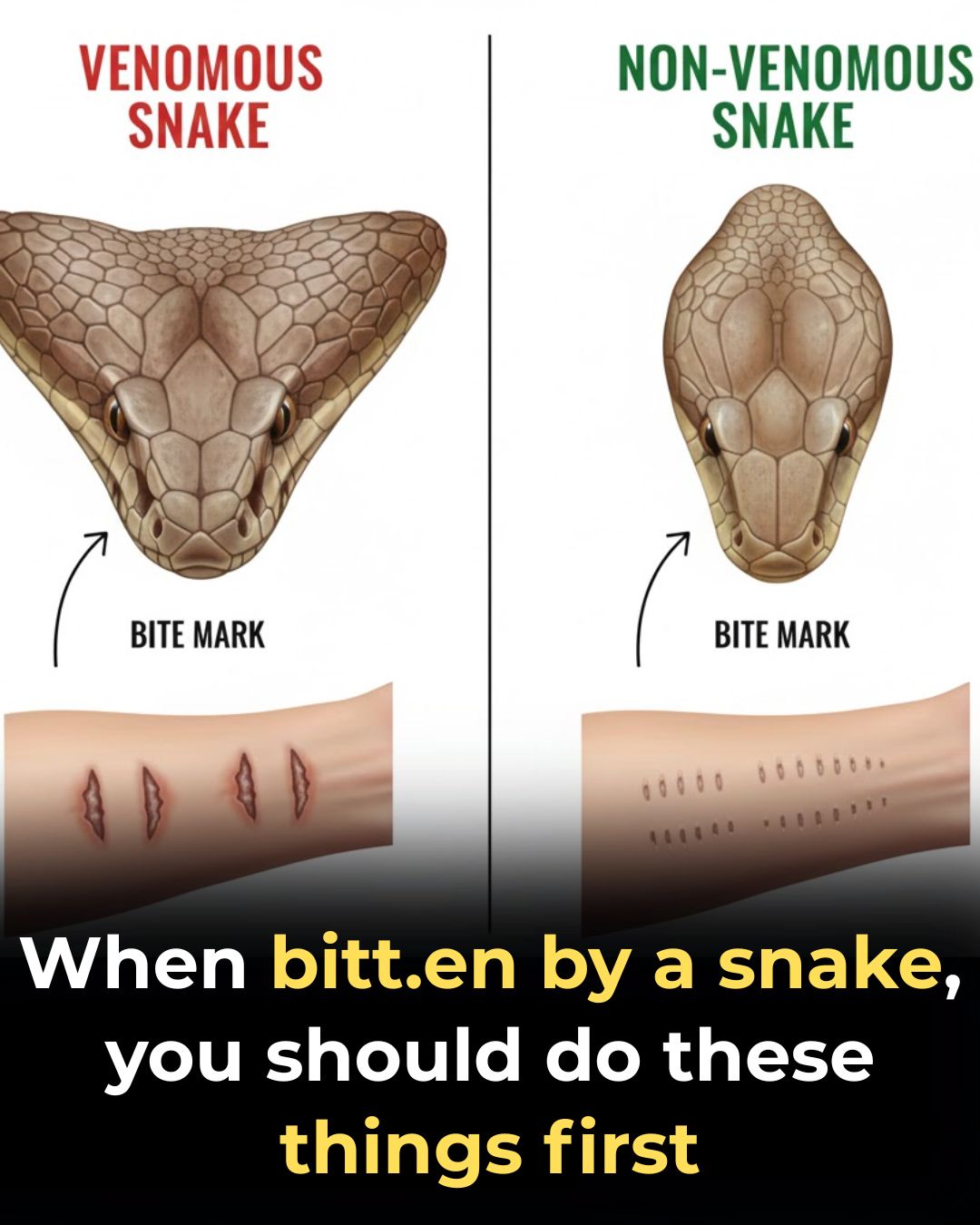
Venomous vs Non-Venomous Snake Bite


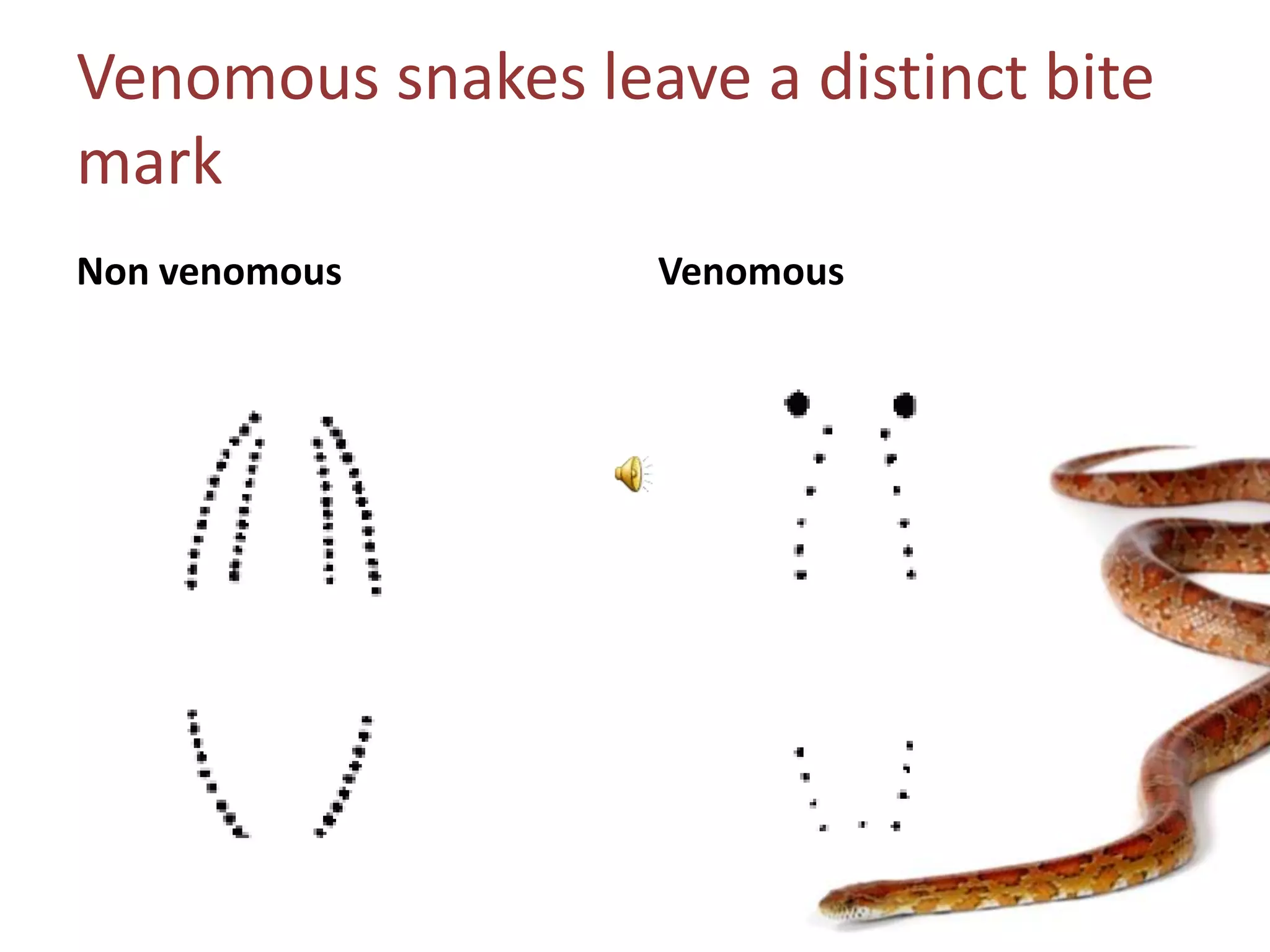
A snake bite can look different depending on whether the snake is venomous or non-venomous.
Venomous Snake Bite
Common characteristics:
-
Usually two deep puncture marks caused by the snake’s fangs.
-
Rapid swelling around the bite area.
-
Severe pain or burning sensation.
-
Skin redness, bruising, or blistering may appear within hours.
-
Possible symptoms: nausea, dizziness, sweating, or breathing problems.
Non-Venomous Snake Bite
Typical signs include:
-
Several small teeth marks or scratches instead of two deep holes.
-
Mild pain similar to a scratch.
-
Minimal swelling or redness.
-
Usually no serious body symptoms.
⚠️ Important: Bite marks alone are not always reliable, and any snake bite should be treated as a medical emergency.
First Aid for Snake Bites
Continued on next page:
Pages: 1 2
