
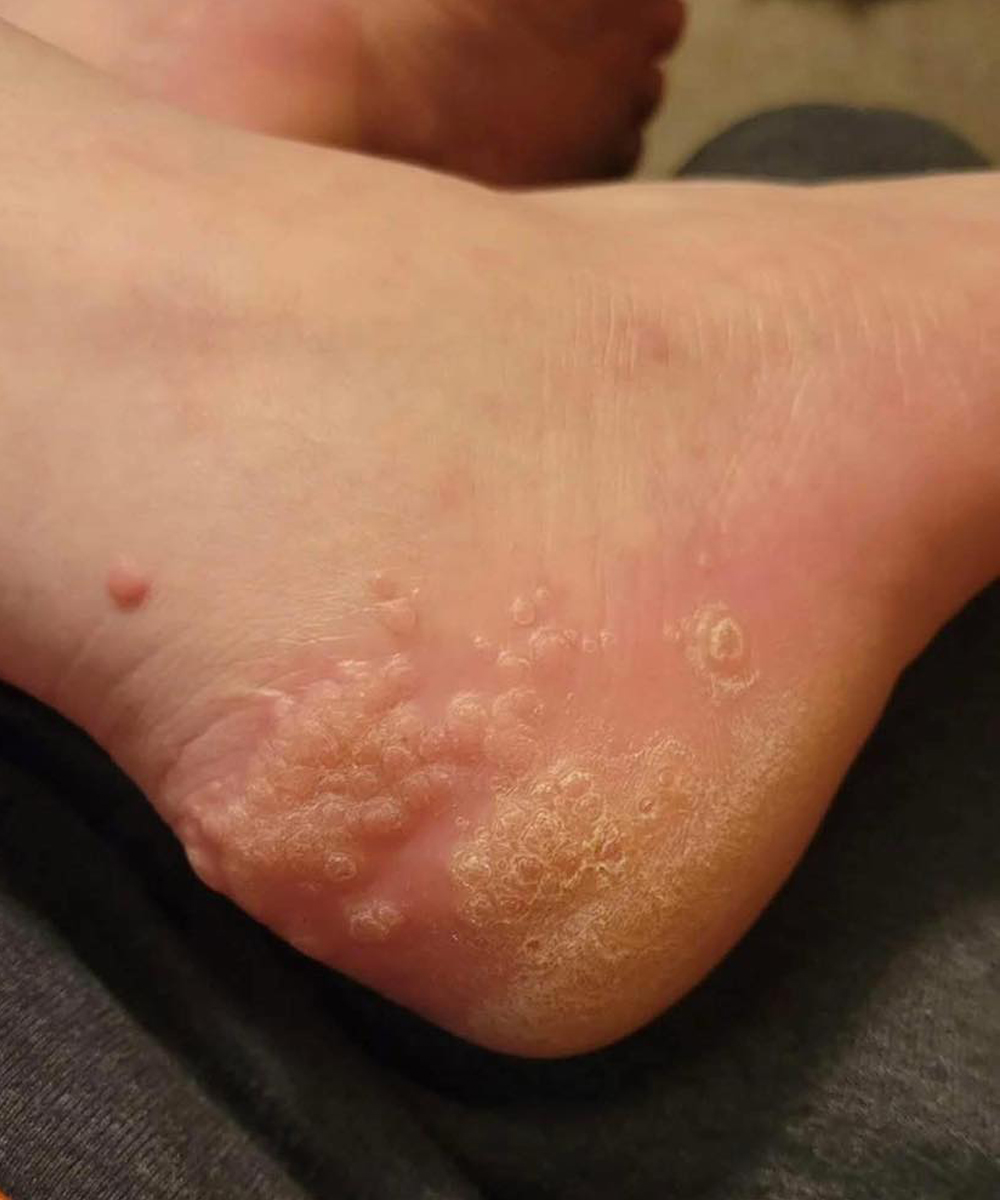
Fungal infections: Shoes worn by others can carry fungi that lead to athlete’s foot or nail infections. These typically cause itching, redness, peeling skin, or yellowing nails rather than a firm bump.
Why Second-Hand Shoes Are More Likely to Cause Problems
While new shoes can cause issues during the break-in period, used shoes come with extra concerns:
They’re already shaped to someone else’s feet, creating uneven pressure points.
Poor sanitation can transfer sweat, bacteria, or fungi, increasing irritation or infection risk.
(Images above typically show yellow corns or calluses caused by shoe friction.)
How to Treat It
Most yellow bumps improve with basic home care:
Change footwear: Stop wearing the problematic shoes. Choose well-fitting pairs with roomy toe boxes and good cushioning.
Soak and smooth: Soak your feet in warm, soapy water for 10–20 minutes, then gently use a pumice stone or emery board. Don’t cut the skin yourself.
Reduce friction: Apply corn pads, moleskin, or gel toe protectors.
Moisturize: Use creams containing urea to soften thickened skin.
OTC treatments: Salicylic acid pads can gradually break down corns.
If the area becomes painful, red, swollen, produces pus, or doesn’t improve after a couple of weeks, it’s best to see a podiatrist. They can safely treat the problem and check for underlying causes such as bunions or bone spurs.
Preventing Problems with Used Shoes
Clean and disinfect second-hand shoes thoroughly, ideally with antifungal sprays.
Wear socks to reduce friction and moisture.
Break shoes in slowly.
Choose breathable materials and the correct size.
That yellow bump is your skin’s way of signaling too much friction. Fixing the shoe fit usually solves the problem quickly—and when foot issues persist, professional care can help you get back to comfortable, healthy steps.
