
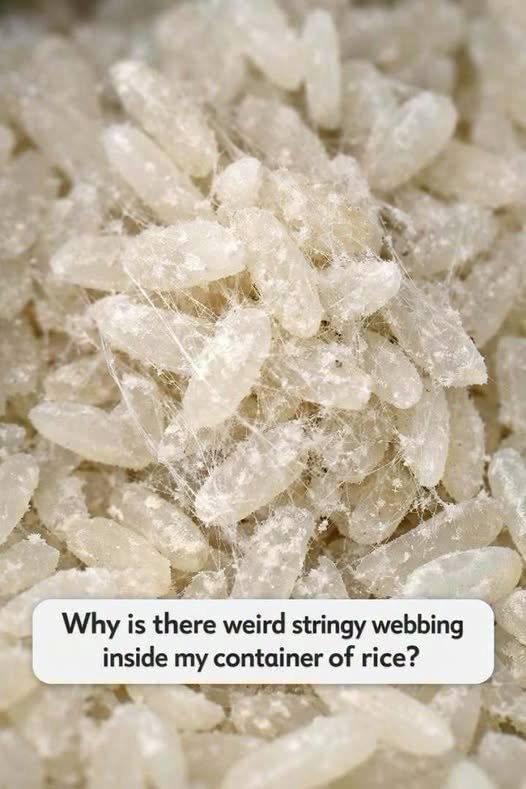
Opening a container of rice and finding thin, web-like strands is enough to make anyone stop cooking. Rice is supposed to be dry, loose, and clean, so stringy clumps can immediately raise questions about food safety, storage, and whether the rest of the pantry is still usable.
In most cases, that webbing is not part of the rice. It is a warning sign of pantry pests, most commonly the larvae of the Indian meal moth, a household insect that can infest rice, flour, cereal, grains, nuts, dried fruit, pasta, pet food, and other dry goods.
What the Webbing Usually Means
The fine white or off-white threads found in rice are typically silk-like material produced by pantry moth larvae. As the larvae feed and move through stored food, they spin webbing between grains. Over time, that can make rice stick together, form clumps, or cling to the sides of a container.
The problem may be easy to miss at first. Sometimes the webbing only becomes noticeable when the rice is scooped, poured, or stirred. In a more developed infestation, the strands can be visible across the surface or throughout the container.
Adult Indian meal moths are small and may be seen fluttering near pantry shelves, kitchen cupboards, walls, or lights. But the larvae usually cause the real damage. They are small, cream-colored caterpillar-like insects with darker heads, and they feed directly on stored food.
Along with webbing, an infested container may contain larvae, eggs, shed skins, cocoons, insect waste, or a dusty residue at the bottom. Some dry foods may also smell stale or unpleasant, though odor is not always obvious.
How Pantry Moths Get Into Sealed Food
It is common to find pests in containers that seemed closed. Pantry moth larvae can exploit loose lids, thin plastic, damaged cardboard, small packaging gaps, or weak grocery bags. In some cases, larvae can chew through flimsy packaging to reach food.
The issue may also begin before the rice ever reaches your kitchen. Eggs or larvae can already be present in products that have passed through storage facilities, warehouses, stores, or packaging environments. Once one contaminated item enters the pantry, the insects may spread to nearby boxes, bags, and containers.
This is why one bad bag of rice can become a larger pantry problem. Even items that look untouched from the outside should be checked if they were stored close to the affected container.
Warm, humid storage conditions can make the problem worse by helping pantry moths reproduce more quickly. Dry goods that sit unused for months, especially in the back of a shelf, can become a hidden breeding spot before anyone notices.
What Readers Should Know
 Continued on the next page
